"One Belt, One Road" advances in the challenge of epidemic situation
"Looking forward to the world 2021"
The "Road to Life" is the hope of "Road to Recovery"
"One Belt, One Road" advances in the challenge of epidemic situation
Hu Biliang (Executive Dean of the Belt and Road College of Beijing Normal University)
In 2020, the world suffered a pandemic that had never happened in a hundred years, and all aspects were severely impacted. The "Belt and Road" construction is no exception, but it has not stopped because of this. Instead, it has proceeded from reality and acted proactively, showing strong resilience and vitality and making great contributions to the global anti-epidemic and stable economy. In 2021, the global anti-epidemic and economic recovery will put forward stronger demand for the joint construction of the Belt and Road, stimulate the accelerated development of related industries, usher in new opportunities for high-quality joint construction of the Belt and Road, and relevant countries will achieve mutually beneficial and win-win new development through the joint construction of the Belt and Road.
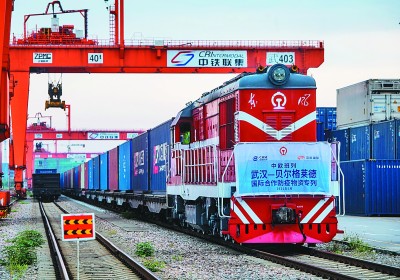
On May 9, 2020, the China-Europe train (Wuhan) bound for Belgrade, Serbia, was ready to leave Wujiashan Station. The train was loaded with 3,500 cubic meters and 294.42 tons of international cooperative epidemic prevention materials to support Serbia and neighboring countries in fighting the COVID-19 epidemic. Xinhua news agency
1. Fight the epidemic, stabilize the economy and protect people’s livelihood.
Over the past year, the global epidemic in COVID-19 has directly brought adverse effects on the construction of the Belt and Road, mainly in three aspects: First, in the specific period when the epidemic spread most seriously, construction projects had to stop production in some countries; Second, the global supply chain was severely affected by the epidemic, and some equipment, materials and raw materials could not be transported to the construction site in time, so the construction speed of some construction projects was forced to slow down; Third, affected by the epidemic situation, the economic development of some countries where construction projects are located has declined seriously, and the relevant countries cannot continue to provide necessary supporting funds and material guarantees, which has brought certain difficulties to the smooth implementation of construction projects.
Despite this, the construction of the "Belt and Road" has not been stagnant. Even though some enterprises did stop production during the worst period of the epidemic, they quickly resumed production. Compared with the situation in normal years, the Belt and Road construction in 2020 shows very obvious characteristics. As Wang Yi, State Councilor and Minister of Foreign Affairs, pointed out at the advisory committee meeting of the 2020 Belt and Road International Cooperation Summit Forum held in December 2020, the Belt and Road construction has played an important role in fighting the epidemic, stabilizing the economy and protecting people’s livelihood.
From the perspective of anti-epidemic, China and the partner countries of the Belt and Road Initiative have given full play to the role of the international cooperation platform of the Belt and Road Initiative, and have done many things in anti-epidemic, among which three things are very important: First, they are committed to building the Belt and Road Initiative into a "road to life" to ensure people’s lives and safety. By opening up land, sea and air transport channels, we will transport anti-epidemic materials from China to countries related to the Belt and Road as much as possible and as soon as possible. China-Europe trains are outstanding in this respect. In 2020, more than 10,000 trains will be operated, which will connect China with more than 20 countries and 90 cities in Europe, and more than 8 million emergency medical supplies will be delivered by the end of November 2020. In addition, China has also built the "Aerial Silk Road" with relevant countries, and delivered nearly 2,000 tons of medical aid to countries around the world, including a large number of masks, protective clothing and test kits.
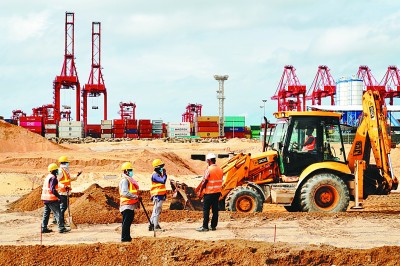
On September 22, 2020, workers were working in Colombo Port City, Sri Lanka. Colombo Port City is a key cooperation project of "One Belt, One Road" between Sri Lanka and China. Xinhua news agency
Second, we will work together to build the Belt and Road into a "healthy road" to ensure people’s health, including sharing epidemic prevention programs and diagnosis and treatment programs at the national level, and providing anti-epidemic assistance between relevant countries. China has also sent medical expert teams to some Belt and Road partner countries, and some Chinese-funded enterprises have built temporary hospitals and organized the production of urgently needed medical protection materials according to the actual needs of their countries.
Third, China has jointly developed vaccines with partner countries of the Belt and Road Initiative, and some vaccines have already been used. China enterprises have cooperated with Russian, Egyptian, Indonesian, Pakistani, United Arab Emirates and other "Belt and Road" partner countries to carry out the third phase of vaccine trials, and all of them have achieved good results. Some countries, such as Turkey and Egypt, have already started to use vaccines produced by China enterprises, and more countries, such as the Philippines and Indonesia, will soon use vaccines produced by China enterprises.
In terms of stabilizing the economy, the COVID-19 epidemic has had a serious adverse impact on the economic development of all countries in the world, and the partner countries of the Belt and Road Initiative are no exception. Therefore, it is particularly important for China and its partner countries to promote common economic development by jointly building the Belt and Road Initiative. In the past year, through the joint efforts of China and its partner countries, many important achievements have been made in this regard.
First, play the positive role of investment in stimulating economic growth. In the first three quarters of 2020, China enterprises made non-financial direct investment of 13.02 billion US dollars in countries along the Belt and Road, up 29.7% year-on-year. This shows that even in the severe epidemic situation, China’s investment in the major countries related to the Belt and Road Initiative has not decreased, but has increased substantially.
Second, stabilize trade growth. Judging from the "Belt and Road" trade situation, in the first three quarters of 2020, the trade volume of goods between China and countries along the "Belt and Road" was 6.75 trillion yuan, up 1.5% year-on-year, which was 0.8 percentage points higher than the overall foreign trade growth. The trade growth between China and countries along the "Belt and Road" has maintained a positive growth even though the global supply chain is seriously broken, which is of great positive significance for stabilizing their economic development and safeguarding people’s livelihood.
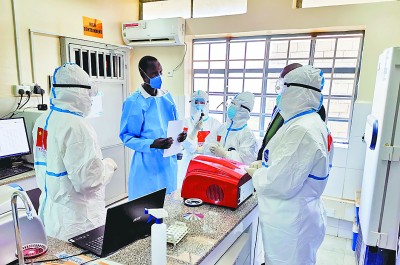
On August 21st, 2020, in a Covid-19 testing institution in Juba, the capital of South Sudan, members of China’s anti-epidemic medical expert group communicated with medical staff in the southern front line. Xinhua news agency
Third, China and its Belt and Road partners will accelerate the process of regional economic integration and reduce the negative impact of the epidemic on relevant countries. All 10 ASEAN countries are partners in building the "Belt and Road" with China. With the development of the epidemic, the cooperation between them has not been cut off, but has become closer. By strengthening cross-border e-commerce cooperation and promoting closer investment cooperation, coupled with the relatively good epidemic prevention and control work between China and ASEAN countries, ASEAN has historically become China’s largest trading partner since the first quarter of 2020, and China has long been ASEAN’s largest trading partner, so the two sides are each other’s largest trading partners at present, achieving good mutually beneficial and win-win development in trade. Under the positive influence of such closer trade and investment relations, ASEAN, China, Japan, South Korea, Australia and New Zealand finally signed the Regional Comprehensive Economic Partnership Agreement (RCEP) in November 2020, which opened a new stage of regional economic integration in East Asia and injected new momentum into the accelerated recovery of the Asia-Pacific region and the global economy.
In addition, the African Union and the Government of China recently signed the Cooperation Plan between the Government of People’s Republic of China (PRC) and the African Union on Jointly Promoting the Belt and Road Initiative, which became the first cooperation document signed by China and regional international organizations to jointly build the Belt and Road Initiative, and clearly put forward the timetable and road map for the cooperation contents and key cooperation projects. In the long run, the signing of this agreement is conducive to promoting the complementary advantages of both sides through the joint construction of the "Belt and Road" and jointly coping with global challenges, and is also conducive to better achieving the objectives of the AU’s Agenda 2063; In the short term, such deepening cooperation will help the two sides to achieve better cooperation results in fighting the epidemic and reviving the economy.
Fourth, more actively promote the development of e-commerce and mitigate the negative impact of the epidemic on economic growth as much as possible. At the beginning of the global pandemic of COVID-19, the World Trade Organization predicted in early April 2020 that the global trade volume of goods would decrease by 12.9%~31.9% in 2020. However, the WTO updated its forecast in early October, and believed that the global trade volume of goods would only decrease by 9.2% in 2020. Among them, e-commerce has played an important role in promoting the development of transnational trade under the epidemic situation. Take China as an example. In the first three quarters of 2020, the national online retail sales increased by 9.7% year-on-year. Under the framework of "One Belt, One Road" international cooperation, China has actively carried out the construction of "Silk Road E-commerce" with countries and regions along the Belt and Road in the past few years. By the end of 2019, China’s cross-border e-commerce trade has achieved full coverage of countries and regions along the Belt and Road, which has played a positive role in promoting the e-commerce development of China and related countries.
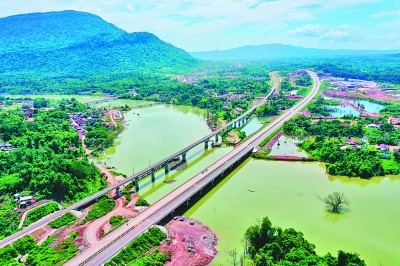
This is the Wanwan Expressway Bridge (right) and China-Laos Railway Bridge (left) under construction in Vientiane Province, Laos on October 21st, 2020. Xinhua news agency
Fifth, quickly resume work and production. During the worst period of the global COVID-19 epidemic, many Belt and Road construction projects were forced to stop, but most of them resumed work soon. The core project of "Belt and Road" construction — — The construction project of China-Pakistan Economic Corridor was forced to stop in March 2020, when the epidemic situation in Pakistan was the most serious, but it was resumed in April in an orderly manner. Karakoram highway Phase II Project, carlot Hydropower Station, Lahore Rail Transit Orange Line Project, Gwadar Port, Gwadar New International Airport and other construction projects are currently under normal construction. In Indonesia, the Bandung Expressway project, which was built by China Road and Bridge, suspended construction in some areas in March, but it was fully resumed by the end of May; The No.3 tunnel construction project of Jakarta-Bandung High-speed Railway Project, which was undertaken by China Power Construction Company, was also successfully completed at the end of April, and Jakarta-Bandung High-speed Railway was successfully built during the epidemic. As an important part of the Trans-Asian Railway, the construction of China-Laos Railway has not been interrupted by the epidemic. It is a nearly 10-kilometer cross-border tunnel connecting China and Laos — — The Friendship Tunnel was successfully completed in September. In Africa, Yaji Railway, the first transnational electrified railway on the African continent jointly built by China, Turkey and China Railway, did not stop its operation even in the worst period of the epidemic, which made important contributions to various transportation guarantees during the Ethiopian epidemic and explored some successful practices for its commercial operation.
Sixth, strive to maintain the basic stability of the global supply chain. China has established "green channels" with many partner countries of "Belt and Road" to smooth the flow of goods, and strived to improve the multimodal transport mode of land, sea and air, to ensure the normal operation of international large-channel transportation and strive to improve the efficiency and quality of transportation, and at the same time, it has also established "fast channels" to facilitate personnel exchanges, which has played an important and positive role in ensuring the economic growth of China and related countries.
From the perspective of protecting people’s livelihood, from the above-mentioned situation, in 2020, when the epidemic is raging, China and the "Belt and Road" partner countries insist on promoting the joint construction of the "Belt and Road" in various ways, striving to protect people’s health through cooperation in fighting the epidemic, ensuring people’s employment through promoting the resumption of work and production, and ensuring people’s income through stabilizing the economy. In addition, China has also actively participated in the G-20 debt relief initiative, and it is the country with the largest amount of debt relief among G-20 members, among which some countries that have received debt relief are partners in building the Belt and Road Initiative with China. All these have directly made positive contributions to ensuring the basic livelihood of people in China and other countries.

On September 22nd, 2020, a Lao girl dressed in national costume took a selfie at the opening ceremony of Foge Village Tunnel in China-Laos Railway. Xinhua news agency
2. New opportunities for digital, green and sustainable development
The once-in-a-century epidemic has indeed brought a disastrous blow to the whole world, but it also forces us to explore new ways of survival and development: e-commerce and a broader digital economy have developed rapidly, green economic development and green lifestyle have been widely recognized and promoted, the concept of sustainable development has been deeply rooted in people’s hearts, and deeper regional economic integration has been accelerated & HELIP; … All these objectively lead a new direction for China and relevant countries to better build the "Belt and Road" in the future.
First, the digital "Belt and Road" construction momentum is good. The development of digital technology and digital industry under the epidemic situation has become an important guarantee for people to maintain their basic survival, such as solving shopping problems through online shopping in isolation, as well as online education, online office, online medical treatment and other issues. This epidemic has also greatly promoted the development of the entire digital economy based on digital technology, such as e-commerce trade, intelligent manufacturing, smart tourism, smart finance and smart agriculture. This provides new opportunities for China and the partner countries of the Belt and Road Initiative to jointly build the digital Belt and Road Initiative, and provides new momentum for the economic development of these countries. China and its partners in the Belt and Road Initiative have made some achievements in "Silk Road E-commerce", the construction of digital transportation corridors, the construction of cross-border optical cable information channels, and the construction of China-ASEAN information ports. The epidemic will surely promote the cooperation in this area in the new year and will surely achieve more and greater cooperation results.
Second, the green "Belt and Road" construction is deeply rooted in the hearts of the people. The epidemic has made the whole world more deeply aware of the importance of green life and green development. Guided by the concept of ecological civilization, China has put forward the principle of green investment with relevant countries under the framework of "One Belt, One Road" international cooperation, established the "One Belt, One Road" international alliance for green development, and established a green investment fund. The future task is to firmly build the "One Belt, One Road" into a green development road with relevant countries.
Third, sustainable development has become the basic follow-up for building the "Belt and Road". This epidemic also proves the necessity and importance of all countries in the world working together to implement the UN’s 2030 Agenda for Sustainable Development. Therefore, the future work of building the "Belt and Road" is to implement it according to the basic requirements of the UN’s Agenda for Sustainable Development. China has announced that it will strive to reach the peak of carbon dioxide emissions by 2030 and achieve carbon neutrality by 2060; At the same time, China also announced that by 2030, China’s carbon dioxide emissions per unit of GDP will drop by more than 65% compared with 2005, and non-fossil energy will account for about 25% of primary energy consumption; In addition, China promised to further increase its forest stock, total installed capacity of wind power and solar power. We clearly know that there are many difficulties and challenges to achieve the above goals; But once China has made a promise, it will definitely do it. This shows China’s confidence and determination to firmly follow the road of sustainable development, and also expresses China’s hope that it will drive and promote the sustainable development of the whole world with its own practical actions.
Fourth, deeper regional economic integration and cooperation have broad prospects. On the one hand, the epidemic has indeed isolated countries and people to a great extent; On the other hand, in order to overcome the adverse impact of the epidemic on the country and people, some countries have joined forces to ease the adverse impact of the epidemic by building closer regional economic cooperation. The signing of the Regional Comprehensive Economic Partnership Agreement (RCEP) mentioned above and the signing of the cooperation plan between China and the African Union to jointly promote the construction of the Belt and Road Initiative all belong to this situation. Obviously, this will directly promote the better development of the "Belt and Road" international cooperation, and is more conducive to providing a new kinetic energy for the economic development of relevant countries and promoting the common development of relevant countries. China has announced that it is willing to actively consider joining the Comprehensive and Progressive Trans-Pacific Partnership Agreement (CPTPP), which shows that the development prospect of regional economic integration is broad and the development of regional economic cooperation can be expected in the future.
3. Turn a stronger desire for co-construction into more win-win results.
The epidemic has caused a lot of trouble to the whole world, but it also gives us a lot of enlightenment. From the perspective of building the "Belt and Road", we can get the following important inspirations:
First, as Europe and the United States have been severely hit by the epidemic, their ability to invest abroad has weakened. Accordingly, many countries, especially developing countries, have increased their dependence on investment from China. Therefore, the desire of more countries to build the "Belt and Road" with China has increased, and the demand for "Belt and Road" construction has increased. Because China has done a good job in epidemic prevention and control, resumed work earlier and has strong production capacity, China’s supply capacity is still very strong, which provides a strong impetus and guarantee for the "Belt and Road" construction in the epidemic and post-epidemic era.
Second, the epidemic situation has tested the cooperation concept and basic principles of building the "Belt and Road", that is, the special importance of adhering to the concept of openness, tolerance and transparency and the principle of joint construction and sharing. It is under the guidance of such cooperation concepts and basic principles that China and relevant countries have held many international conferences in the form of videos under the multilateral cooperation platform of "Belt and Road", and coordinated in many ways on specific policies in the fields of finance, taxation, energy and green development related to fighting the epidemic, stabilizing the economy, protecting people’s livelihood and promoting development, so as to promote the consensus of all parties.
Third, in the case of a pandemic, building the "Belt and Road" should proceed from reality. China and relevant countries have agreed on the key areas of close cooperation, namely, medical and health care and joint anti-epidemic, digital technology and digital economy, green economy and sustainable development, regional economic integration, etc., and have effectively promoted them.
Fourth, adhere to the basic concept of people-centered, and all parties involved in building the "Belt and Road" should firmly grasp the core issues such as fighting the epidemic, promoting economic recovery and promoting sustainable development, and refrain from geopolitical confrontation and ideological competition, so that all parties concerned can achieve good pragmatic cooperation results.
Guangming Daily (12th edition, January 4, 2021)