American allies are going to engage in joint military exercises with American opponents. The news focused the global attention.
On January 3rd, Rear Admiral Edward mikhailov, deputy commander of the Russian Pacific Fleet, who is leading the fleet to visit the Philippines, said that Russia and the Philippines will hold joint anti-piracy and anti-terrorism drills in the near future. If it goes smoothly, it will be the first joint military exercise between the Russian and Philippine navies.
In addition, inviting the Russian navy to visit and purchase weapons from Russia, the Philippines has been quite enthusiastic about military cooperation with Russia recently.
You come and I fight.
Recently, the military cooperation between the Philippines and Russia has made great strides.
RIA Novosti reported on the 4th that Igor Hovayev, Russian ambassador to the Philippines, recently revealed that Russia is ready to supply modern weapons to the Philippines, including airplanes, helicopters and submarines. "Not second-hand weapons, but the latest weapons." Igor Hovayev stressed.
Philippine Defense Minister Delfin Lorenzana also said after his visit to Moscow in December last year that the Philippine military was considering purchasing sniper rifles from Russia.
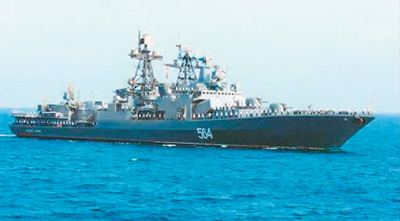
At the same time, an anti-submarine destroyer and a supply ship of the Russian Navy are on a friendly visit to Manila. Rear Admiral Edward mikhailov, deputy commander of the Russian Pacific Fleet, said that during the six-day visit starting from January 2, Russia will show the Philippine military a lot of equipment carried by the two warships.
It is reported that this is the third time that a Russian warship has visited the Philippines, and it is also the first time since Philippine President Duterte took office. "After Philippine President Duterte distanced himself from the United States, two Russian warships rarely docked in the Philippines." AFP said.
In addition to weapons orders and Russian military visits to the Philippines, what is more striking is the upcoming joint military exercise between Russia and the Philippines. Agence France-Presse quoted Edward mikhailov as saying that the planned joint military exercise would focus on combating piracy and terrorism.
This is not difficult to think of the "last military exercise" held by the Philippines and the "big brother" America. Last October, the US-Philippines amphibious landing joint military exercise was held in Manila. Almost at the same time, Duterte announced that he would soon terminate his joint military exercise with the United States. At that time, it was also reported that the preliminary list of weapons purchased by the Philippines from Russia had been completed. Prior to this, Russia had never provided any weapons to the Philippines.
All along, the military exercise partners of the Philippines are traditional allies of the United States and western countries such as Japan and Australia. This time, why did the Philippines turn around and play hot with Russia?
Philippines seeks independence and Russia seeks breakthrough.
"No matter for Russia or the Philippines, this military exercise is not playing ordinary cards." Xu Liping, deputy director of Southeast Asia Research Center of China Academy of Social Sciences, said in an interview with this reporter.
The mind of the Philippines is not difficult to speculate. Since taking office in June last year, the new President Duterte has been adjusting his foreign policy in a high-profile way in an attempt to reduce his dependence on the United States. After following the United States for decades, the Philippines is increasingly aware that it is playing an unequal role as a "little brother" in this alliance. To pursue our own interests, we must be more active in dealing with big countries.
In November last year, Russian satellite news network reported that Duterte said that the Philippines is willing to buy Russian weapons if there is funds. "In the future, it is possible for us to deal with the EU and Russia on arms trade, because the United States seems to have cancelled the order to supply arms to the Philippines."
This joint military exercise is no exception. "To some extent, this military exercise with Russia is precisely to show the United States the firm determination and will of the Duterte government to adhere to independent diplomacy." Xu Liping pointed out that now is the window period of US-Philippines relations. The Duterte administration and the Obama administration have had many festivals, and US President-elect Trump is about to take office. At this critical time, the Philippines invited Russian warships to visit and even held a joint military exercise. In fact, this move is used as a card to put pressure on the United States to show its strong will to carry out more independent diplomacy in the future.
In Russia’s view, trapped in the strategic containment of Europe and the United States, now is also a good window of opportunity. In an interview with RIA Novosti last December, Russian Deputy Foreign Minister Morcourt Lov said that Russia regards the Philippines as a promising partner in the Asia-Pacific region and is ready to help the Philippines strengthen its defense capabilities.
"Since 2003, Russia has been looking for its own diplomatic breakthrough. One of the important directions is to turn eastward and strengthen cooperation with ASEAN." Gao Fei, director of the Russian Research Center of the Foreign Affairs University, pointed out to this newspaper that the symbolic and political significance of the approach of Russia and the Philippines, whether it is selling weapons, joint military exercises or oral statements, is far greater than the military significance. As he said, although Russia has sold weapons to other ASEAN countries before, this time it is cooperating with an important ally of the United States in the Asia-Pacific region. "This is a major change in itself and a major blow to the US policy of containing Russia."
For Russia, the greatest success of this military exercise may be to turn American allies into their friends.
Rebuilding the beauty of balance is restricted
"This will not affect the attitude of the United States towards cooperation with the Philippines." Russian satellite news network reported on January 4th that John Kirby, a spokesman for the State Council in the United States, said that the military partnership between Washington and Manila was "important and comprehensive" when asked how to comment on the possible maritime military exercises in Moscow and Manila in the near future.
Will the relationship between the United States and the Philippines really be "unscathed"? Xu Liping doesn’t think so. "Since the Obama administration, the Philippine policy toward the United States has been adjusted and there have been some tensions. This Russian-Philippine military exercise is undoubtedly an enhancement of this adjustment. " Xu Liping pointed out that at present, Duterte is more cautious about whether the relationship between the United States and the Philippines will improve after Trump takes office. Therefore, he should pay more attention to expanding pragmatic cooperative relations with Russia and other countries and strive for more chips in the game with the United States.
For the United States, the bad news may not only be the "hereditary territory" of the Philippines. In the future, in order to alleviate the pressure of strategic game and even military confrontation with the United States, Europe and other western camps, Russia will continue to seize the breakthrough of "looking eastward" and its military presence in the Asia-Pacific region will continue to strengthen.
Experts believe that this is a hedge against the future military presence and strengthening of the United States in this region, and will form constraints to some extent. The Russian-Philippine military exercise is actually a break of the monopoly situation that the United States is trying to form in the Asia-Pacific region.
In fact, it is not just the Philippines that is turning. It is worth noting that in 2017, as the new rotating presidency of ASEAN, the Philippines will host the new East Asia Summit. According to the usual practice, the United States and Russia, as foreign countries in the region, will be invited to participate. By then, how the Philippines will demonstrate its diplomatic skills and skills is worthy of attention. The analysis points out that the Philippines’ enthusiasm with Russia this time reflects to some extent that in the new period and under new conditions, the whole ASEAN’s great power balance strategy will really enter a pragmatic stage. "In the past, this great power balance strategy was mainly reflected in seeking a balance between the United States and China. This time, bringing Russia in will be a new means for ASEAN." Xu Liping said.
In this regard, Russia is naturally happy to see it. "Russia will make further use of cooperation with eastern countries to deal with western countries." Gao Fei pointed out that for Russia, "as long as there is an opportunity, it will seize it immediately."