For automobile dealers, 2020 is a difficult year. Although the automobile market experienced a deep "V" reversal after the epidemic and continued to pick up under the effect of "Golden September and Silver 10", it has not completely passed the "cold winter". On October 31st, china automobile dealers association released the latest issue of "China Automobile Dealer Inventory Alert Index Survey" VIA(Vehicle Inventory Alert Index), which showed that in October 2020, the automobile dealer inventory alert index was 54.1%, up 0.1 percentage point from last month, and the inventory alert index was above threshold. How to gain new users in the current market environment, reduce costs and increase efficiency, and maintain sustained growth is still the most important issue facing the majority of dealers.

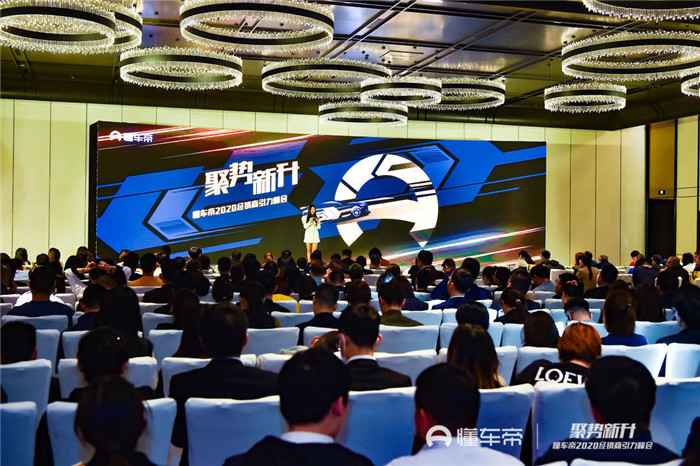
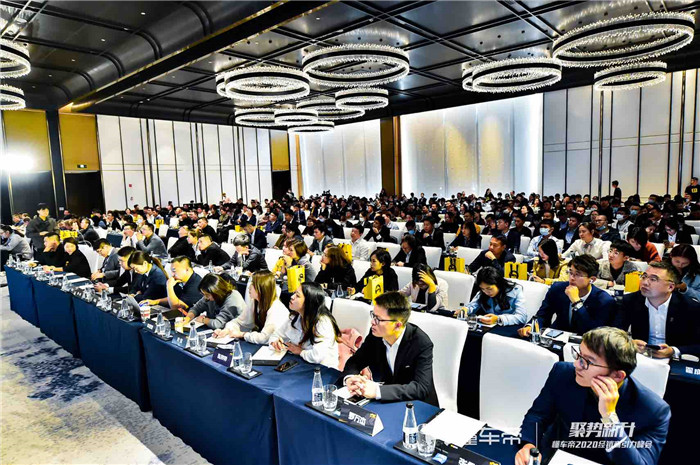
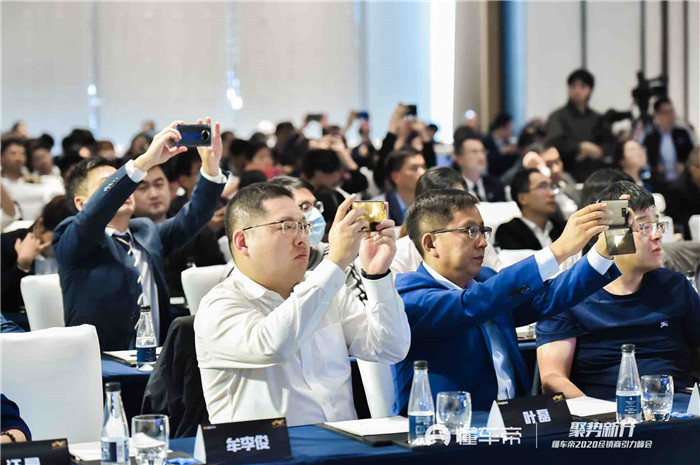
On November 3rd, the 2020 Dealer Gravity Summit with the theme of "Gathering momentum and rising" arrived in Hangzhou. The summit invited many auto industry experts and representatives of auto dealers to discuss the latest trends of the industry and the new challenges and opportunities faced by the development of auto dealers.

The cycle effect of automobile consumption shows that the consumption potential of luxury car market in Zhejiang Province is huge
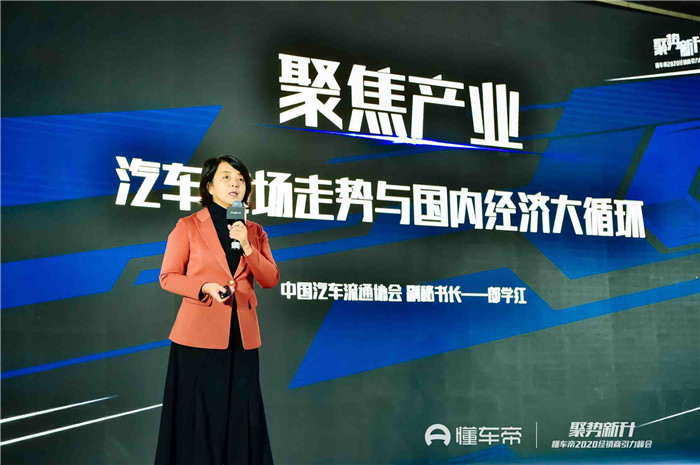
Lang Xuehong, Deputy Secretary-General of china automobile dealers association, introduced at the summit that at present, China’s car ownership has reached 275 million, surpassing the United States to become the world’s largest car ownership country. Megacities with net population growth are still the main force of automobile consumption, and strong third-tier cities will become the mainstay of the market. In the future, the passenger car market will show the characteristics of dual drive for first purchase and redemption, and dual drive for new and used cars, and the circular effect of automobile consumption will begin to appear. Second-hand car business and financial insurance will have more room for development for dealers.

According to the research data of Otis, from January to September, the sales volume of passenger car terminals nationwide was 13.28 million, down 14.33% year-on-year. The top five provinces were Guangdong, Jiangsu, Shandong, Zhejiang and Henan, and economically developed provinces and populous provinces remained the main areas of passenger car consumption. The monthly terminal retail volume of passenger cars in Zhejiang Province is usually between 100,000 and 150,000. In the third quarter, with the gradual decline of the epidemic and the introduction of local policies to promote automobile consumption, the passenger car market in Zhejiang Province ushered in three consecutive months of positive year-on-year growth. From the perspective of brand structure, luxury brands in Zhejiang Province have achieved positive growth and further increased brand differentiation. As a new first-tier city, Hangzhou is increasingly attractive to enterprises and talents. From January to September, the retail volume of passenger car terminals was 244,100, making it the most concentrated and active city in Zhejiang Province.
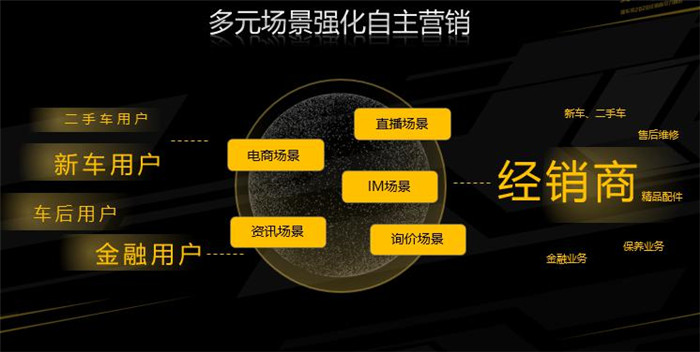
Billion-level capital flow supports multiple scenarios to help dealers independently market private domain operations.
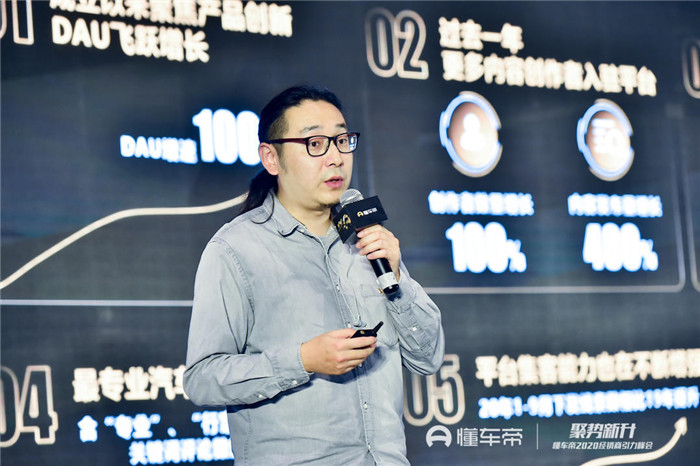
In the past year, the number of creators who know the car emperor has doubled, the content release volume has increased by 400%, the diversified creative genres have grown rapidly, and the live broadcast volume has increased by 1100%. The consumption mode and catalyst mode of a new generation of automobile users are changing, which is not limited to a single scene to obtain information, but they have more abundant needs.

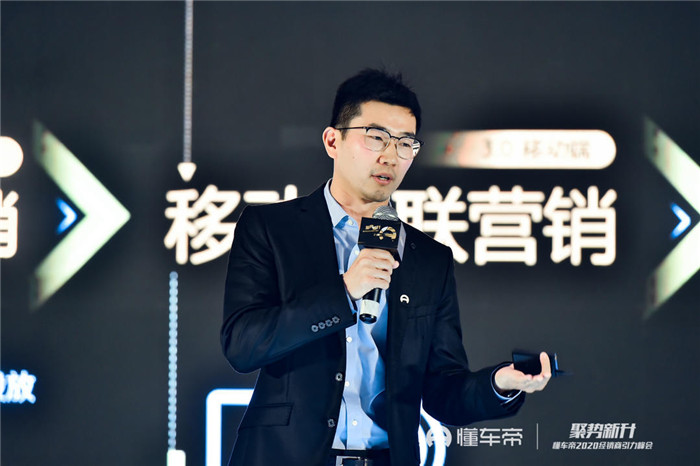
"Based on user insight and scene changes, the important trend of dealer development in the future will be to take the initiative to find users and precipitate customers through various scenarios and means, and conduct independent marketing and private domain operations." Cui Qiao, the person in charge of commercial products who understands the commercial dealers of Chedi, thinks.

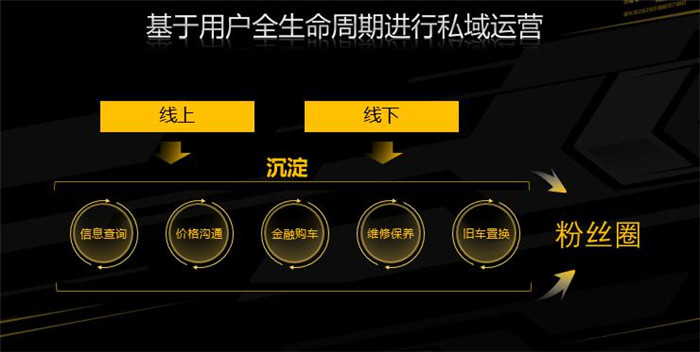
It is understood that knowing the car emperor selling cars is the first to promote the exclusive online business hall of dealers, and through various efficient operation transformation tools, it helps dealers to realize offline business scenarios and help them realize localized online independent marketing. Based on multiple scenarios such as content information scene, live broadcast scene, fan scene and e-commerce scene, online business hall helps automobile dealers to carry out long-term operation, interactive operation, customer protection operation and transformation operation to promote efficient transformation. In this way, it can solve the problem of online traffic bottleneck and single customer collection method of dealers, help dealers to carry out independent marketing and improve online customer acquisition ability.

At the same time, relying on the products of selling car fans, car dealers can precipitate online and offline users, accumulate data assets, accurately reach users through different tools and provide them with corresponding services in time for private domain operations.
Knowing the car emperor will also encourage car dealer partners to carry out localized online independent marketing and private domain operation through 100 million local traffic support and 100 million special funds to help them improve their digital capabilities and jointly promote industrial upgrading.
Marketing reform, long-term growth and refined digital operation have become the new normal.
From waiting for customers offline to getting clues from PC and mobile to inviting customers, and then satisfying users’ needs through multiple scenarios such as private media traffic and short video live broadcast, the marketing model of traditional car dealers is also changing with the development of media and the changes of consumers. Obtaining online increment through digital means has gradually become the new normal of automobile dealer marketing.

Yu Cheng, the person in charge of the business planning of a huge engine car dealer, said: "In the past, the service of car dealers to users began when they entered the store, and marketing was in a passive state. Nowadays, car dealers’ service to users starts from the scene, and it will become a new trend to provide active service and independent marketing based on pre-sale, in-sale and after-sale scenarios to promote long-term growth. "
At the meeting, a number of representatives of Hangzhou automobile dealers shared their experiences of taking the initiative to achieve long-term growth through digital marketing based on their personal experiences. Chen Weimin, Chairman and President of Zhejiang Wanyin Automobile Group, believes that the marketing orientation of automobile 4S stores is to close the physical distance between automobile brands, models and customers, and it is customer-acquisition marketing. However, at present, the automobile industry has shifted from incremental market to stock market, and it is difficult for traditional marketing methods such as profit promotion and price war to bring growth to automobile sales. In the era of mobile Internet, the marketing of automobile 4S stores is gradually changing to experiential service marketing, mobile digital marketing and live e-commerce marketing. Hangzhou Yuanbo Automobile Sales & Service Co., Ltd. has been officially in operation for only two years, during which it has experienced a store relocation and its location is more remote, but it can rank among the best in the competitive environment of 10 first-class stores and 11 direct stores in the same city, with an annual sales volume of more than 2,000 units. Zhang Yiyong, its general manager, said that in order to quickly improve its popularity, Hangzhou Yuanbo successfully reversed the unfavorable situation in geographical position through online operation by reaching cooperation with emerging platforms such as Knowing Car Emperor, strengthening marketing and enhancing exposure by means of member products and live broadcast.

So far, the gravity summit of dealers who know the car emperor has been successfully held in five cities: Xi ‘an, Suzhou, Guangzhou, Jinan and Hangzhou, and officially came to an end. As a car content platform, Know Car Emperor has 750,000 content creators and serves 200 million car-interested users. It is trusted by more and more users based on the real and professional content value. In the future, Knowing Car Emperor will continue to focus on product innovation, provide better services for car dealers, and work with dealer partners to promote industrial digital upgrading.
"What is the scientific research system of the Chinese Academy of Sciences? How can your small team run so many big projects? " Going out for academic exchanges, Du Qiang, a researcher at the Institute of Engineering Thermophysics of Chinese Academy of Sciences (hereinafter referred to as the Institute of Engineering Thermophysics), is often asked questions outside this academic field.
A team of more than 60 people has undertaken research and development projects of various types of aero-engines. Almost everyone is a multi-functional person, spanning several types, opening roads on every mountain and bridging bridges when encountering water … Du Qiang has become accustomed to such a working state.
"Except for a few people who undertake management work, most people devote themselves to scientific research, which can ensure the investment time of core technicians from the system design." Du Qiang told the China Science Journal.
To build such a dedicated research team is inseparable from the guarantee of the mechanism behind it. Since the beginning of this year, the Chinese Academy of Sciences, which has been ahead in the reform of scientific research system, has continued to play the leading role of "pioneer" and "reduced the burden" for scientific and technological workers in the practice of "I do practical things for the masses" to stimulate stronger innovation vitality.
In order to hand over satisfactory answers to the country
Du Qiang has always had a dream: independently develop high-performance and high-reliability aero-engines to fill the shortcomings of China’s industrial system.
Gas turbines and aero-engines are known as "flowers of industry" and are high-end manufacturing industries with extremely high thresholds. The difficulty of research and development can be imagined. As the deputy director of the laboratory and the deputy chief engineer of the model, Du Qiang shoulders a heavy burden.
Recently, however, his management work has been a lot easier-in order to better support the model task, the quality office of the institute and the major special office have been deeply involved, sharing the routine work of the research team’s key models, such as external coordination and liaison, meetings, and document sorting.
"It really helped us share a lot of trivial matters, so that researchers can better focus on the main business." Du Qiang said, "The mission orientation of the Chinese Academy of Sciences leads us to be a’ national person’ and shoulder the’ national responsibility’ and fully solve the national needs."
Huang Congli, secretary of the Party Committee and deputy director of the Institute of Engineering Thermophysics, said that "scientific research service comes first" is the focus of the institute’s practical activities of "I do practical things for the masses", which will give full play to the role of grassroots party organizations as fighting bastions and pioneers in party member, and ensure the effectiveness of "I do practical things for the masses" with practical actions.
For a long time, China has been restricted by the blank of high-power gas turbine test equipment. In order to solve this bottleneck, the country has started the construction of a major scientific and technological infrastructure-high-efficiency, low-carbon gas turbine test equipment. In order to hand over a satisfactory answer sheet to the country as soon as possible, the Party Committee of the Institute of Engineering Thermophysics decided to merge 12 management support party branches, party member, into the high-efficiency and low-carbon gas turbine party branch, and at the same time, all the staff of the major facilities department moved to the laboratory to work with researchers. Thanks to everyone’s concerted efforts, the scientific apparatus has recently completed all the design of the experimental platform, and the supporting projects have started in an all-round way.
Such unreserved support not only reassured the researchers, but also ensured the efficient progress of the project. In the development of a certain type of gas turbine, the scientific research team encountered the dilemma that there was no suitable test bench in China. Time waits for no one, and Lan Kaiwei, director of conditional construction project of Institute of Engineering Thermophysics, went to the outfield to coordinate and advance.
At the scene in Jinan, Lan Kaiwei quickly organized everyone to identify the problem, make plans, coordinate and promote, and solve the problem of buck passing. For more than three months, he worked overtime with the construction workers and did not rest for a weekend. In the end, with the cooperative efforts of many teams, the gas turbine bench, which usually takes several years to complete, was built in only three months, and "China Speed" shone on the engineering site.
Before leaving Jinan, the head of the base who "fought" together grabbed Lan Kaiwei and took a work photo hand in hand under party flag. Looking at the photo at the end of the year, this old party member, who has been a party member for 15 years, broke down in tears. Lan Kaiwei likened himself to "a grain of sand"-it can be more powerful than granite if it is melted into the cement mortar of the team.
Return the time to the researchers.
At 11: 23 on April 29, 2021, "Tianhe" went to heaven!
The successful launch of the core module of China Space Station not only marks the full-scale construction of the space station in orbit, but also means the official opening of China’s space laboratory.
For this day, the research team of space science experiment cabinet of Chinese Academy of Sciences has worked hard for more than 3,000 days. But they have no time to relax, because the task has just been completed 1/10.
"Tianhe has brought two experimental cabinets to the sky, and nearly 20 are being integrated and debugged. Now our task is very tight, and we work almost until late at night every day." Kelly, director of the Integrated Technology Center of the Space Application Engineering and Technology Center of the Chinese Academy of Sciences (hereinafter referred to as the Space Application Center), told the China Science Journal.
In fact, from 2015 to now, the Kelly team hasn’t had a full day off.
According to the plan, China’s space station will be built around 2022 to realize the dream of a space laboratory. However, the development of more than 20 multi-disciplinary scientific experimental cabinets is an innovative road from scratch. In order to get through this road, a large number of researchers have devoted themselves to studying and tackling problems unremittingly. Where did all their time go? Countless holidays, rest days and sleepless nights, they all stick to their jobs.
Zhao Guangheng, secretary of the Party Committee and deputy director of the Space Application Center, said that as a research institute born with the mission of major national tasks, the Space Application Center comprehensively sorted out and optimized the work processes of various functional departments in this year’s "I do practical things for the masses" practice, improved the level of digital and intelligent services and efficiency, and returned the time to researchers to the greatest extent.
To this end, the Space Application Center System Working Group has held seven special meetings, sorted out and optimized the work processes of various functional departments one by one, revised 22 systems, reduced unnecessary "signatures" as much as possible, and freed researchers from the cumbersome process.
The Space Application Center has also built and implemented an office automation system, transforming the offline approval of daily comprehensive affairs into online information customized services. Up to now, online processing has accumulated more than 2,000 businesses such as "leaving Beijing for approval", "information release approval", "visiting during the epidemic" and "official car".
In this regard, Kelly said: "I do practical things for the masses" is very powerful! Our research room has a lot of business trips. Every day, one-fifth of people are outside, and there are many urgent tasks. Now automation, informationization and paperless office are of great help to us, which can also effectively strengthen management and improve work efficiency. "
Do a good job of "subtraction"
Doing a good job of "subtraction" and "loosening" scientific and technological personnel is not only the consensus of all institutes and affiliated units of the Chinese Academy of Sciences, but also the key project of the practice of "I do practical things for the masses" of the party group of the Chinese Academy of Sciences this year-actively promoting management innovation, further implementing the "streamline administration, delegate power, strengthen regulation and improve services" reform, and freeing scientific and technological personnel from the cumbersome and unnecessary institutional constraints.
In the management of the strategic pilot science and technology project of the Chinese Academy of Sciences, the competent department has received more than 120 feedback opinions after extensively listening to the opinions of the masses, and will revise the management measures and relevant system rules accordingly. It is reported that the revised method will optimize the management process, expand the scope of "green channel" in the process of project demonstration and mid-term inspection, give leading scientists and research institutions more authority to manage personnel and property, and provide institutional guarantee for high-quality implementation of pilot projects.
Popularizing intelligent technical services to solve the problem of "complicated reimbursement" is also an important measure to further implement the "streamline administration, delegate power, strengthen regulation and improve services" policy in the practice of "I do practical things for the masses".
In the Institute of Semiconductors, Chinese Academy of Sciences, the allocation ratio of scientific research financial assistants to scientific research groups has basically reached 1: 1, forming full coverage of scientific research topics and effectively reducing the burden on scientific researchers. The team of scientific research financial assistants is all held by employees, and the composition of the team is stable. Liu Xuelu, a senior engineer, said that this has effectively reduced the burden on researchers and enabled them to devote more time and energy to scientific research and innovation activities.
In Shanghai Institute of Silicate, Chinese Academy of Sciences, in view of the pain point of "complicated audit" such as the need to concentrate on transferring a large number of vouchers and copying and stamping in a short time for special audit of scientific research projects, the institute promoted the establishment of "accounting voucher image information scheme". The goal is to establish a electronic certificate database that meets the requirements of electronic archives of Chinese Academy of Sciences and provide data support for scientific research project audit at any time. According to reports, the institute has photographed and uploaded about 260,000 vouchers, and it is expected to provide services to researchers from March next year, which will fundamentally solve the problem of difficulty in accessing vouchers. Yang Jinjing, a senior engineer, said that the visualization of vouchers is the biggest improvement of office automation and data, which allows researchers to focus more on scientific research.
(Originally published in China Science Journal, 4th edition, December 22, 2022)

Xinhua News Agency, Beijing, April 24th Title: Wearing armor in white is a common life-a group image of medical staff in the global anti-epidemic battlefield
Xinhua News Agency reporter Han Mo Shang Jing Yang Tianmu
Historically, unknown viruses have often exposed lost face and attacked human beings. In the battle to protect life, there are such a group of people, who wear armor in white and go retrograde to devote themselves to protecting well-being and practice their mission with their lives.
In the global battle against the COVID-19 epidemic, they rushed to the front line without hesitation. People may not know their names or even see their faces covered by protective gear, but their white coats, firm eyes and hard work will never be erased in people’s hearts.
They have a common name-soldiers in white.
Bravely go backwards to fight the plague demon.
The epidemic is raging around the world, and the horn has already sounded. From new york to Daegu, from Melbourne to Harare, the global medical staff did not hesitate to act quickly and rushed to the battlefield against the epidemic.
"My babies are too young to recognize me in protective clothing. If they lose me because of Covid-19, I hope they know that my mother tried her best for her work. " Griggs, a doctor in new york, USA, and her husband, both medical staff, left a will and began to work hard for several weeks.

On April 11th, in a hospital in Bronx, new york, the medical staff took the patient to the hospital. Xinhua News Agency (photo by Guo Ke)

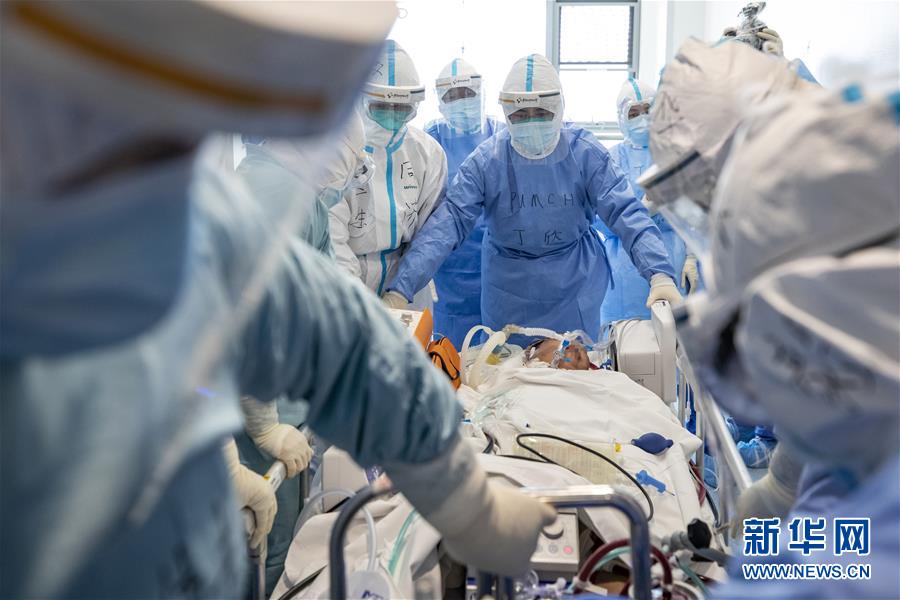
On April 12th, members of the medical team of Peking Union Medical College Hospital and the medical staff of tongji hospital, Wuhan jointly transferred a critically ill patient from COVID-19 to the ICU of Sino-French New Town Campus in tongji hospital, Wuhan. In the process of transportation, ECMO (artificial membrane lung) treatment is still going on. Xinhua News Agency reporter Shen Bohan photo
Although there are still eight months before graduation, Abby Kanagranger, a medical student at the University of Melbourne, Australia, has taken up her post ahead of schedule. "I mainly do some auxiliary work, such as answering the phone, tracking the test results, and some things within our ability. In short, it is to try our best to share their work pressure. "
Like Kana Granger, many medical students all over the world start their careers in this special way.
Doctors are kind, regardless of age.
On the morning of March 16th, Klose, France. Roche Botai, a retired doctor, said a brief farewell to his wife. He will go to the local emergency center as a reinforcement volunteer to receive patients with infection symptoms. He decided to isolate himself in a separate room after work that day to ensure that his family was not infected.

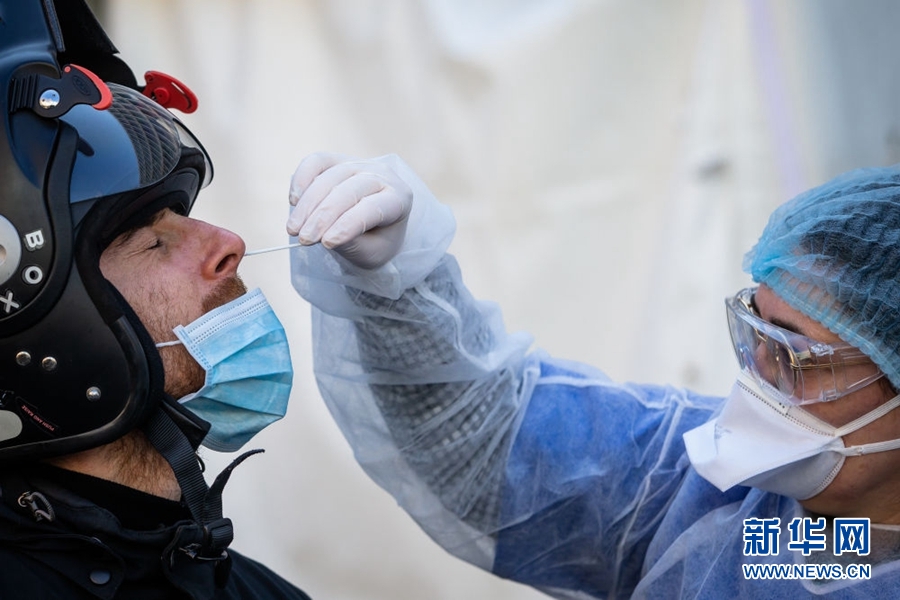
On April 1st, in the 17th arrondissement of Paris, the staff took samples from a medical worker who was tested by Covid-19. Xinhua News Agency (photo by Aurelian Morisal)
If you ask Botai why, Roberta Terzi, a 66-year-old doctor of infectious diseases in Italy, may answer for him: "I will ask myself:’ Do you really want to retire? With my children and grandchildren, to support my life? Where would you rather be on such a spring day?’ My answer is always:’ I want to be here, beside these patients.’ "
In late February, the epidemic situation in Daegu, South Korea deteriorated sharply. Since then, Dr. Quan Taiheng of Daegu Dongshan Hospital affiliated to Qiming University in South Korea has worked in the ward for 10 hours every day, 7 days a week, without taking turns. He has no time to meet his family, so he can only take time to communicate by phone or video. Quan Taiheng said: "What I say most is to ask them if everything is all right or’ I miss you’."

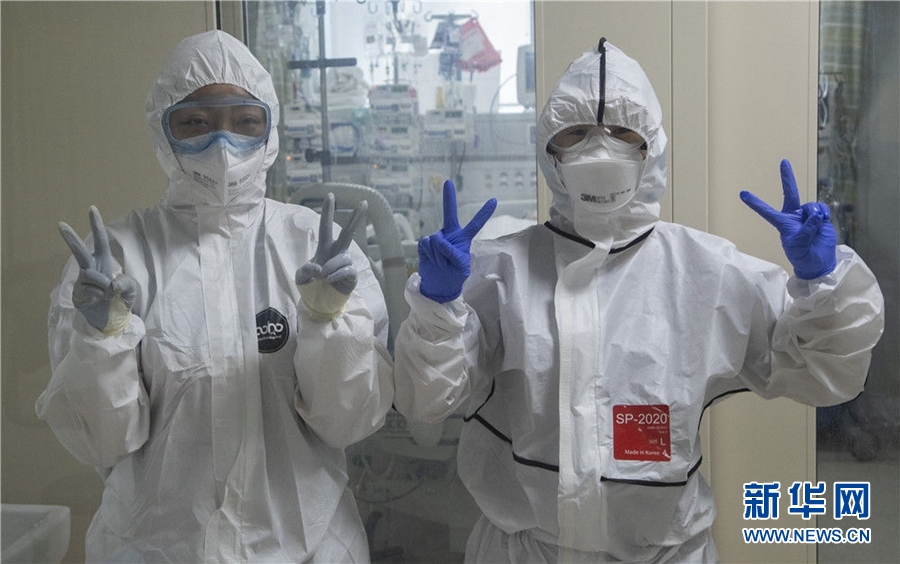
On March 18th, at Dongshan Hospital of Qiming University in Daegu, South Korea, medical staff made a victory gesture to reporters. Xinhua News Agency (photo by Sang Ho Lee)
In the bitter battle with the plague, the soldiers in white paid not only hard work, but even life.
"We won’t stop," said stella, president of the Italian Varese Medical Association. "We should be careful and stick to it." When he said this, stella’s clinic had run out of masks and gloves, and his town of Busto Alsi Qi ‘ao was the hardest hit area. Soon, stella was unfortunately infected with respiratory failure, and his life was fixed at the age of 67.

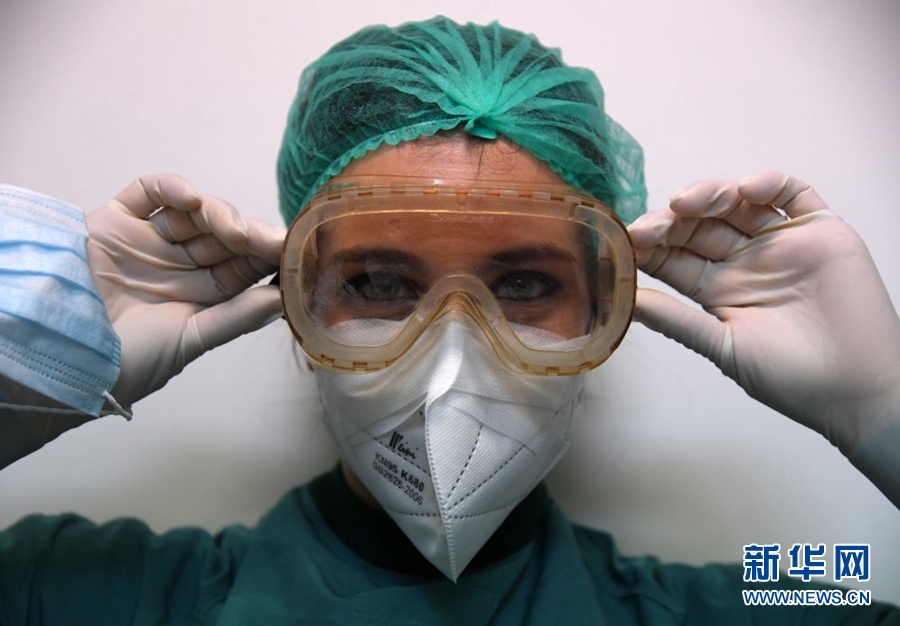
On April 12th, in Rome, the nurses in Santospirito Hospital wore protective equipment before entering COVID-19 ward. Xinhua News Agency (photo by Alberto Linglia)
According to the report of the National Federation of Italian Doctors on April 22nd, there were 144 medical staff killed in Italy due to the epidemic. According to data from the Italian Institute of Advanced Health Research, the number of infections among medical staff in this country accounts for about one tenth of the country. Even so, there are still a large number of doctors and nurses who take the initiative to go to the epidemic area. After the Italian civil protection department announced the formation of a support team, more than 7,900 medical and health professionals signed up within 24 hours.

On April 23, in Reading, England, the medical staff of the Royal Berkshire Hospital applauded outside the hospital. Since the outbreak of the COVID-19 epidemic, every Thursday night at 8 o’clock, the British people have applauded on the balcony, in front of the door or in front of the window to pay tribute to the medical staff. The medical staff in some hospitals also took time out of the hospital, thanking people for their support and applauding for themselves. Xinhua News Agency (photo by Tim Ireland)
Infection, death, fear brought by Covid-19, not fade away, but soldiers in white armor still choose to move forward.
"It is false to say that we are not afraid at all," said Cynthia Shatti, a nurse at Wilkins Hospital in Harare, Zimbabwe. "But this is a sacred profession, and public interests and professional ethics require us to stand up … We have no reason to retreat."
Protect the boat of life with one heart
In the face of the dangerous epidemic, the soldiers in white bravely rushed to kill and guarded the boat of human life. In ordinary families, they are also ordinary people with blood and tears, parents, children and husband and wife.

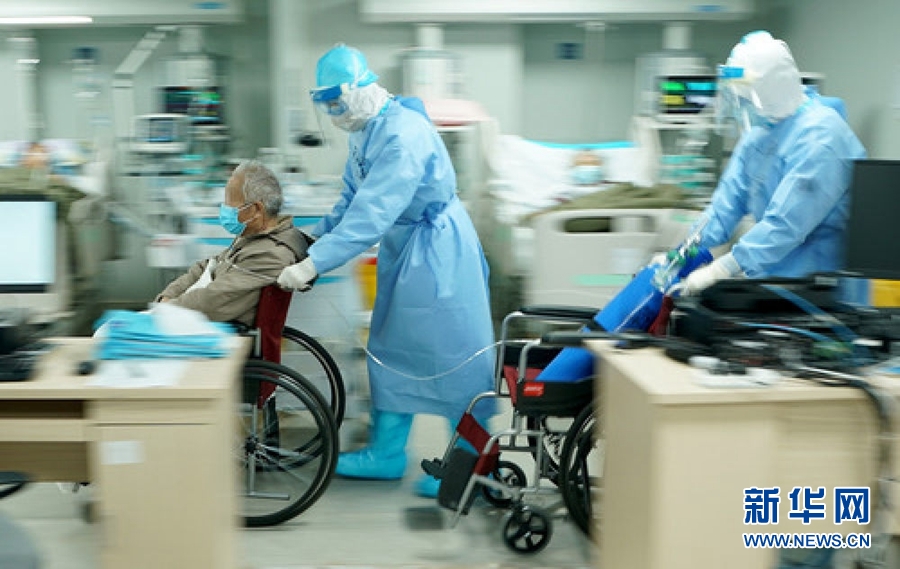
On March 20th, Song Liqiang (middle), deputy director of the First Department of Critical Care Medicine, Wuhan Huoshenshan Hospital, escorted 81-year-old critically ill patients from COVID-19 for CT examination. In order to ensure that the patient has sufficient oxygen supply, the doctor Hu Shizhen pushes the oxygen bottle with him. Xinhua News Agency reporter Wang Yuguo photo
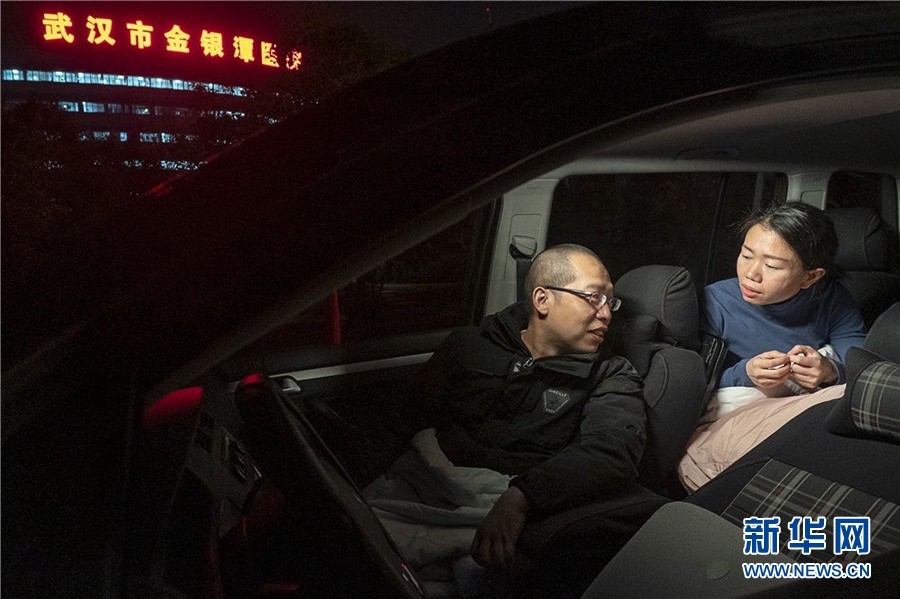
On March 3, late at night, outside Jinyintan Hospital in Wuhan, China.
In a car, Tu Shengjin and Cao Shan were leaning in the front and back rows, one reading a book, the other staring at the mobile phone, and they chatted from time to time.
The couple have spent nearly 40 nights in the car. An 11-year-old son can only be given to the elderly.

On the evening of February 22nd, Tu Shengjin (left) and Cao Shan were chatting in the car in Jinyintan Hospital. Xinhua News Agency reporter Xiong Qishe
Tu Shengjin, 44, is the deputy chief physician of the intensive isolation ward of Jinyintan Hospital. Cao Shan, 40, is a nurse in different wards of the same hospital.
On January 23, Wuhan closed the traffic outside the city, and soon the public transportation in the city stopped, so there were too many hospital employees who could not go home. In addition, the medical team who came to support it, the dormitory was full and the hotel room was tight. The couple made a decision: give the opportunity to other colleagues and sleep in the car by themselves.
After a period of time, the hospital informed that the hotel room was vacant nearby, but Tu Shengjin decided to spend the night in the car. "The hotel has to drive to the hospital for more than ten minutes. When it comes to rescue, it is counted by seconds. With this time, it is possible to pull the patient back from the death line! "
March 16th, French Oak Szitanyi Region.
Aurelian and Stefani, doctors and couples who are about to leave, send their children to grandparents’ home.
They are husband and wife and "comrades-in-arms". As a doctor, it is inevitable to have close contact with patients and face the risk of infection.
"The first batch of COVID-19 patients admitted to the hospital immediately, we are likely to be infected. The child asked us when to pick him up, and we didn’t know. " They said.
In the global anti-epidemic battlefield, it is countless Tu Shengjin, Cao Shan, Aurelian and Stefani who built a series of life berms with their flesh and blood, striving for more hope for patients.

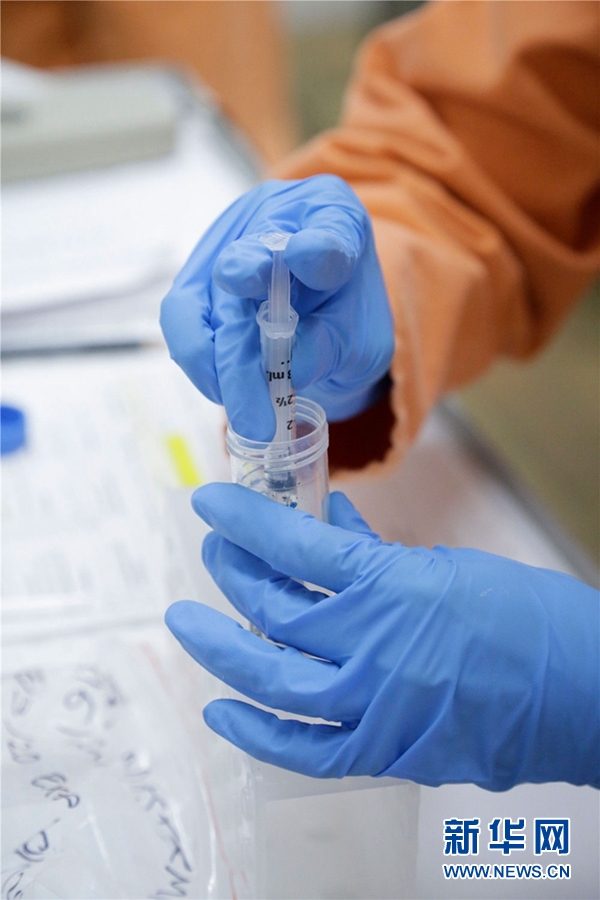
Photographs provided by the Commonwealth Scientific and Industrial Research Organization, Australia’s national scientific institution, on April 2nd showed that its scientists were conducting preclinical trials of candidate vaccines in Covid-19. Xinhua news agency

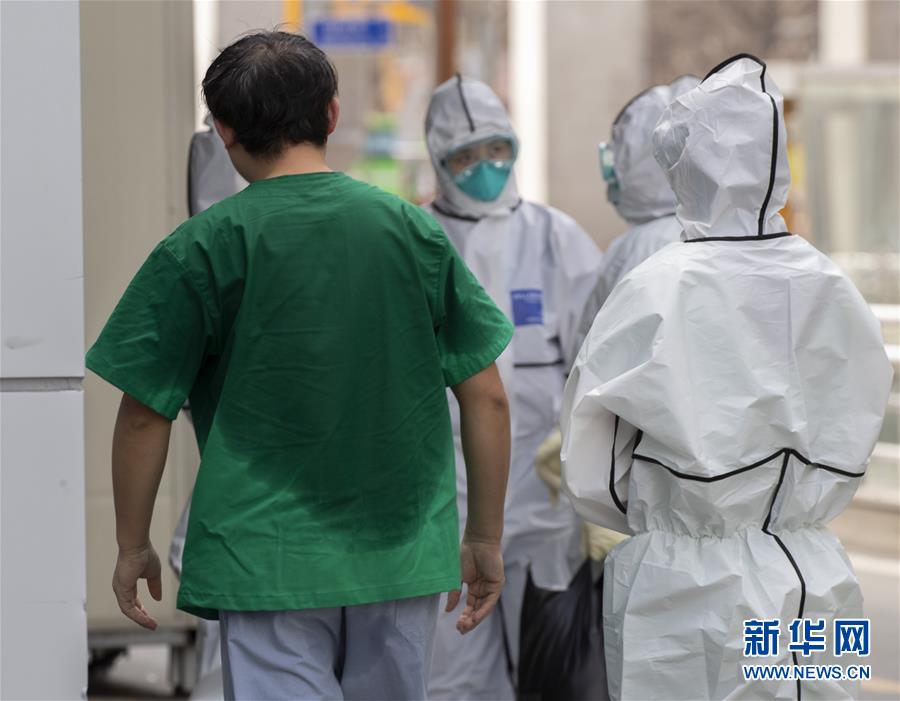
On March 15th, a medical worker’s shirt was soaked with sweat at Dongshan Hospital of Daegu Qiming University in South Korea. Xinhua News Agency (photo by Sang Ho Lee)
April 6, Jinan, Shandong, China.
Zhang Jingjing, who returned from the battlefield in Hubei, will never see her beloved husband and dear children again.
Zhang Jingjing is a nurse in charge of respiratory and critical care in Qilu Hospital of Shandong University, and she is also a member of the first batch of medical aid teams in Hubei Province. On March 21, she completed the task of supporting Hubei, and her isolation expired on April 5. At about 7 o’clock in the morning, she suddenly stopped her heart and died unfortunately. Her husband is now doing aid construction work in Sierra Leone thousands of miles away.
"I wish to protect this prosperous China with our youth," she wrote when she was in Hubei.
In every corner of the earth, those white soldiers who fought bravely against the virus are the light in the dark night, the lighthouse standing in the storm, and the indestructible "life number" in the stormy waves.

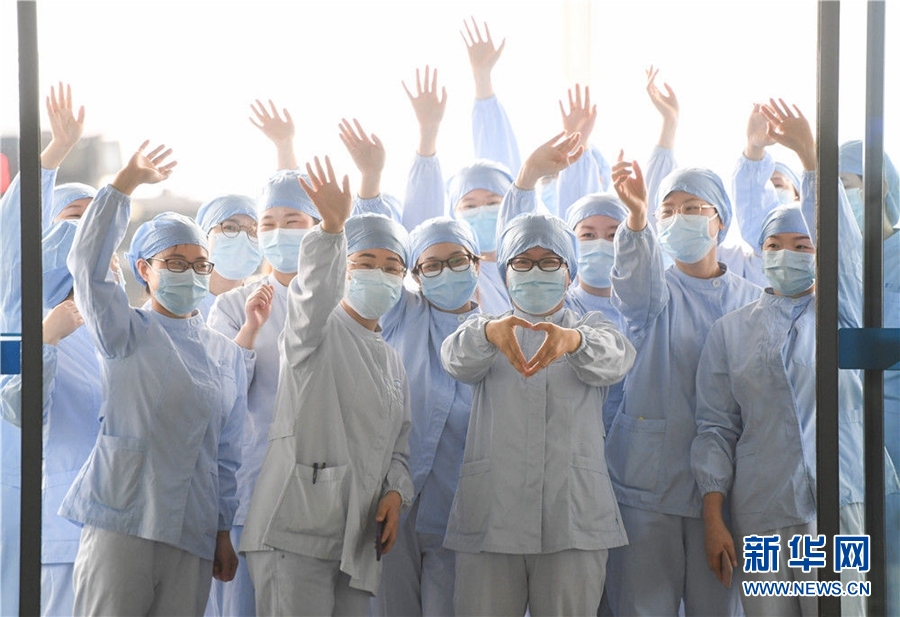
On March 23rd, some medical staff from the First Hospital of Wuhan saw off the 14th batch of Guangdong medical aid teams in Hubei at Wuhan Tianhe Airport. During the 14th Guangdong medical aid team in Wuhan, the whole organization took over four intensive care units in the First Hospital of Wuhan, and formed a deep friendship with the local medical staff in the hospital. Xinhua News Agency reporter Chen Yuhua photo
"Doctors have no boundaries" has great love.
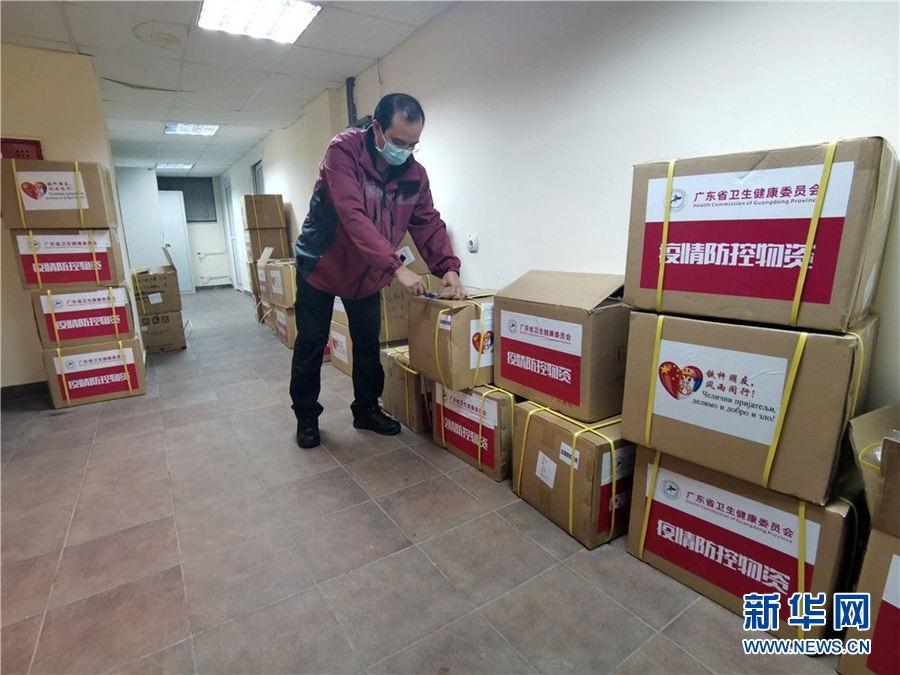
Visited 7 cities and 22 medical institutions, and held 15 exchange meetings and 9 lectures. This is travel itinerary after the China anti-epidemic medical expert group arrived in Serbia.
During the three weeks in Serbia, the members of the expert group did not take a day off, and almost traveled to all the cities where the epidemic occurred. "Get up at six o’clock every morning, return to the station at seven or eight in the evening, and finish the report. Generally, you can’t rest until late at night." Long Qisui, a member of the expert group and the first-level director of the AIDS Prevention and Control Institute of the Guangdong Provincial Center for Disease Control and Prevention, said.

On March 28th, China in Belgrade, the capital of Serbia, went to the residence of the Serbian anti-epidemic medical expert group. The expert group member Long Qisui arranged and counted the materials to prepare for the protective equipment used the next day. This is the work that he must do every night. Xinhua News Agency (Photo courtesy of the expert group)

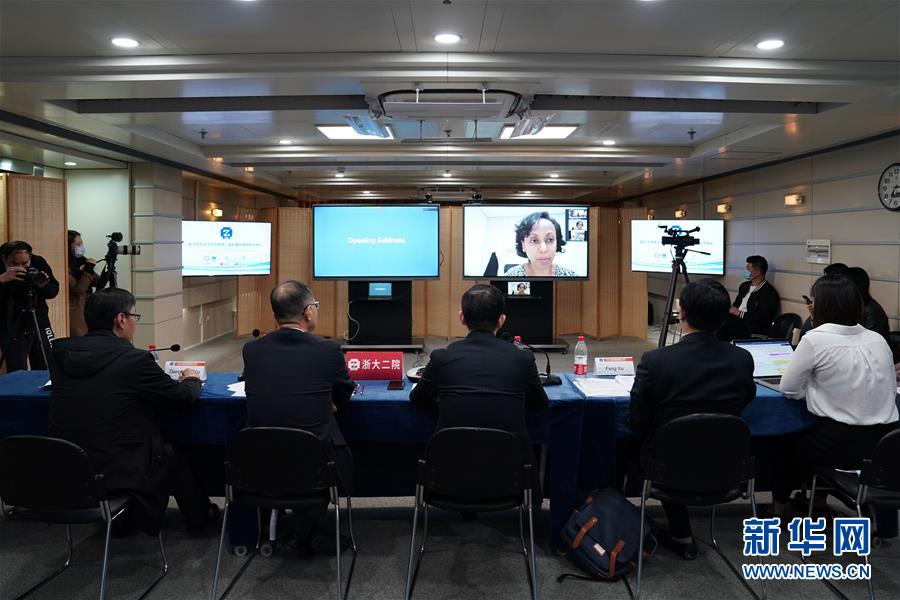
On April 10th, in Hangzhou, Zhejiang Province, Ethiopian Health Minister Leah tadesse had an online exchange with Chinese experts. On the same day, experts from the Second Affiliated Hospital of Zhejiang University School of Medicine and Ethiopian doctors exchanged experiences on prevention and treatment of COVID-19 online. Xinhua News Agency reporter Yin Xiaosheng photo
Insist on "four mornings and four concentrations", strengthen source control, expand testing scope, build shelter hospitals, and pay close attention to returnees … China medical experts’ suggestions were quickly transformed into important decision-making references. The epidemic prevention situation in Serbia is steadily improving.
From Africa to Latin America, from the Middle East to Southeast Asia, there are many "multinational doctors" like Long Qisui. So far, China has sent anti-epidemic medical experts to more than ten countries, including Iranian, Italian, Philippine, Russian and Ethiopian. They are not far from Wan Li, and they have traveled all over the world, devoted themselves to the great cause of the war and epidemic of all mankind, and conveyed the great love of "doctors have no boundaries".

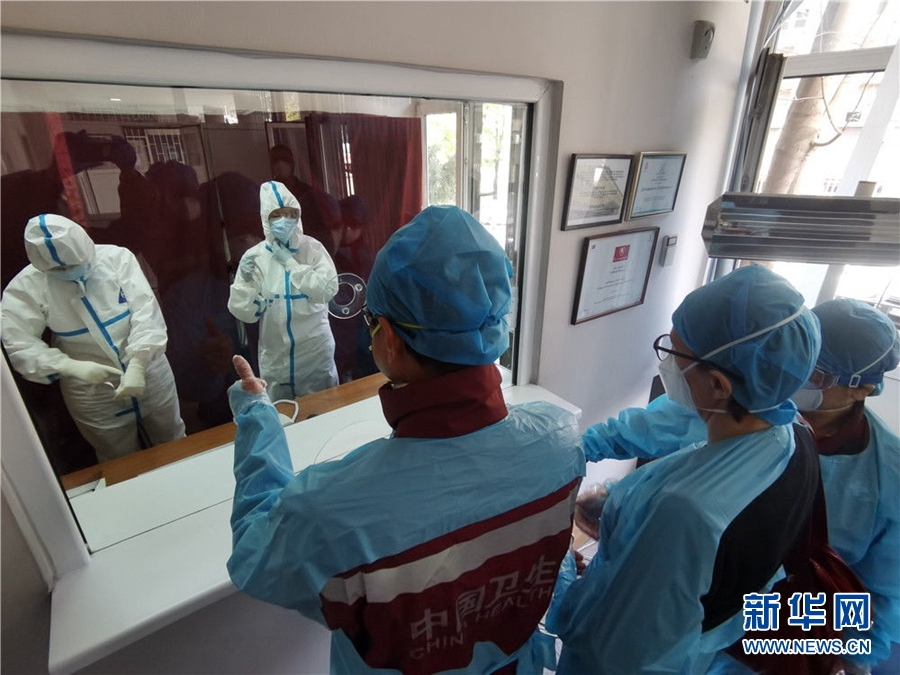
On April 11th, in Belgrade, the capital of Serbia, China visited an outpatient clinic in Belgrade, and praised the protection awareness of medical staff. Xinhua News Agency (Photo courtesy of China’s anti-epidemic medical expert group in Serbia)
"Their working hours are not measured in days, but in minutes." Sosambo, an interpreter accompanying China to the Cambodian medical team, said that Dr. China has been working in a state of intense tension. In the hospital, the expert group pays attention to the process: from patient admission and triage to triage and specimen sampling, every link should be carefully studied to determine the operating rules; In the virus detection laboratory, the expert group attaches great importance to methods: explaining in detail how to use automatic nucleic acid extractor, sterilizer and other equipment; In airports, railway stations and industrial parks, the expert group emphasizes standards: strict implementation of epidemic prevention regulations and operational norms for health inspection procedures, seating arrangements, disinfection operations, etc.
"Thanks a lot! Thank you, China’s relatives! Even if there is no good food, there is a song from my hometown for you and my relatives. " Knowing that the members of the expert group came from Guangxi, Cambodian people filled in new words in Cambodian with the melody of "Sister Liu" and gave them to white soldiers from China.

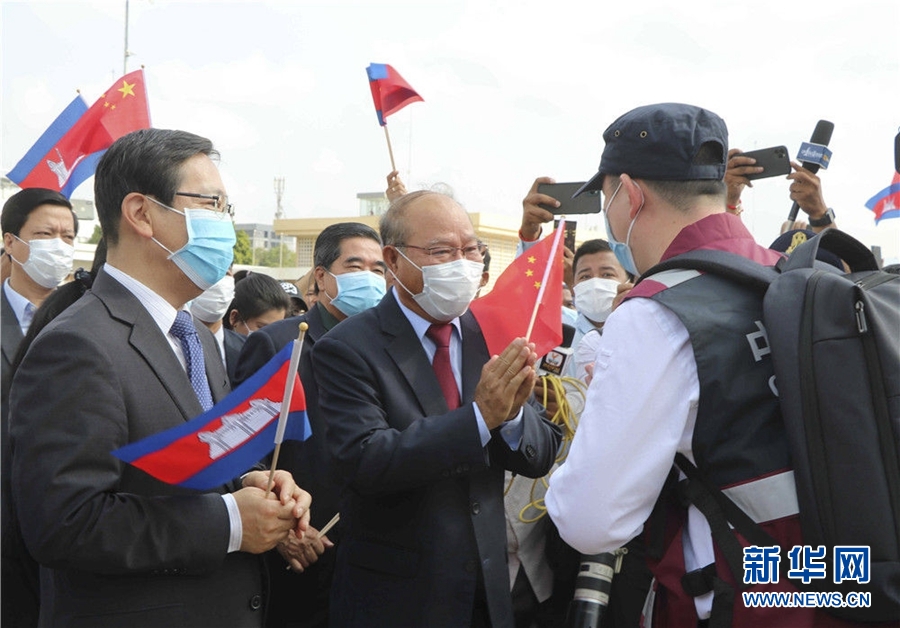
On March 23rd, in Phnom Penh, Cambodia’s capital, Cambodian Health Minister Manbenheng (centre) greeted China’s anti-epidemic medical expert group at the airport. Xinhua News Agency reporter Mao Pengfei photo
As a member of the medical aid team in Hubei Province, Pan Konghan, director of the Department of Critical Care Medicine in sir run run shaw hospital, immediately put himself into the next "battle" after returning to Zhejiang. This time, his battlefield is not a ward, but a conference room: an online video conference with the Rwandan health minister and doctors.
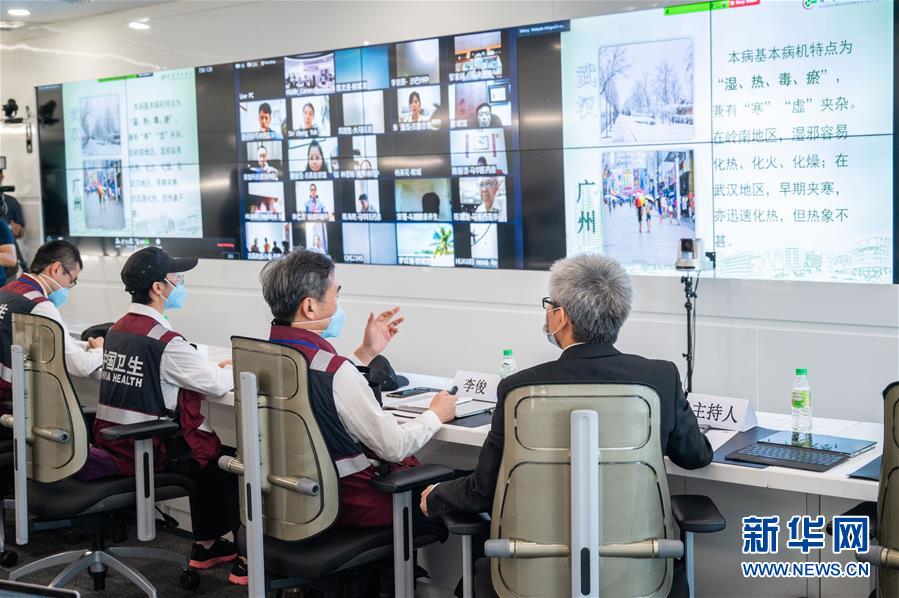
Through the Internet, medical workers from different countries have opened up a new joint battlefield and built a "bridge of clouds" for transnational communication. Doctors from Union Hospital of Huazhong University of Science and Technology shared their diagnosis and treatment plans with their Sri Lankan counterparts, medical experts from west china hospital discussed the treatment of severe patients with Italian experts, and medical experts from Shanghai Center for Disease Control and Prevention introduced China’s experience to their South African counterparts in detail from nine aspects … Since the outbreak, China has held nearly 100 video conferences of health experts with more than 150 countries and regions.

On April 22nd, in Kuala Lumpur, Malaysia, a medical expert group from China went to Malaysia to fight against epidemic diseases and made video connection with people from Chinese medicine circles all over Malaysia. Xinhua News Agency reporter Zhu Yushe
Busy figure, fearless retrogression, efficient cooperation and sincere mutual assistance, Chinese and foreign medical workers show the moral responsibility of internationalism to the world, and also interpret the true meaning of the concept of community of human destiny. Robert kuhn, chairman of the American Kuhn Foundation, said that the vision of a community of human destiny urges us to take action for common interests, which meets the needs of this turbulent era.
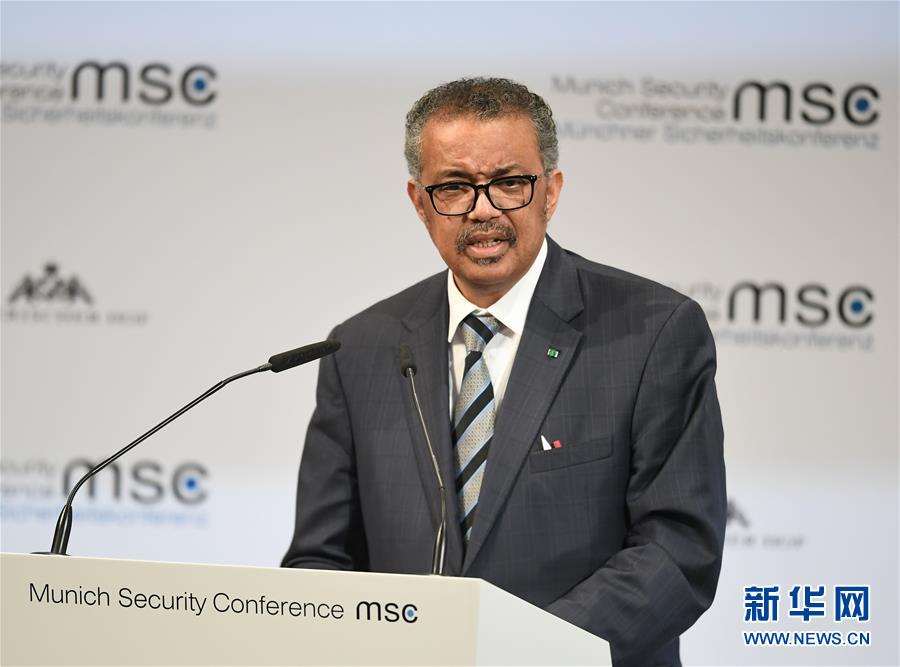
Tan Desai, Director-General of the World Health Organization, said: "The whole world is witnessing the important role of medical staff and their central role in the anti-epidemic process." Guarding life, the heart is the whole life. From the medical staff, more and more people read the power of unity and cooperation and understand the connotation of common destiny.

On February 15th, in Munich, Tedros Adhanom Ghebreyesus, Director-General of the World Health Organization, delivered a speech at the 56th Munich Security Conference. Xinhua News Agency reporter Yuyang photo
At this moment, the fighting continues. Towards the final victory, the global medical staff are still charging. Let’s pay tribute to the hero in the name of life! (Participating in reporters: Tang Ji, Geng Xuepeng, Hao Yalin, Guo Yang, Tian Ming, Zhang Yuliang, Mao Pengfei, Shi Zhongyu)

Recently, the Ministry of Education and the National Defense Mobilization Department of the Central Military Commission jointly issued the "Teaching Outline of Military Training for Senior High School Students" (hereinafter referred to as the "Outline"), clarifying that the military training teaching for senior high school students includes two parts: basic military knowledge and basic military skills. The teaching time is 7 to 14 days, with a total of 56 class hours of no less than 7 days. The assessment results are included in the students’ comprehensive quality evaluation files.
The "Outline" stipulates that the teaching content of military training for senior high school students includes compulsory training content and optional training content. Among them, there are 24 classes of basic military knowledge, 12 classes of compulsory training and 12 classes of elective training; There are 88 class hours of basic military skills, 44 class hours of compulsory training and 44 class hours of optional training.
In the arrangement of teaching subjects, the "Outline" stipulates that basic military knowledge includes the knowledge of the people’s army, modern national defense, services and arms, and on-the-spot teaching, while basic military skills include queue action, light weapons shooting, bombing, tactical action, fighting foundation and military sports, health and rescue, and map reading.
Encourage schools to actively offer school-based courses on military knowledge and skills training and teaching, and broaden the teaching content of military training.
In terms of the teaching team, the teachers who teach basic military knowledge are equipped by the school on a full-time and part-time basis, and the instructors who train basic military skills are the backbone of the active forces, reserve forces and militia. The school can hire retired soldiers to participate in the military training of students.
Under the wave of entrepreneurial innovation, what kind of groups are riding the waves? On August 14th, the Provincial Administration for Industry and Commerce issued the "Analysis Report on the Development of Private Enterprises in the Province", which sorted out the entrepreneurial groups of the "four new economies" for the first time. The report shows that in 2018, the business environment in our province continued to improve, and young people became the main force of investment and industry.
East Lake High-tech "Four New Economies" entrepreneurs rank first in the province.
"The tablets and laptops that are popular now will disappear in the future because of it." In the laboratory of Wuhan Shangsai Optoelectronic Company, Mu Guangyuan, the founder and CEO, gently shook the white powder in the glass bottle, saying that this powder is the key material of the screen. It used to be imported from foreign companies, but now it has been reversed. The products independently developed by the company are exported to foreign countries.
Wuhan Shangsai Optoelectronic Technology Co., Ltd. is a global supplier of OLED (Organic Light Emitting Diode) core materials, mainly through scientific and technological innovation to break the international technology monopoly and enter the international market.
Mu Guangyuan said that OLED has the advantages of self-luminescence, wide viewing angle, low power consumption and extremely high reaction speed, and has broad market prospects. However, most of the related technologies are mastered by Japanese, Korean, European and other enterprises. Although China has a certain OLED industry foundation, its industrial chain is still not perfect, so it is urgent to develop OLED materials.
Through the independent research and development of the team, last year, Shangsai team won the gold medal in the third China "internet plus" University Student Innovation and Entrepreneurship Competition with the development of new OLED materials, and it is currently in the process of industrialization.
According to incomplete statistics, as of the first half of the year, there were 63,371 private enterprises in the "four new economies" in the province, including 25,471 new technology enterprises, 27,233 new industries, 10,155 new formats and 512 new models. In the regional division of "Four New Economies", there are 10,084 "Four New Economies" enterprises in Wuhan Donghu High-tech Zone, accounting for 16% of the province’s "Four New Economies", ranking first in the province.
From the perspective of industry distribution, information transmission software and information technology service industry have become one of the fastest rising industries.
Groups under the age of 40 become the main force of entrepreneurship
Shirts and trousers, talking to audience Kan Kan. For Wang Xingze, born in 1989, these "listeners" are sometimes students and sometimes customers.
Undoubtedly, Wang Xingze is regarded as a "schoolmaster" by everyone, and he has an academic resume of scientific research all the way: he was sent to Peking University from Huanggang Middle School, and successively obtained six master’s and doctoral degrees from MIT, Cambridge University and Stanford University, and served as a senior engineer of computer vision in Silicon Valley and an artificial intelligence scientist on Wall Street. Less than 30 years old, he is already a professor at the School of Physics, Huazhong University of Science and Technology.
In August 2017, Wang Xingze registered and established Helian Technology Co., Ltd. in Wuhan, with the main direction of holographic full-frequency machine vision system.
"Simply put, it is to further improve artificial intelligence through Optics Valley photoelectric technology, which can be applied to unmanned driving, industrial testing and other fields." Wang Xingze said that since its establishment, the company has received more than 100 million yuan in financing from many institutions such as Sequoia Capital, Baidu Venture Capital and Lenovo Star.
The relevant person in charge of industrial and commercial registration Branch said that with the increasing efforts of governments at all levels to promote "mass entrepreneurship and innovation", the enthusiasm of the younger generation for entrepreneurial innovation has been constantly stimulated.
By the end of last year, according to the age structure of newly established private entrepreneurs, entrepreneurs under 40 accounted for 55%, entrepreneurs aged 40 to 60 accounted for 40.95%, and entrepreneurs over 60 accounted for 4.05%. Compared with the age structure of entrepreneurs in 2016 and 2015, the number of entrepreneurs under 40 increased by 74,400 and 135,400 respectively. The most dynamic and creative group under 40 has gradually become the main force of entrepreneurship.
The data shows that entrepreneurs under the age of 40 prefer high-tech industries such as information transmission, software and information technology services, scientific research and technical services; Entrepreneurs over the age of 40 focus on traditional economic industries such as manufacturing, agriculture, forestry, animal husbandry and fishery.
Chen Zhongbin, an associate professor at the School of Economics and Management of Wuhan University, said that there are many colleges and universities in Hubei, and the support for young people’s employment and entrepreneurship has been increasing in recent years. In particular, a series of favorable policies such as the "Million College Students Studying in China Project" have been introduced, and young people’s willingness to start businesses and innovate in Hubei is even stronger.
Chen Zhongbin said that for college students, academics are important, but academics and entrepreneurial innovation do not conflict, but complement each other. College students should not only talk about entrepreneurial innovation, but also dare to practice and lay a solid foundation for future integration with society.
Entrepreneurship is a gender-free movement.
Elegance and intellectuality are the first impressions left by Wei Jun to many people. After graduating from Huazhong Agricultural University, she obtained a doctorate in developmental biology and stem cell biology in the UK, and entered famous universities and scientific research institutions such as Cambridge University in the UK to engage in research on the application of gene editing stem cells.
In 2017, Wei Jun returned to China with his many years’ research achievement "Induced Pluripotent Stem Cell Medical Application Project" and founded Wuhan Ruijian Pharmaceutical Technology Co., Ltd., hoping to care for more people’s health with the help of the power of induced pluripotent stem cell technology (iPS).
In recent years, female entrepreneurs have gradually grown into an important force in entrepreneurial groups. Judging from the composition of shareholders of newly established private enterprises from 2015 to 2017, the number of female entrepreneurs in the past three years was 138,200, 165,800 and 200,500, respectively, accounting for 33.66%, 32.80% and 33.31% of the shareholders of newly established private enterprises in that year, which basically remained at about 30%.
Female entrepreneurs are mainly concentrated in wholesale and retail, leasing and business services, manufacturing, scientific research and technical services, construction and other industries, accounting for 36.84%, 17.38%, 7.38%, 7.11% and 6.53% of female entrepreneurial groups respectively.
According to the analysis of relevant persons, there is not much difference between the industries where women entrepreneurs are concentrated and those of newly established private enterprises as a whole, which shows to some extent that women entrepreneurs do not choose industries with fewer men to avoid competition because of gender differences.
Wei Jun said, "Entrepreneurship will not produce different success criteria because of the gender of the founders. Entrepreneurship is a’ gender-free movement’." She admits that although she has encountered many difficulties in the process of starting a business, she also feels the increasingly perfect entrepreneurial environment and believes that the difficulties will be resolved. (Reporter Jess Zhang)
Red Net News October 20 th(Correspondent Peng Binbin) Mr. Li (pseudonym) is a big truck driver. He is 35 years old and has been suffering from fatigue, chest pain and palpitation since early September. He mistakenly thought it was overwork and didn’t attract attention. On October 12, Mr. Li’s symptoms suddenly worsened, and his chest pain made him unable to sleep. He was rushed to the Cardiovascular Rehabilitation Department of the Second People’s Hospital of Hunan Province for treatment.
Immediately, Mr. Li was diagnosed with coronary heart disease, and after a week of active treatment, the symptoms such as chest pain and palpitation were obviously relieved. "Mr. Li himself suffers from diabetes, hypertension, overwork, mental stress, obesity, etc. He is a high-risk group of coronary heart disease, which can easily lead to sudden death once he gets sick."
Coronary artery (coronary artery) is an artery that supplies blood to the heart. When coronary artery atherosclerosis causes lumen stenosis or occlusion, it leads to myocardial ischemia, hypoxia or necrosis, which in turn leads to chest pain, chest tightness and other discomfort. This heart disease is called coronary heart disease.
"More than 80% of the causes of sudden death are caused by heart, and the common one is coronary heart disease, which is coronary atherosclerotic heart disease". According to the statistics of National Cardiovascular Center, the number of sudden cardiac death in China is as high as 550,000 every year, which is equivalent to one person dying of sudden cardiac death every minute, and 43% of them are under 40 years old. "The cause of the high mortality rate of people under 40 years old is related to the stress, chronic fatigue and the neglect of disease at that age, so once the disease occurs, it is more dangerous than the elderly."
Xing Zuzhong, director and chief physician of Cardiovascular Rehabilitation of the Second People’s Hospital of Hunan Province, said that the main risk factors for coronary heart disease are age, sex, dyslipidemia, hypertension, smoking, diabetes, abnormal glucose tolerance and obesity. Therefore, preventive measures should be taken, such as quitting smoking and drinking, improving lifestyle, including controlling weight, increasing exercise, limiting sodium intake, etc., controlling blood pressure below 140/90mmHg, reducing blood fat, stabilizing plaque and preventing platelet aggregation.
"Once you find one of the six symptoms, such as palpitation, acute dyspnea, chest pain, dizziness and even fainting, chest tightness, and blackness in front of your eyes, you should be highly alert to sudden cardiac death." Xing Zuzhong reminded that it is easy to get tired, the left side of your back, your arms and teeth have unexplained pain, your lips and nails are purple, and your lower limbs are edema. It may also be a "distress signal" sent by your heart. When you have these symptoms, you should check them in time to prevent accidents.
Since ancient times, there has been a saying in China that "carrying a vanilla bag is not afraid of five pests". After the outbreak of COVID-19, Chinese medicine colleges and medical units in Shanghai, Nanjing, Guangzhou and other places have worked out the prescription of epidemic prevention sachets according to the physical characteristics of local residents, and rushed to make sachets. The Guangzhou medical team also brought the sachet into Jianghan Fangcang Hospital in Wuhan, and the patients praised it.
Can Chinese herbal sachets prevent epidemic? So amazing? What principle?
These drugs are hidden in the sachet of traditional Chinese medicine
COVID-19 belongs to the category of "epidemic disease" in traditional Chinese medicine, and the disease is caused by the feeling of "epidemic disease".
The traditional Chinese medicine in the epidemic prevention sachet is mainly aromatic and dampness-eliminating, which has the effects of exorcising evil spirits and strengthening the body resistance.
The traditional medicine team of the Second People’s Hospital of Guangdong Province entered Wuhan Jianghan Fangcang Hospital. After clinical observation, the traditional Chinese medicines such as Rhizoma Atractylodis, Notopterygii Rhizoma, Bupleuri Radix, Radix et Rhizoma Rhei, Herba Asari, Evodia rutaecarpa, Eupatorium, Folium Artemisiae Argyi, and Herba Menthae were formulated to form an epidemic prevention sachet, so as to play the roles of aromatic expelling filth, invigorating spleen and regulating stomach, regulating qi and relieving depression, inducing resuscitation, expelling toxin and killing insects.
The prescription of epidemic prevention sachet published by Zhou Zhongying, a master of traditional Chinese medicine, contains seven kinds of traditional Chinese medicines, such as Pogostemon cablin, Atractylodes rhizome, Angelica dahurica, Amomum tsaoko, Acorus calamus, Folium Artemisiae Argyi and Borneolum Syntheticum, with emphasis on removing filth, removing turbidity and detoxifying.
Yuyao Hospital of Traditional Chinese Medicine in Zhejiang Province has many years’ experience in using anti-flu sachets, and has also drawn up sachets composed of 14 Chinese medicines, including Atractylodes rhizome, Notopterygium root, honeysuckle flower, angelica dahurica, Amomum tsaoko and borneol.
Chinese herbal sachet can kill virus and inhibit bacteria.

Modern research believes that the fragrant smell of Chinese herbal medicines in sachets can form a high-concentration microenvironment around the human body, which can purify the air, kill viruses and inhibit bacteria. Modern research shows that traditional Chinese medicines with aromatic smell, such as Folium Artemisiae Argyi and Rhizoma Atractylodis, have a good killing effect on bacteria in the air.
A study shows that Chinese herbal sachets can reduce the number of Staphylococcus aureus, Pseudomonas aeruginosa, Escherichia coli and Candida albicans in the air. In addition to air disinfection and antibacterial, Rhizoma Atractylodis also has anti-inflammatory, gastrointestinal motility promoting and gastric emptying functions. The volatile oil of Eupatorium odoratum contains cymene, nerolidol acetate and 5-methyl thymol B, which can directly inhibit influenza virus. The compatibility of Radix Angelicae Dahuricae and Radix Saposhnikoviae has strong antiviral activity and can effectively kill respiratory syncytial virus. Pogostemon cablin oil in Pogostemon cablin has broad-spectrum antiviral effect, which can kill or inhibit respiratory syncytial virus, adenovirus, coxsackie virus and influenza A virus. The volatile oil of Schizonepeta tenuifolia can resist influenza A virus.
Epidemic prevention mechanism of traditional Chinese medicine sachet
Traditional Chinese medicines in sachets generally have a fragrant smell. By using their functions of "dredging meridians, dredging collaterals, inducing resuscitation and penetrating bones", the meridian system of zang-fu organs can be dredged through oral and nasal inhalation and skin and meridian point absorption, and the human body can be adjusted as a whole, thus playing the role of avoiding filth and turbidity and preventing diseases.
Through clinical trials and animal experiments, scientists have found that the human respiratory mucosa can secrete more immunologically active substances — — Secretory immunoglobulin A(SIgA) and immunoglobulin G(IgG). These immunoreactive substances have been found to play a protective role in the body’s immunity, which can effectively resist bacteria and viruses. SIgA is the main antibody in human mucosal immunity, which can inhibit the growth and reproduction of pathogenic bacteria in respiratory mucosa, thus reducing the probability of colds and respiratory related infectious diseases. Some experiments also found that the therapeutic effect of aerosol inhalation of SIgA-containing preparations on pneumonia in children is better than that of aerosol therapy with antibiotics.
Chinese herbal sachet can prevent and treat colds.
Traditional Chinese medicine sachet plays a role in preventing and treating colds mainly through strengthening the body resistance and eliminating pathogenic factors.
At present, the research shows that Chinese herbal sachet can enhance the immune function of people with low immunity. In addition, the aromatic Chinese medicine in the sachet will stimulate the brain to secrete and release hormones with sedative effect, which will relieve people’s stress, thus improving the quality of sleep and enhancing the healthy qi of the human body.
Traditional Chinese medicine sachets commonly used to prevent and treat colds are mainly aromatic herbs such as angelica dahurica, mint, perilla leaf, agastache rugosa and Schizonepeta tenuifolia.
Usage of traditional Chinese medicine sachet

It is recommended to place the sachet of traditional Chinese medicine in the lining of clothes, office, bedside, pillow or wardrobe, sniff it from time to time, and replace the contents of traditional Chinese medicine after 2 weeks or the smell disappears, and use it continuously for more than 2 months.

1. It can be used by adults and children, especially for those who are prone to colds due to physical weakness.
2, pregnant women are prohibited, and people with skin allergies should use it with caution.
3. If there is a rash or itching during use, stop using it.