The 2022 World Women’s Volleyball League was released in groups! The new China women’s volleyball team will be unveiled.

  On December 8th, FIVB announced the date, grouping and host city of the 2022 World Women’s Volleyball League. Unlike the last national women’s volleyball league, which concentrated in Italy, this competition adopted a new competition system. Sixteen teams will be divided into two groups, with 8 teams in each group. It can be predicted that the World Women’s Volleyball League will be the first show of the new China Women’s Volleyball Team.

  The stage of the 2022 World Women’s Volleyball League Sub-competition will be held from May 31, 2022 to July 3, 2022, with a total of 6 stations, and no city in China will host the sub-competition; The finals will be held from July 13th to 17th, 2022, and the host city is to be determined.

  In the first week (May 31 to June 5, 2022), the China women’s volleyball team will go to Ankara, Turkey, and the opponents in the same group will be Russian team, Italian team, Dutch team, Belgian team, Serbian team and Thailand team. The other group was held in Posil City, USA, with teams from the United States, Japan, South Korea, Brazil, Dominica, Germany, Poland and Canada. Judging from the grouping in the first week, China women’s volleyball team will be strongly challenged by Italian team, Serbian team and Russian team, and the newly combined China women’s volleyball team will be put to the test.

  In the second week (June 14-19, 2022), China women’s volleyball team will go to Pasay, Philippines to participate in the competition, with the same group of opponents as the United States, Russia, Belgium, Japan, Poland, Thailand and Canada; The other group was held in Brasilia, Brazil. Besides the host Brazil, there were Turkey, Dominica, Netherlands, Italy, Germany, Serbia and South Korea.

  In the third week (from June 28th to July 3rd, 2022), China women’s volleyball team will go to Ufa, Russia, and the opponents in the same group are Russia, Brazil, Dominica, Italy, Poland, South Korea and Thailand. The other group of competitions was held in Calgary, Canada. The participating teams were Canada, the United States, Turkey, Japan, the Netherlands, Belgium, Germany and Serbia. In the third week, for China women’s volleyball team, it will accept the challenges from Brazil, Italy and Russia.

Supreme Leader and Mother River

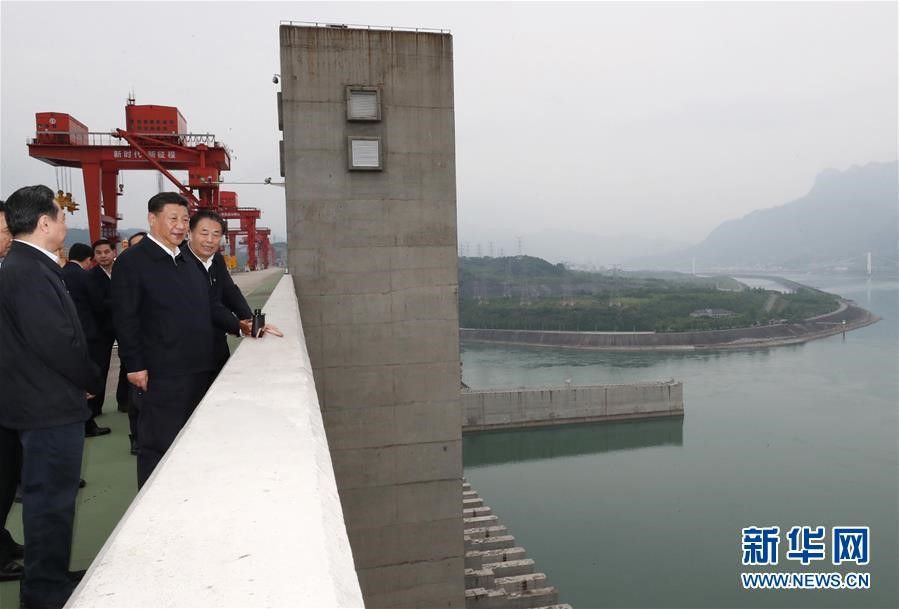
  On April 24, 2018, the supreme leader was inspecting the Three Gorges Dam. Source: Xinhua News Agency

  CCTV News:"The Yangtze River is the mother river of the Chinese nation and must be protected."

  On April 24, 2018, the supreme leader went deep into Hubei to inspect the ecological environment around the Three Gorges Project and the dam area. He looked up and saw the majestic dam, the rippling river and the lush river bank.

  The Yangtze River, the cradle of the Chinese nation, is the longest river in China and our mother river. For thousands of years, the Yangtze River basin has been linked by water, connecting the upstream and downstream, the left and right banks and the main tributaries, forming a large economic and social system. In addition, the Yangtze River is an important link between the Silk Road Economic Belt and the 21st Century Maritime Silk Road.

  For a long time, the development and planning of "Mother River" has always touched the heart of the supreme leader.

  Play the "Yangtze River Concerto"
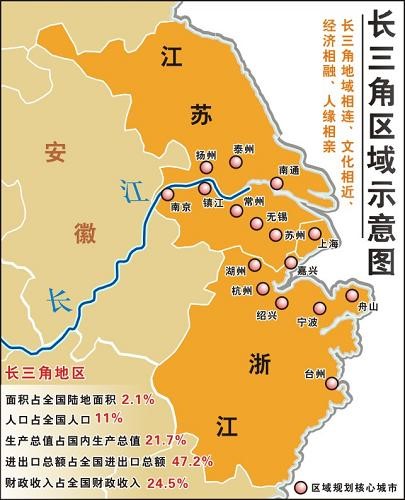
  Chart: Schematic Diagram of the Yangtze River Delta Region Source: Xinhua News Agency

  From Bashan Shushui to Jiangnan Water Town, the Yangtze River basin is outstanding, edifying the elites of past dynasties and nourishing countless people.

  As early as when he was working in Zhejiang, the Supreme Leader put forward the "Eighth Five-Year Strategy" in view of the natural geographical advantages of Zhejiang’s long delta, explicitly demanding that "Zhejiang’s geographical advantages should be further developed, and Shanghai should take the initiative to participate in exchanges and cooperation in the Yangtze River Delta region, so as to continuously improve the level of opening up at home and abroad".

  The Supreme Leader emphasized that jumping out of Zhejiang to develop Zhejiang is an inevitable requirement for Zhejiang’s economic development and a strategic choice for Zhejiang to achieve greater development from a high starting point.

  Under the care and guidance of the supreme leader, Zhejiang Province plans to build an industrial belt and urban agglomeration around Hangzhou Bay, actively promotes regional coordinated development, and accelerates the rise of the Yangtze River Delta urban agglomeration led by Shanghai.
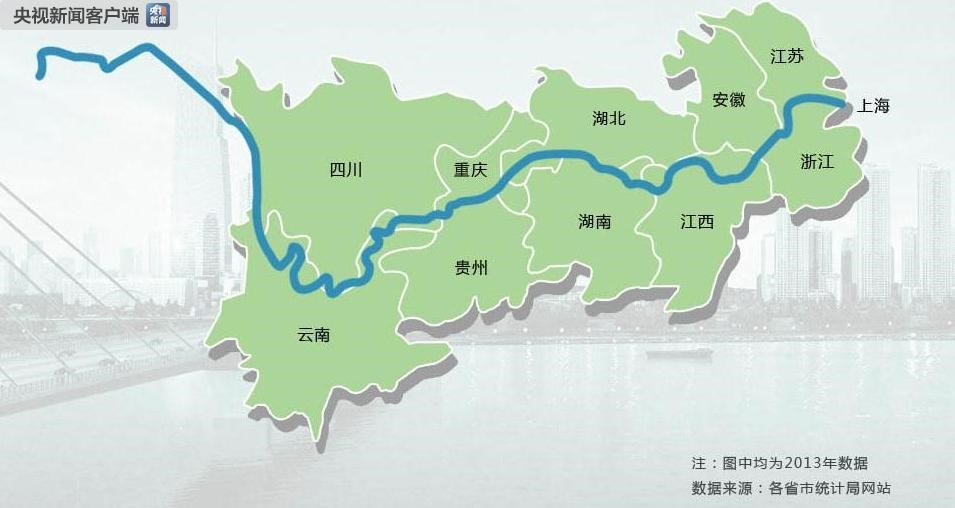
  Schematic diagram of the Yangtze River Economic Belt Source: China Government Network

  For more than a decade, the pace of Zhejiang’s comprehensive integration into the Yangtze River Delta has never stopped. In the Yangtze River Economic Belt, capital, commodities, technology, talents and other elements from Zhejiang are surging. From the Yangtze River Delta to the Yangtze River Economic Belt, Zhejiang took the initiative to connect and actively integrate, and played a powerful and distant "Yangtze River Concerto".
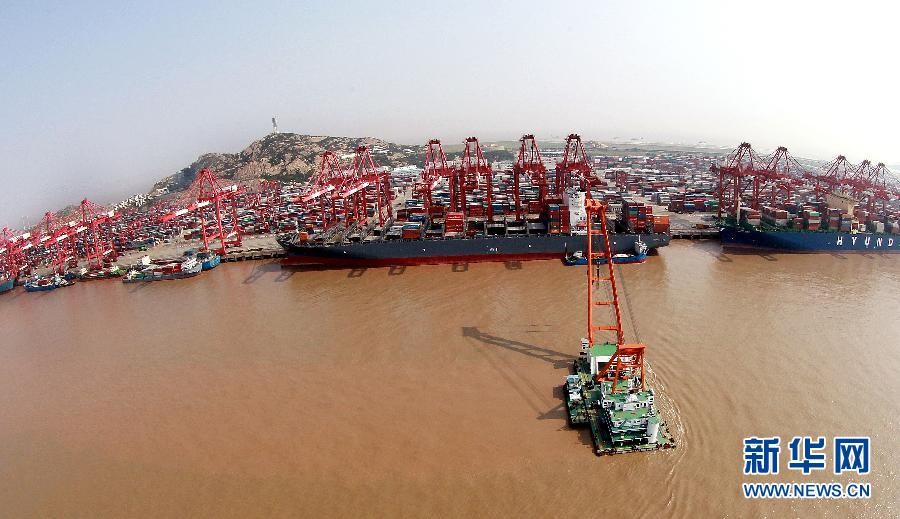
  Shanghai Free Trade Zone Waigaoqiao Container Terminal Source: Xinhua News Agency

  Plan the Yangtze River estuary

  The rolling Yangtze River is a golden waterway, and Shanghai, located at the mouth of the Yangtze River, undoubtedly plays a leading role in the cooperation and exchanges in the Yangtze River Delta region.

  In May, 2007, the Supreme Leader had just been working in Shanghai for two months. When planning the future development of Shanghai, he put forward that we must focus on "four in". One of them is to "think and plan in the overall arrangement of the country for the regional development of the Yangtze River Delta".

  In August of the same year, the Shanghai Municipal Committee held a study meeting of the Standing Committee. At the meeting, the top leaders pointed out that it is necessary to adhere to regional coordinated development, promote regional cooperation, consciously put the service of the Yangtze River Delta in a more prominent position, strengthen cooperation and exchanges between Jiangsu, Zhejiang and Shanghai, give play to the role of the market in allocating port and shipping resources, and strive to build a Yangtze River Delta port group with clear levels, reasonable division of labor and complementary advantages; Actively promote the construction of the "golden waterway" of the Yangtze River, and make greater contributions to serving the Yangtze River basin, serving the whole country, and promoting the coordinated development of the East, China and the West.

  Look at the overall situation and plan for the future.

  Under the leadership of the supreme leader, Shanghai has actively participated in and actively served the development of the Yangtze River Delta region and the construction of the Yangtze River Economic Belt for more than a decade, setting up a free trade zone, deepening reform, expanding opening up and building channels.

  During the "Thirteenth Five-Year Plan" period, Shanghai will promote the landing of major projects and realize multi-point connection and organic integration with the comprehensive transportation network of the Yangtze River Economic Belt; Strengthen the opening and cooperation of river basins and establish a cooperation mechanism for customs clearance in the Yangtze River Economic Belt; Enhance innovation ability and promote regional industrial transformation and upgrading.
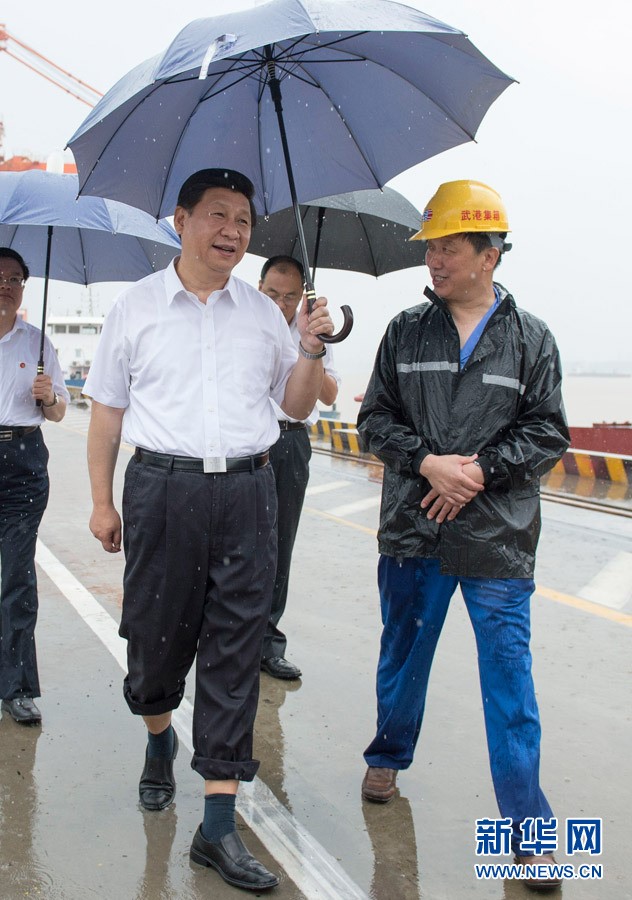
 

  On July 21, 2013, the Supreme Leader visited Wuhan. As soon as he got off the plane, he came to Yangluo Container Port Area of Wuhan Xingang in the rain. Source: Xinhua News Agency

  Visit the port area along the Yangtze River in the rain.

  Since assuming the post of general secretary, the supreme leader has braved the severe cold and summer heat to inspect the Yangtze River basin many times, held symposiums, reviewed relevant plans, and deployed and implemented the strategy of the Yangtze River Economic Belt.

  It was an unusual summer-in July of 2013, a torrential rain came unexpectedly in Xingang, Wuhan, and the Yangtze River became more and more misty.

  As soon as the supreme leader got off the plane, he braved the rain and went straight to Yangluo Container Port Area in Wuhan Xingang, located on the north bank of the Yangtze River. It rained heavily, and the accumulated water didn’t cross the foot. In the storm, he rolled up his trouser legs, held an umbrella and asked while watching. The shirt was wet by the rain, but the supreme leader still focused on the local production situation. He stressed that the Yangtze River basin should strengthen cooperation, give play to the role of inland navigation, and turn the whole basin into a golden waterway.

  Under the care and guidance of the supreme leader, in March 2014, "Building the Yangtze River Economic Belt by Relying on the Golden Waterway" was written into the Government Work Report. In September 2014, the State Council’s Guiding Opinions on Promoting the Development of the Yangtze River Economic Belt by Relying on the Golden Waterway was officially released.

  The Yangtze River Economic Belt starts from Shanghai in the east and reaches Yunnan in the west, covering 11 provinces and cities such as Shanghai, Jiangsu, Zhejiang, Anhui, Jiangxi, Hubei, Hunan, Chongqing, Sichuan, Yunnan and Guizhou, radiating about 600 million people and covering an area of about 2.05 million square kilometers, with GDP accounting for 45% of the national total. Promoting the development of the Yangtze River Economic Belt is an important regional development strategy of the country, and it is a new strategic chess game that is balanced vertically and horizontally and related to the coordinated development of the eastern, central and western regions.
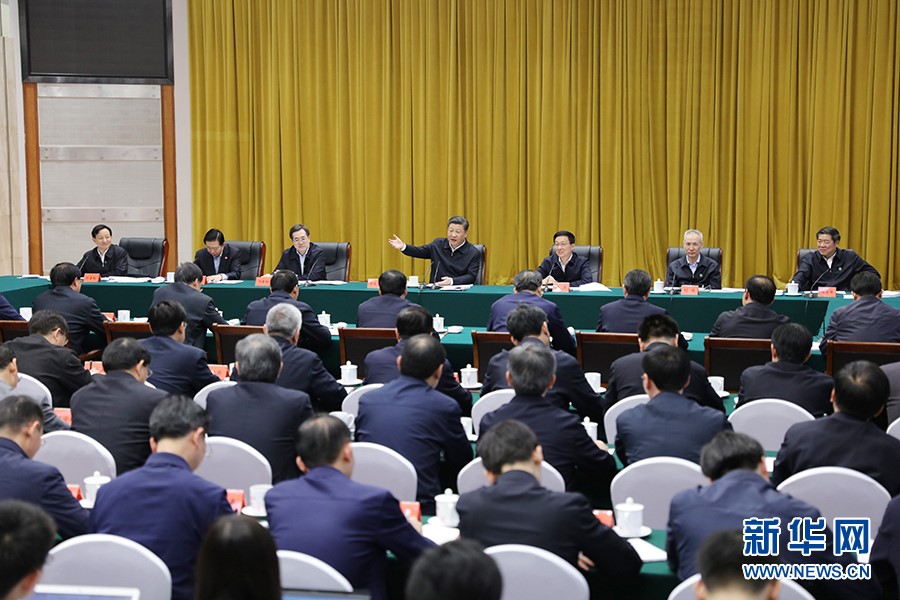
  On April 26, 2018, the Supreme Leader hosted a symposium in Wuhan to further promote the development of the Yangtze River Economic Belt. Source: Xinhua News Agency

  Planning the future development of the Yangtze River

  January 5, 2016 is a milestone in the development history of the Yangtze River Economic Belt.

  Just after New Year’s Day, the mountain city in winter is warm in the cold. From January 4th to 6th, the Supreme Leader came to Orchard Port in Liangjiang New Area of Chongqing, walked to the dock front platform, inspected the Yangtze River shipping and port loading and unloading operations, listened to the construction of the shipping center in the upper reaches of the Yangtze River, and told operators, cargo ship owners and port planning and construction personnel to build, manage and operate the port well.

  On January 5, 2016, the Supreme Leader held a symposium in Chongqing to promote the development of the Yangtze River Economic Belt, pointing out the direction and setting the tone for the development of the Yangtze River Economic Belt: "At present and for a long time to come, we should put the restoration of the ecological environment of the Yangtze River in an overwhelming position, work together for great protection and not engage in great development."

  As a basin economy, the Yangtze River Economic Belt involves water, roads, ports, shores, production, cities, biology, wetlands, environment and other aspects. It is a whole and must be comprehensively grasped and planned.

  In March of the same year, the Political Bureau of the Central Committee held a meeting to review and approve the Outline of the Yangtze River Economic Belt Development Plan. In 2017, "Promoting the development of the Yangtze River Economic Belt with the guidance of joint protection and no development" was solemnly written into the report of the 19th National Congress.

  In 2018, in the spring and April, the green is full of Jingchu. The supreme leader crossed Jingzhou and entered Yueyang to develop the Yangtze River Economic Belt, further unified his thinking, and investigated whether the requirements of "jointly protecting and not developing" were put in place; Through on-the-spot investigation and classified guidance, it is proposed to correctly grasp the "five major relations" and push the development of the Yangtze River Economic Belt deeper.

  From Xizi Lake to Zhongnanhai, this affection for the mother river, the Yangtze River, has been lingering in the mind of the Supreme Leader General Secretary. In his mind, it bears the sustainable development of the whole eastern, central and western regions and the coordinated development of the whole Chinese land.

  The blueprint is clearer and the horn is louder.

  Under the leadership of the CPC Central Committee with the Supreme Leader as the core, we will protect and make good use of the golden waterway of the Yangtze River, build and develop the Yangtze River Economic Belt, and March forward toward the glorious other side of the great rejuvenation of the Chinese nation. (Text/Yu Xiaoling)

Special feature on current affairs: 7 meetings in The Politburo Standing Committee (PSC) in 54 days, understanding the prevention and control of China epidemic and blocking war.

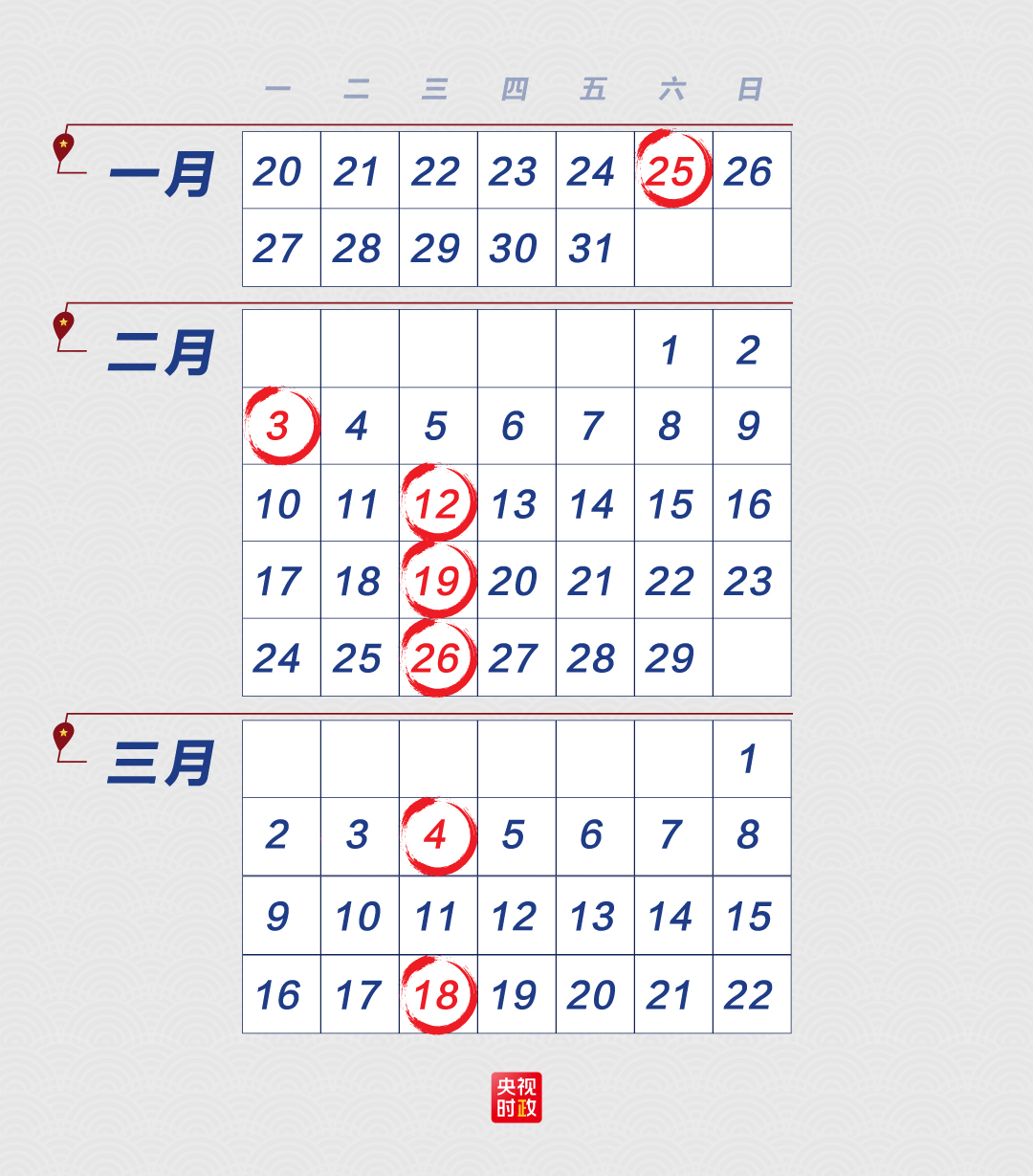
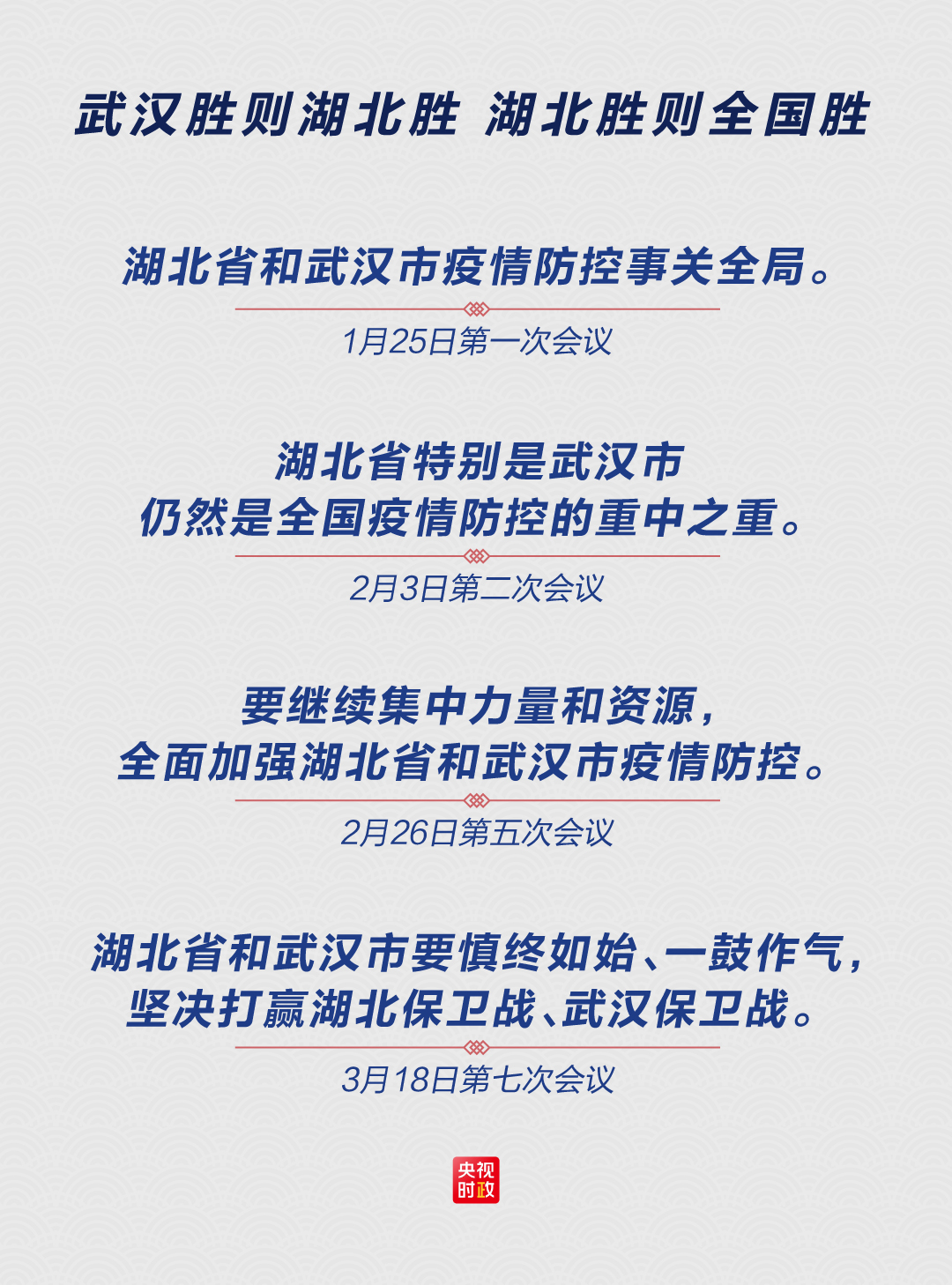
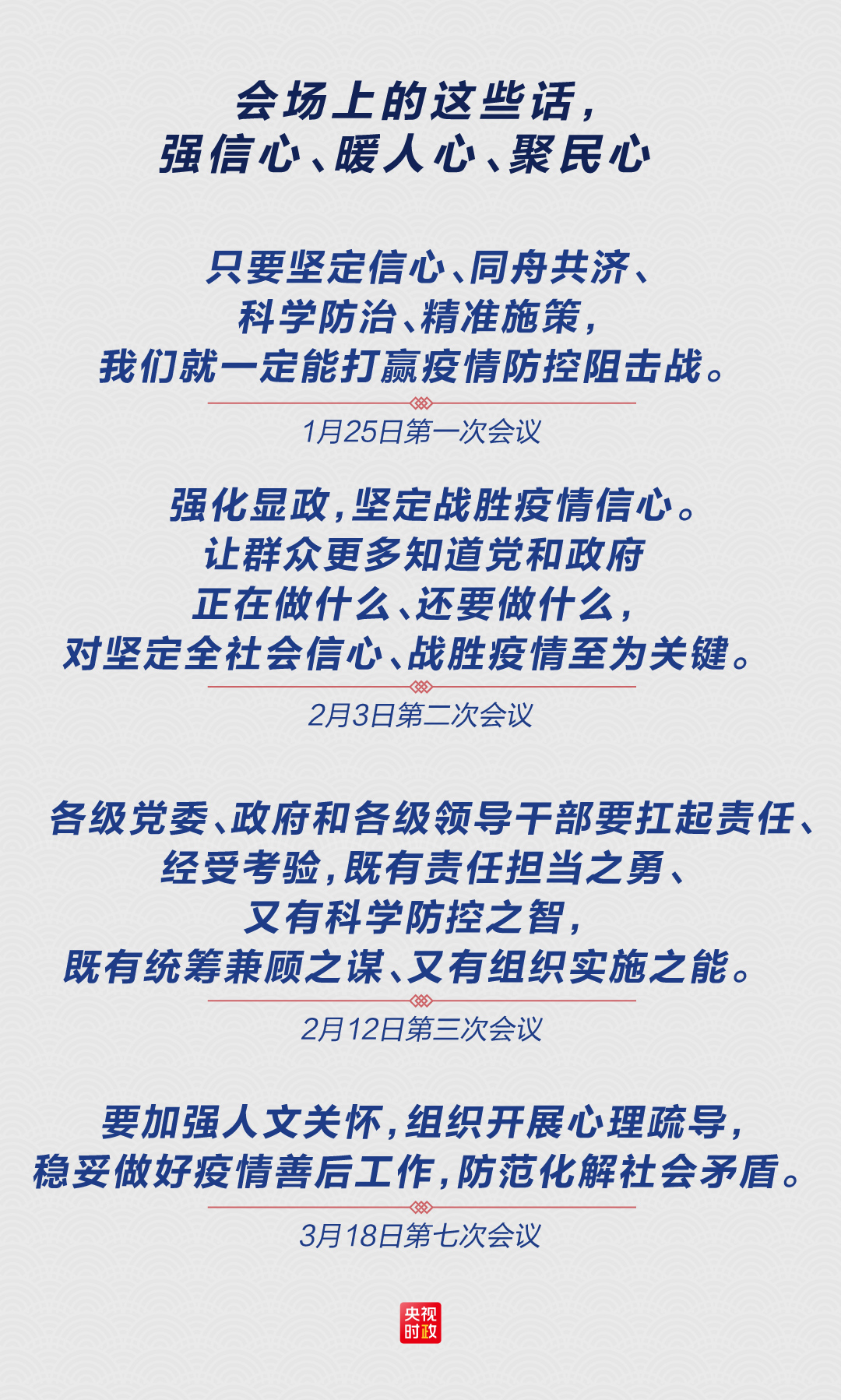
  On March 18th, the Supreme Leader presided over the The Politburo Standing Committee (PSC) meeting and delivered an important speech. This is the 7th The Politburo Standing Committee (PSC) Conference hosted by him since New Year’s Day. It was the first time in the history of the Party that seven meetings were held in a row in 54 days to deal with an unprecedented major public health emergency and to study the prevention and control of epidemic situation and the resumption of work. Through these seven meetings, we can clearly see how the supreme leader directed and deployed this epidemic prevention and control war.

Seven key meetings, leading the trend of war "epidemic"

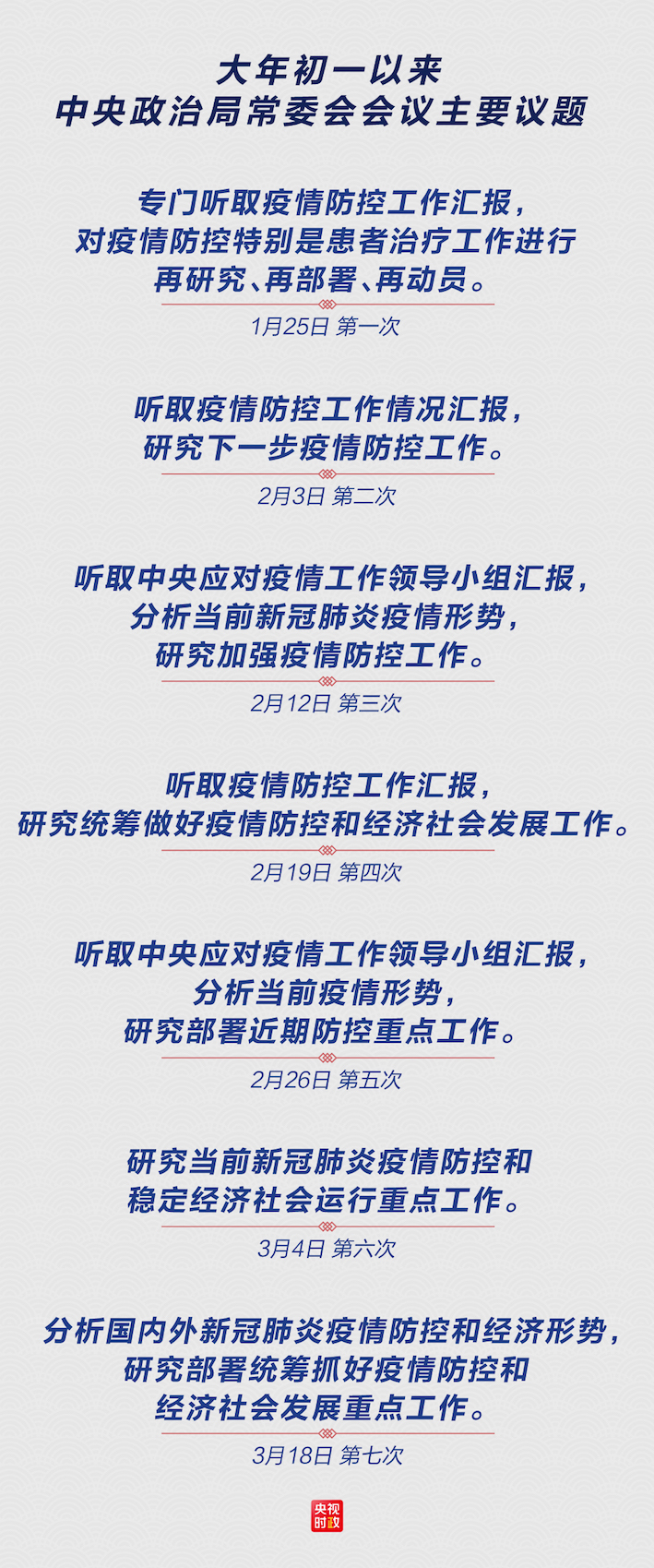
  Since January 25th (the first day of the Lunar New Year), the The Politburo Standing Committee (PSC) Conference has been held with an average frequency of less than eight days. Through the seven meetings that have been held, we can see that the topics have changed and remained unchanged.

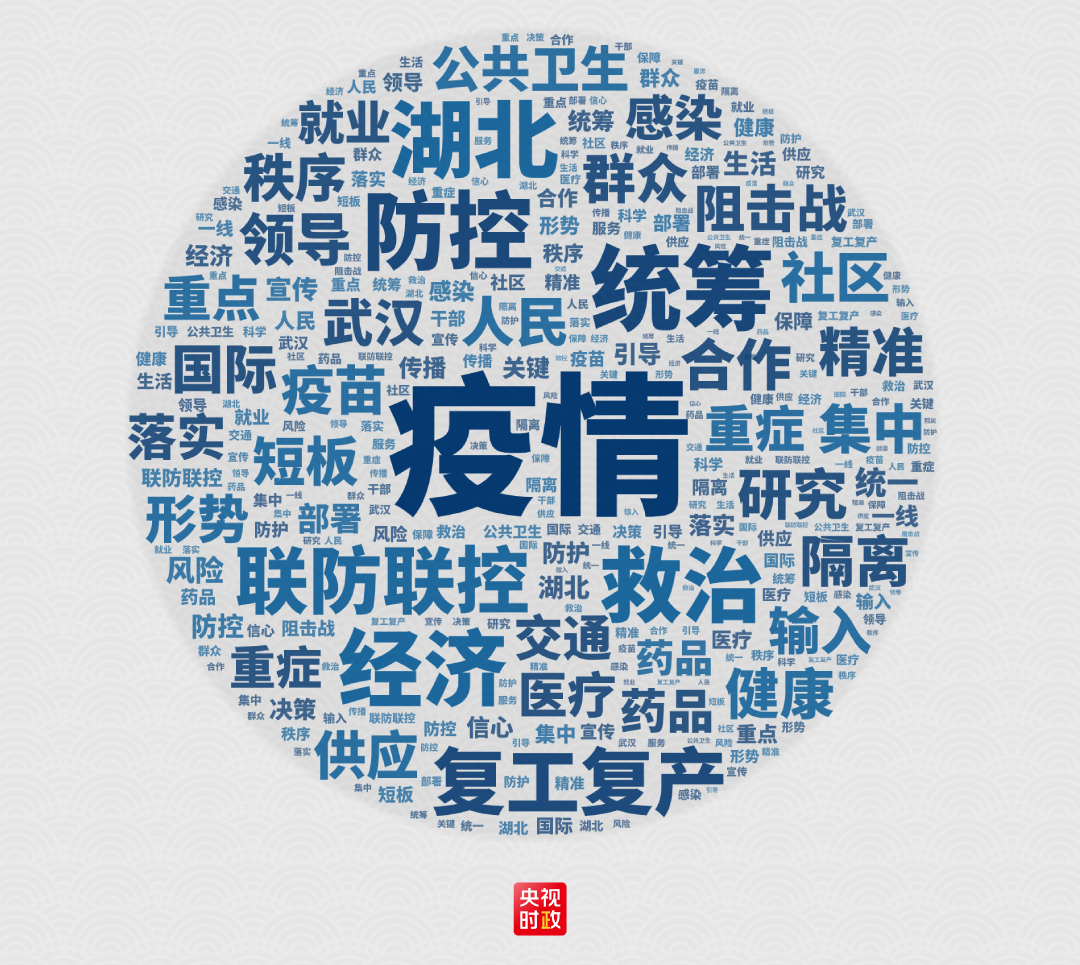
  From the cloud images of the key words of the seven meetings, we can see more clearly the main battlefield and main attack direction of this "epidemic". China is striving for the final and all-round victory in the fight against the epidemic, from confrontation to decisive battle.

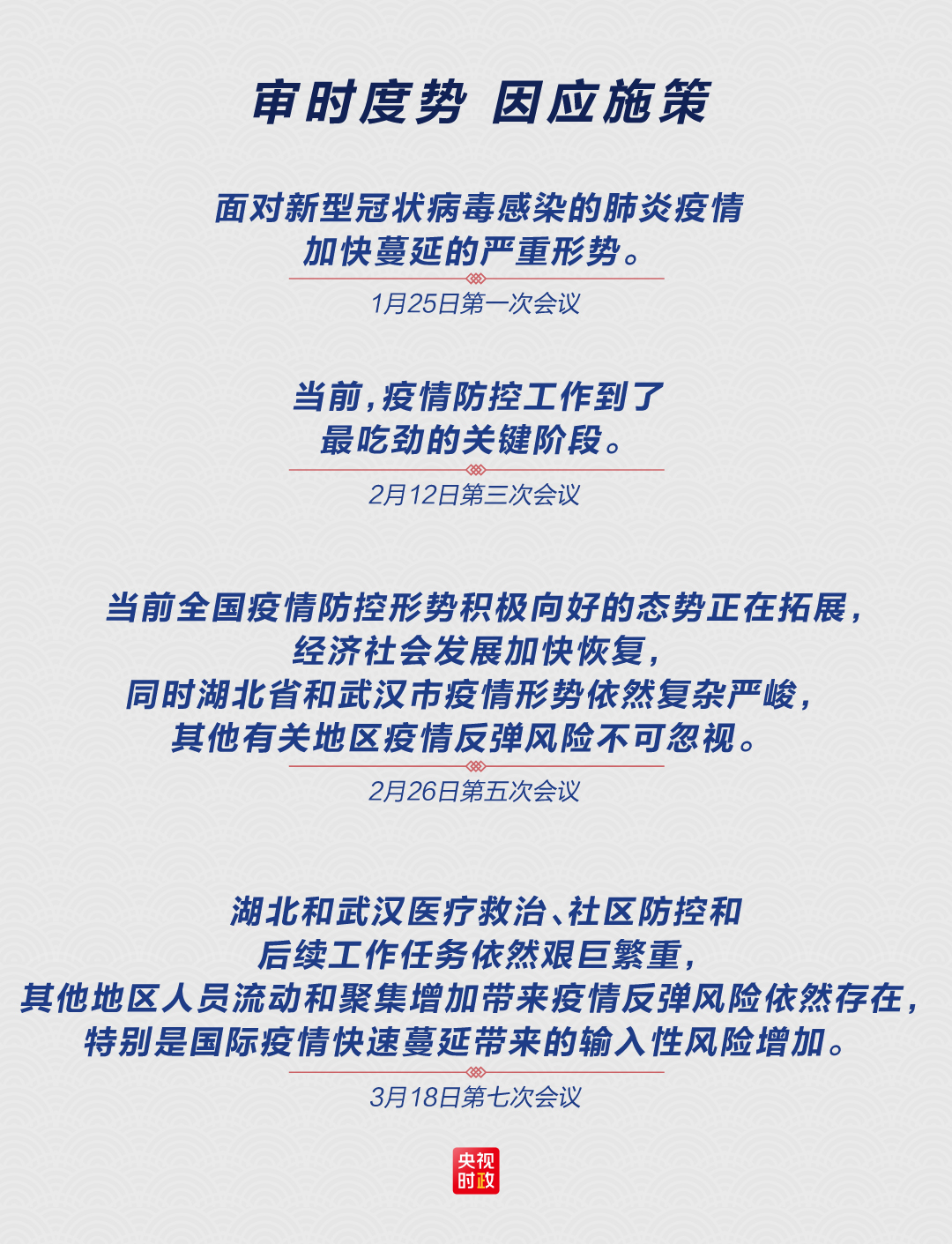
  At the meeting on March 18th, the Supreme Leader pointed out that it is necessary to accurately grasp the epidemic prevention and control at home and abroad and the periodic changes in the economic situation.Adjust the focus of work and countermeasures according to the time and situation.This is also the principle that has always been adhered to at the previous seven meetings.

  "The string of strengthening epidemic prevention and control cannot be loosened, and all work in economic and social development must be grasped." "To strengthen the prevention and control of the epidemic situation, we must be cautious from the beginning." "Do not relax, grasp the prevention and control work, and never let the hard-won epidemic prevention and control continue to reverse to a good situation." At the seven meetings before and after, the Supreme Leader took Wuhan and Hubei as the main battlefields of the country, strengthened classified guidance to other provinces, and always dominated the direction of the "epidemic" war.

The battle of the decisive place and the important place

  The Supreme Leader said: "Since the outbreak of the epidemic, the CPC Central Committee has clearly demanded that people’s life safety and health should be put first. All prevention and control measures taken by the CPC Central Committee should first consider doing their utmost to prevent more people from being infected and save more patients’ lives as much as possible." This is also the clear idea of the 7 The Politburo Standing Committee (PSC) Conferences to guide the defense of Hubei and Wuhan.

  Do your best to prevent more people from being infected.This requires extraordinary measures to control the source of infection and cut off the route of transmission. The first six meetings took "admission" as an important topic. On January 25th, it was put forward that "all confirmed patients should be treated in time"; on February 3rd, it was made clear that "centralized hospitals should be built and put into use as soon as possible"; on February 12th, it was put forward that "all accounts receivable should be collected, all treatment should be done, and the rate of treatment should be improved"; and on February 26th, it was required to "consolidate the results of investigation and treatment", and Wuhan, Hubei Province finally closed the "faucet" for the spread of the epidemic. On March 18th, when the 7th meeting was held, Wuhan, Hubei Province ushered in the clearing of three new confirmed cases, new suspected cases and existing suspected cases.

  Save as many patients’ lives as possible.The most important thing is to try our best to treat serious cases. From January 25th, it was required to "concentrate severe cases in designated medical institutions with strong comprehensive strength for treatment", on February 12th, it was required to "speed up the transformation and expansion of designated hospitals and increase the supply of severe beds", and on March 4th, it was proposed that "all severe patients should be concentrated in high-level designated hospitals for treatment", and special arrangements were made for each of the seven meetings. As of March 18th, the number of severe cases in Hubei has dropped from more than 10,000 during the peak hours to 2,274.

  Next, don’t be paralyzed, don’t be tired of fighting, don’t relax, and never say success lightly until you win the whole game.

Grasp both hands and win a double victory

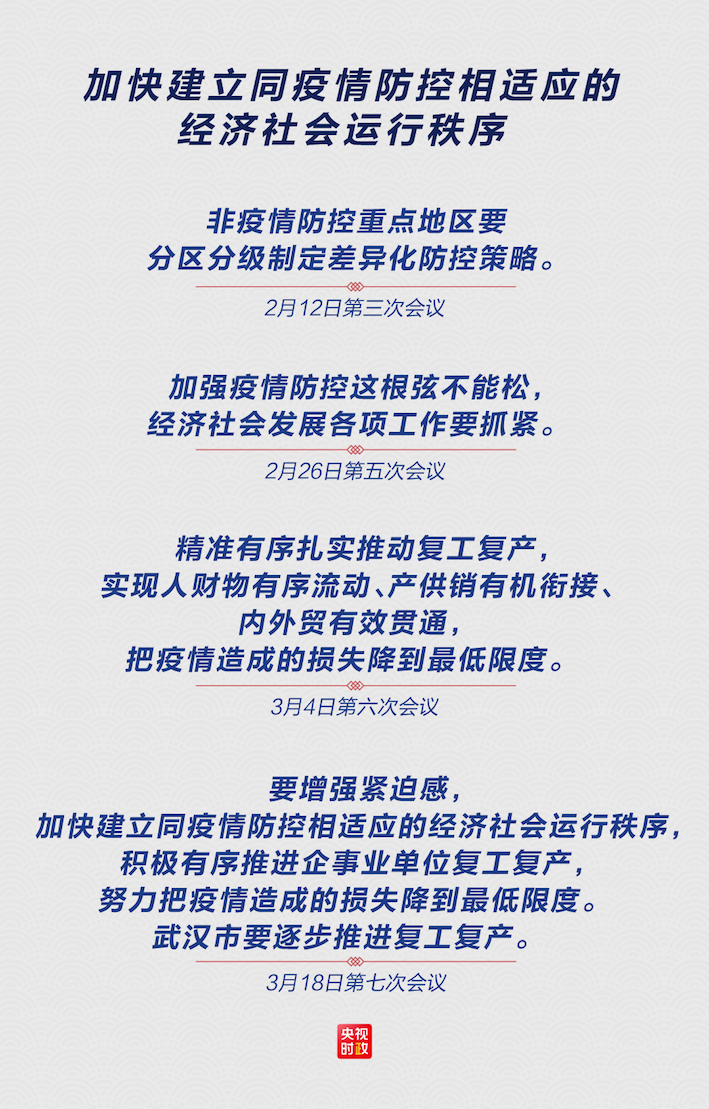
  When he presided over the The Politburo Standing Committee (PSC) meeting on February 12th, the Supreme Leader said that it is both a great war and a big test to make overall plans for epidemic prevention and control and economic and social development. The seven The Politburo Standing Committee (PSC) conferences made key arrangements on how to meet the challenge and take the exam.

  Coordinating the promotion of epidemic prevention and control and economic and social development is being carried out in accordance with the principle of "scientific prevention and control, precise policy". Taking the two meetings of the Standing Committee of the Political Bureau as an example, the meeting on February 12 proposed thatTaking the county as a unit,Determine the risk levels of different counties, and formulate differentiated prevention and control strategies by region and level. The meeting on March 18 proposed thatTake the province as a unitPromote the recovery of economic and social order. The basic unit of prevention and control has been expanded from county to province, which shows that with the situation of epidemic prevention and control continuing to improve, China is expanding the achievements of epidemic prevention and control, and striving to lead the national economic and social development into a normal track at an early date.

Help each other in the same boat and fight the epidemic together

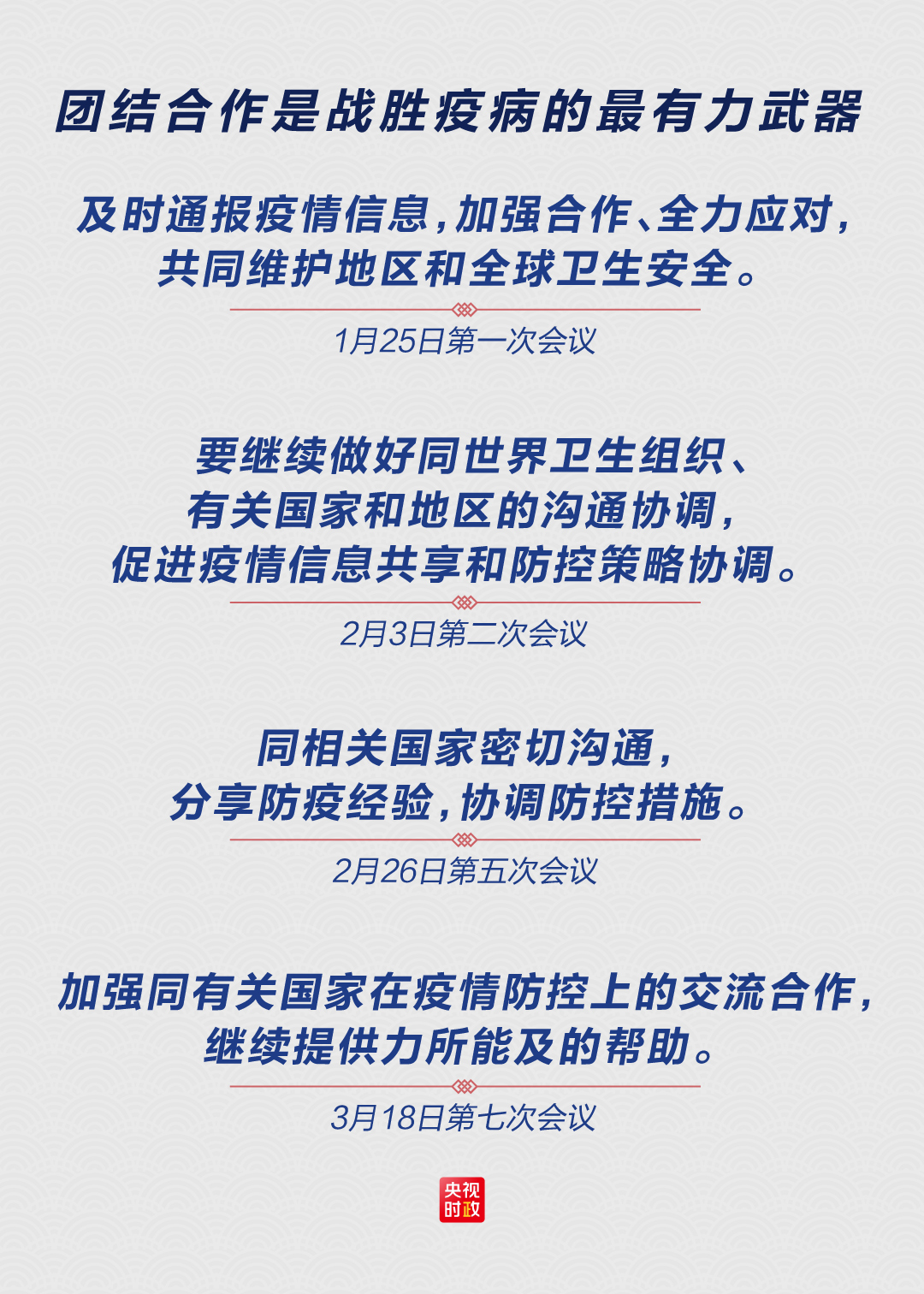
  At the beginning of the "epidemic" in China War, the Supreme Leader made it clear that,China not only safeguards the life safety and health of the people in China, but also safeguards the life safety and health of the people in the world.Strengthening international cooperation in epidemic prevention and control is an important manifestation of giving play to China’s role as a responsible big country and promoting the building of a community of human destiny.

  Just when China has stepped out of the most difficult and arduous stage, the epidemic broke out in many countries and places, and the epidemic spread abroad, which brought new challenges to China’s epidemic prevention and control and economic development.

  On the day of The Politburo Standing Committee (PSC) meeting on March 18th, 31 provinces, autonomous regions and municipalities and Xinjiang Production and Construction Corps reported 34 newly confirmed cases, all of which were confirmed cases imported from abroad. At the meeting that day, the supreme leader stressed that it is necessary to clearly see the complexity and seriousness of the epidemic situation at home and abroad. The meeting of the day actively cooperated, shared experiences, provided assistance, and made arrangements for contributing China’s strength to the international war "epidemic". At the same time, it requestedImplement the key tasks of external defense input.

  Practice the initial mission in the war and hand over the qualified answer sheet in the big exam. The common war "epidemic" is still going on. In an extraordinary period, the The Politburo Standing Committee (PSC) series of meetings from the beginning of the New Year’s Day will continue to lead the "epidemic" of this war.

  Producer: Shen Yong

  The main author is Gong Xuehui and Yu Zhenyi.

  Visual sense