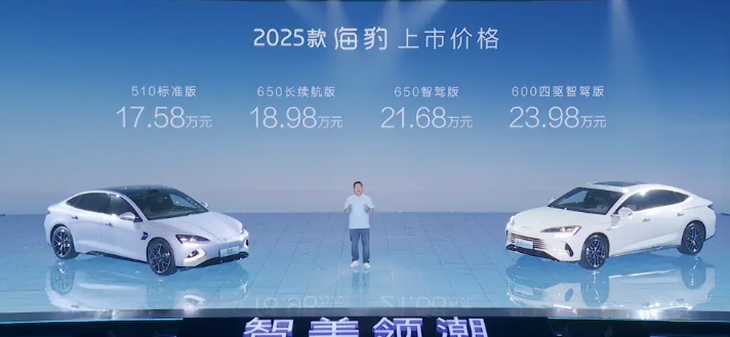
On August 8, the driving line of sight learned from the BYD official that the 2025 BYD seal and seal 07 DM-i were officially launched, of which the 2025 seal was based on the BYD e platform 3.0 Evo, and a total of 4 configuration models were launched. The official price range is 175,800 – 239,800 yuan.
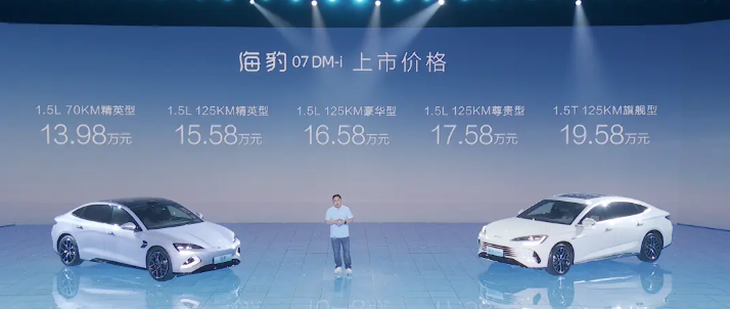
Seal 07 DM-i as a modified model, will apply BYD’s fifth generation DM hybrid technology, providing 1.5 liters and 1.5T two sets of plug-in hybrid power, a total of 5 versions, the official price range is 139,800 – 195,800 yuan.
2025 seal
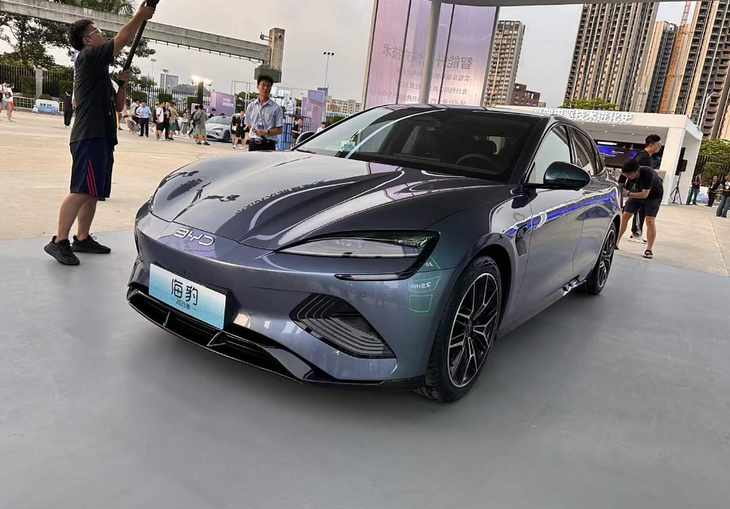
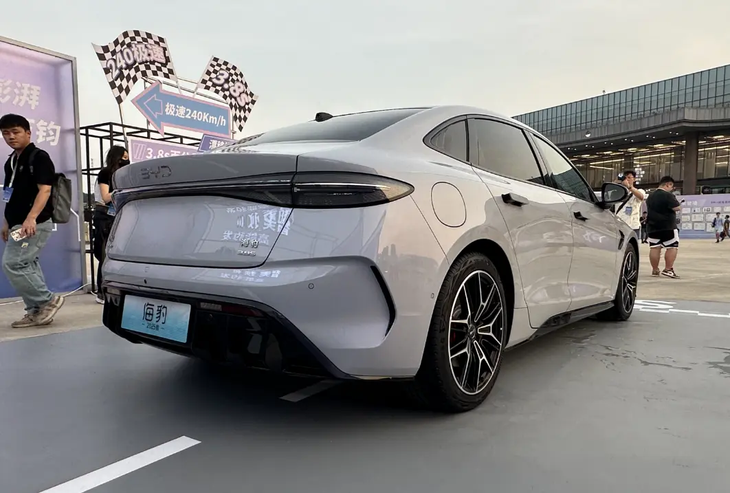
The 2025 Seal follows the concept of "marine aesthetics" of the marine network. The front of the car is a closed design, with bright black trims on the front surround and three-stage vents below. The rear logo is adjusted from "BUILD YOUR DREAMS" to "BYD", and the rear surround also incorporates the diffuser design. In terms of size, the length, width and height of the 2025 Seal are 4800/1875/1460mm respectively, and the wheelbase is 2920mm, which is consistent with the current model.
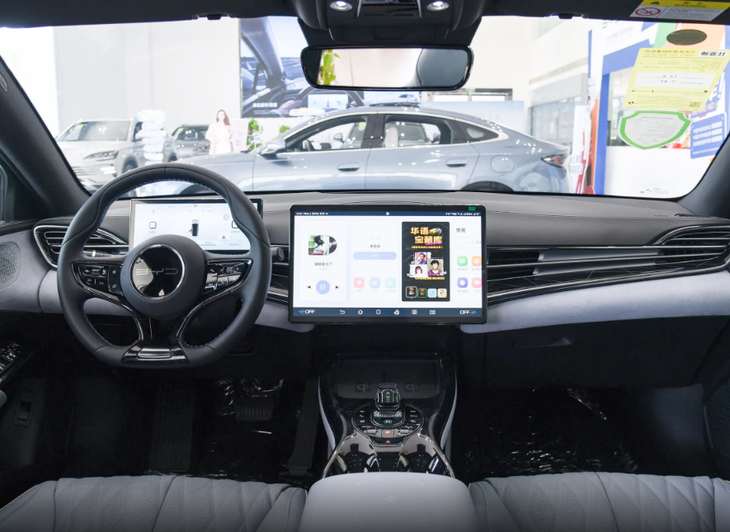
The interior of the new car has been redesigned. The center console adopts a single black fan-shaped panel, a large-size full LCD instrument panel is embedded in it, and it is equipped with a 15.6-inch adaptive floating central control screen. The instrument panel is wider than the current model, providing a wireless charging panel for mobile phones with a maximum power of 50 watts and a liftable cup holder. The shape of the shift lever has not changed, and storage space is still provided below.
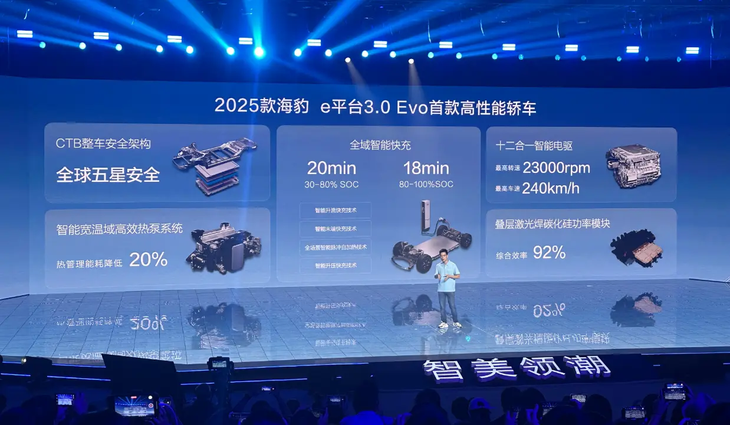
In terms of configuration, the 2025 SEAL series comes standard with FSD variable damping shock absorber, multiple active and passive safety functions, 5G vehicle to everything, panoramic canopy, AGS active air intake grille, driving recorder, vehicle ETC, 12 volt power supply in the car, front seat electric adjustment, front seat heating/ventilation, induction wipers, heat pump air conditioning and other configurations.
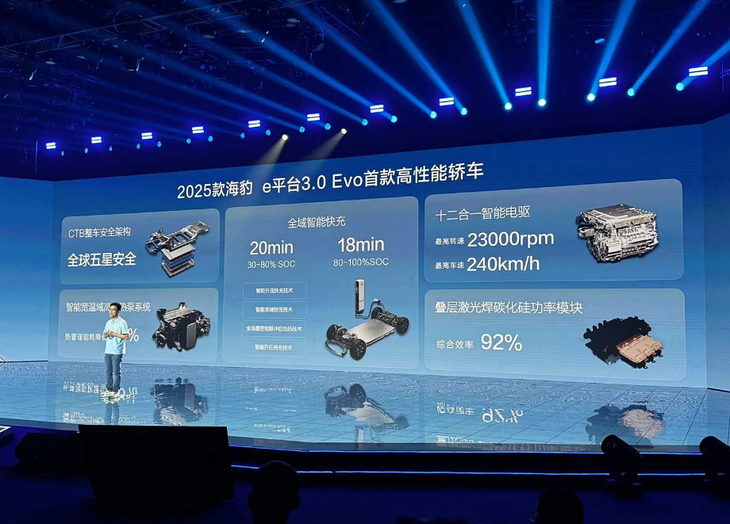
In terms of power, the 2025 Seal will be equipped with SiC silicon carbide electronic control as standard. The maximum power of the motor is 170kW rear drive, 230kW rear drive and 390kW four-wheel drive. The battery capacity is 61.44kWh and 80.64kWh respectively. The cruising range is 510km, 650km and 600km (CLTC conditions). The new Seal also supports 800V technology, with 10% -80% fast charging for only 25 minutes. At the same time, its top model will also be equipped with a cloud-C intelligent damping body control system to improve handling.
SEAL 07DM-i
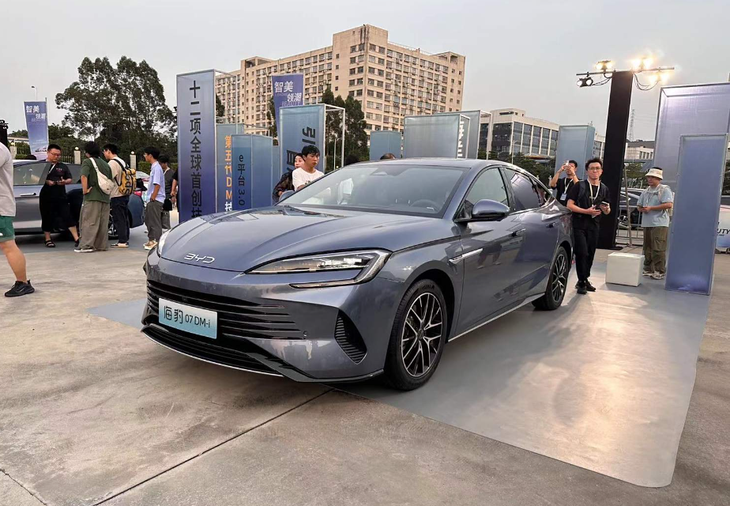
The overall shape of the SEAL 07 DM-i is consistent with the SEAL DM-i. It continues to use BYD’s "marine aesthetic" design concept and incorporates OCEAN X design elements, with a borderless grille and striped-style light strips on both sides of the front envelope. The rear has a spoiler design on the edge of the trunk, and the rear bumper diffuser position also incorporates progressive lateral stripes. The taillights have a through design and use a dot matrix light source.
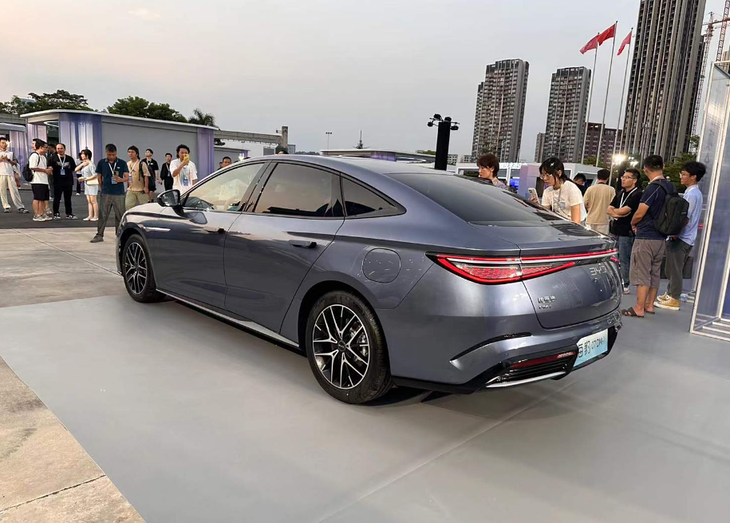
The SEAL 07 DM-i is equipped with a two-section waist line on the side and provides hidden door handles. In terms of size, the car’s length, width and height are 4980/1890/1495mm respectively, and the wheelbase is 2900mm, which is in line with the SEAL DM-i.
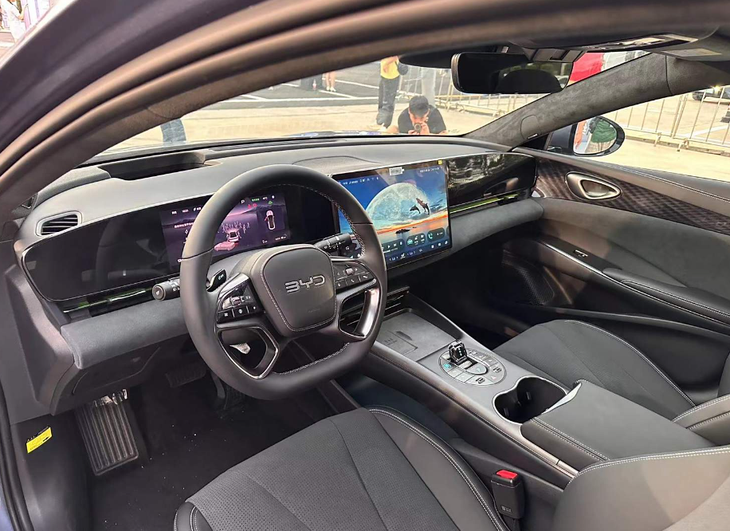
In terms of interior, the SEAL 07DM-i is consistent with the current model, and will be equipped with a streamer gray interior as standard in the whole series. The car is equipped with 8.8-inch or 10.25-inch full LCD meters, as well as 12.8-inch or 15.6-inch adaptive floating center control screen, equipped with DiLink 50 or DiLink 100 car system, and the steering wheel is designed in a four-spoke style.
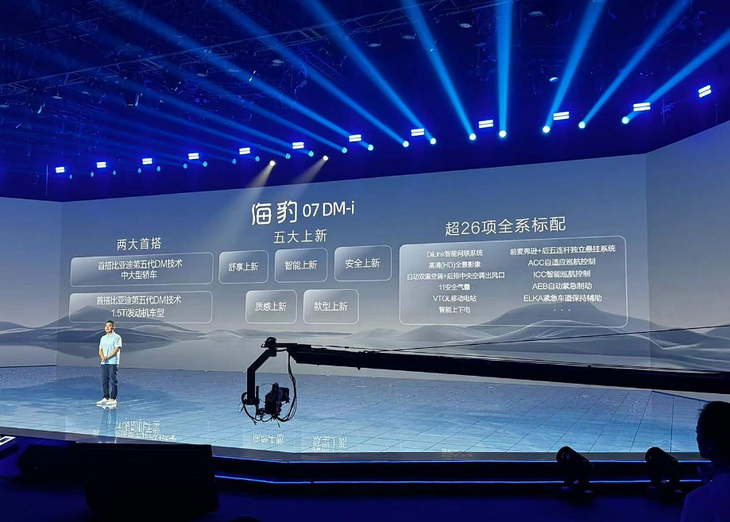
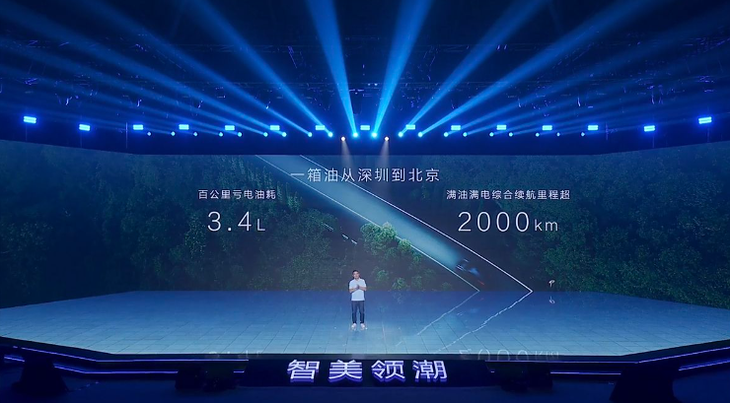
In terms of power, the SEAL 07 DM-i will use BYD’s fifth-generation DM hybrid technology to provide two sets of 1.5L and 1.5T powertrains, of which the maximum power of the 1.5L engine is 74kW, the maximum power of the 1.5T engine is 115kW; the maximum power of the motor is 160 kW and 200 kW; its pure electric battery life is 70km and 125km (CLTC conditions), and the comprehensive battery life is over 2000km; the fuel consumption of power loss is 4.2L/100km, 4.4L/100km and 4.7L/100km (WLTC conditions).