Persistent high temperature threatens the health of key populations. Experts prompt scientific prevention.

  Recently, high temperature warnings have been issued continuously in many parts of the country, and the highest temperature in some areas exceeds 40 C. Experts suggest that continuous high temperature weather will bring health risks to some key people, and these people should strengthen health protection and scientifically prevent heatstroke.

  The "Guidelines for Public Health Protection of High Temperature and Heat Wave" previously issued by the National Bureau for Disease Control and Prevention pointed out that there are three main categories of key people for health protection of high temperature and heat wave. The first category is sensitive people, such as children, pregnant women and the elderly; The second category is patients with chronic basic diseases, such as circulatory system diseases, respiratory system diseases, mental and behavioral disorders, kidney diseases and diabetes; The third category is outdoor workers, such as farmers, construction workers, sanitation workers, couriers and other personnel.

  "Heatstroke is divided into four stages: threatened heatstroke, mild heatstroke, moderate heatstroke and severe heatstroke." Chi Cheng, deputy director of the emergency department of Peking University People’s Hospital, said that the main manifestations of threatened heatstroke are dizziness, fatigue, sweating, thirst and inattention. After that, the body temperature increased and fever appeared, but there was no change of consciousness, so it entered the stage of mild heatstroke. Without intervention, the body temperature will continue to rise, reaching a high fever of 40℃ to 42℃, accompanied by limb convulsions and disturbance of consciousness, and it will enter the stage of moderate heatstroke and severe heatstroke. The most serious heatstroke is severe heatstroke, that is, heatstroke, which is usually complicated with multiple organ failure.

  Chi Cheng reminded that people who work and exercise in high temperature and high humidity environment for a long time, the elderly, children, pregnant women and other people with poor health are more prone to heatstroke, and these people should pay special attention.

  How to prevent heatstroke in key populations? The National Bureau of Disease Control and Prevention reminds that key people should avoid living and working in high temperature and high humidity environment for a long time, have a light diet, pay attention to hydrating and combine work and rest. For sensitive people such as children and pregnant women, children who play outdoors are encouraged to stay in the shade as much as possible, and pregnant women and the elderly are encouraged to stay in the cool room as much as possible. For patients with chronic basic diseases, take the initiative, drink plenty of water, and don’t feel thirsty before drinking water. If you need to take diuretics due to illness, ask your doctor for a reasonable amount of water in time. For outdoor workers, it is necessary to arrange outdoor work time reasonably to prevent occupational heatstroke, and outdoor workers should regularly carry out routine occupational health examination and emergency occupational health examination before and during their posts.

  What should I do if the key people get heatstroke? Experts suggest that when the symptoms of heatstroke appear, the patient should be moved to a cool and ventilated place, the sleeves and neckline of the patient should be untied, and the skin of the patient’s limbs should be wiped with a cool towel, or the patient’s forehead, armpits, thigh roots and other parts should be iced with an ice pack to speed up the cooling, and the temperature of the environment should be reduced with fans and air conditioners. If the patient is conscious, assist the patient to drink more water to replenish water, preferably a drink containing salt. Once the patient has serious symptoms such as disturbance of consciousness, coma, respiratory and circulatory failure, he should call 120 immediately and seek medical treatment in time.

Kim Jae Jung responded that he was selected as the most wanted male artist and wanted to travel to China by train.

     Sina Music’s exclusive dialogue with Kim Jae Jung, this year marks the 20th anniversary of its debut, and it feels like an instant, and the mood is also very complicated; In the past 20 years, the most special song for myself is "Guarding You", and the most special time is the moment of debut; I plan to prepare activities that can get close contact with fans and have longer interaction. I am also looking forward to meeting fans in China.

  Asked if he was satisfied with the two love songs "Locking Love" and "Broken Mirror", "Of course." What is the ideal love like? "If I knew, I should be in love now. Ideal love, I don’t know. I really want to know, tell me, what is the ideal love. If I knew, I should be in love and married. "

  The song with Mika Nakashima praised her for her excellent lyrics. "I told her that you are a genius. How can you write such good lyrics? It’s very cute to see her very shy." I hope I can also participate in HYDE’s music in the future. "If there is an opportunity, I hope to perform together." After the music style, I hope to try rock and dance music.

  I was chosen as the first male artist who wanted to marry K-POP before I was in middle school. I was asked why, "Because I’m not in love? Why did you choose me? I’m not sure. Thank you very much (sigh). Why is the man who wants to get married the first? Many excellent artists are from the 20th generation. Only I am older. From the perspective of the possibility of age, I am closer, so I am selected. "

  After Han Geng became a father, he received a gift from him in class. "It looks very happy to share the joy together. When I go to China later, I will contact my brother for dinner and want to congratulate him in person." I hope that I will have the opportunity to travel to China later, from east to west, by train or by car. Finally, there are words for China fans. New entertainment/literature

It rains in most parts of China, but these places are experiencing continuous high temperatures.

CCTV News:Today (16th), the Central Meteorological Observatory continued to issue a blue rainstorm warning. It is predicted that the rainfall in southern China will develop from west to east in the next three days, and there will be heavy rain or heavy rain in parts of Guangxi, Guizhou, Hunan, Hubei and Anhui.

This round of rainfall in the south began to develop eastward from the southwest, and the Central Meteorological Observatory continued to issue a blue rainstorm warning at 10 am. It is expected that there will be heavy rainstorms in parts of Yunnan, Guangxi, Guizhou, Hunan, Hubei and other places today and tomorrow, including heavy rainstorms in northern Hunan, southern Guizhou and northwestern Guangxi, accompanied by strong convective weather such as short-term heavy precipitation and thunderstorms.

Tomorrow, the rainfall area will move eastward, and there will be heavy rain or heavy rain in parts of southern Anhui, eastern Hubei, western Hunan, northwestern Jiangxi and southeastern Guizhou. From 18th to 19th, the rainfall in southwest China will be obviously weakened, with heavy rainfall concentrated in Jiangsu, Zhejiang and Shanghai. The meteorological department reminded that in the next ten days, the rainfall in the south is still frequent, and the accumulated rainfall is obviously higher than that in the same period of normal years. The risk of floods, flash floods and geological disasters in small and medium-sized rivers increases. All localities should pay attention to real-time monitoring, flood prevention and early warning, and transfer and avoidance.

There are many showers in the northeast of North China, and the temperature in Huanghuai and other places continues to be high

In addition, the northern part of North China and Northeast China are affected by the cold vortex system, and there are many strong convective weather and occasional showers, so we should also pay attention to prevention. In the southern part of North China, Huanghuai and other places, high temperature above 35℃ will continue to appear in the next three days, especially on the 18th to 19th, and the high temperature range will be expanded and the intensity will be enhanced, with the local maximum temperature reaching 40℃.

In 2022, Oricon became a popular actor, and it was 10-30 generations in public.

1905 movie network news On December 21st, Japan’s OriconNews released the list of "Top Actors in 2022 (Male)". With Fuji TV series Silent, NHK morning drama Dancing in the Sky, movies and other topics. In the second half of the year, as an actor, Genese artist (Snow Man), who has frequent activities, topped the list, not only in the 10th-50th generation, but also in the 10th-30th generation. Yang Shi Suzuki, who worked with Mu Heilian in Silent, and Matsushita Yuping, who starred in popular dramas such as Troublemakers this year, ranked second and third respectively.


According to the report, Mu Heilian became the first artist in Genese’s office to win the annual ranking in this ranking, which was investigated in 2009. In 2021, Mu Heilian starred in the TV series Jiaochang II. In October of the same year, he starred in the TV series "The Lost First Love" with W, and gained great popularity at home and abroad. In the first half of this year, she played a relaxed role in the film, and Mu Heilian, who was active on the big and small screens, gradually accumulated rich acting skills.Although Mu Heilian was still outside the TOP10 of the same list in the first half of the year, his support rose rapidly in the second half of the year with the enthusiastic performances of TV series Silent and morning drama Dancing in the Sky.


In Silent, the deaf role is challenged for the first time, and Mu Heilian’s sincere acting performance of Shiori Sakura Xiang has won unanimous praise from the industry and the public. In particular, the first episode depicts the relationship with former lover Qingyu? (Decoration) The scene of accidental reunion, while making a heartbreaking expression and signing a sign language, not only made the audience burst into tears, but also set off a follow-up topic for the play. In the broadcast drama series, several episodes related to Shiori Sakura’s story line have also obtained super-high ratings.


Snow Man Heilian’s performance in Silent, the audience also praised and affirmed without stint: "To be honest, at the beginning, I felt very strongly that it was a bit … … In fact, after watching the play, I thought: If it weren’t for Mu Heilian, I wouldn’t be able to do it, and I liked his performance. I want to see more of his performances. " "He is very good at interpreting inner drama. Want to see him more active. Will cheer for him. "


In addition, Mu Heilian is also very good at playing Bai Mu Hongming in the morning drama "Dancing in the Sky". In addition to the movie "Full Moon and Missing Moon" which is being shown, in the movie released in March next year, Mu Heilian will star alone for the first time, challenging the role of Qingxia in Jiutang, and the audience will also convey their expectations for the film through the materials currently released.

In the list, Genese artists also included Michieda Shunsuke (Wave Man), King&Prince and Matsumura Hokuto. Among them, Michieda Shunsuke won the third place in the 10th generation list this year because of her frequent activities in the TV series "Kaneda-Yi Juvenile Notebook", the film "99.9: Criminal Professional Lawyer" and movies.


Godfrey Tsao Junyan Jiao romantically appeared to perform "the cutest height difference"

Godfrey Tsao

  BEIJING, July 28 (Xinhua)-On the 27th, the TV series Meet Alex Wong held a press conference in Beijing, starring Godfrey Tsao and Junyan Jiao. At the press conference, in Stefanie’s classic and familiar Meet, Godfrey Tsao and Junyan Jiao appeared romantically, with their heights of 195cm and 163cm, respectively, showing the cutest height difference.

  "Meeting Alex Wong" is based on Shi Dingrou’s novel "The Past of Lichuan", and will be premiered in anhui tv at 7: 30 every night from July 31st. The plot tells the love story of Alex Wong, a Chinese architect from Switzerland, and Xie Xiaoqiu, a college student from a small town in Yunnan, who fell in love, separated and reunited, and lived and died again and again.

  As a classic love IP, the original novel "The Past of Lichuan" has become a beautiful memory of youth and love for a generation, which has attracted much attention as early as its preparation. During the filming of the drama, fans shouted on the Internet from time to time, looking forward to seeing the drama as soon as possible.

  It is also known that during the broadcast of "Meet Alex Wong", anhui tv will also launch a special program "Our Youth", which will be broadcast after two episodes every night to tell the story behind the scenes for the audience.

For South Korea? China clarifies its position on rectifying the chaos in entertainment circles and "rice circles"

CCTV News:Recently, the China Municipal Government launched a series of special actions to rectify the chaos in the entertainment circle and the "rice circle", and some artists, including Korean artists, were shut down in their fan base social accounts. South Korean media are concerned about this, worried that cultural exchanges between China and South Korea will be affected, and even think that China’s relevant measures have a side against South Korea. In this regard, the spokesman of the China Embassy in South Korea introduced the relevant situation and clarified China’s position.

The spokesman said that in recent days, there have been frequent incidents of unethical and anomie such as tax evasion, pornography and drug-related activities among entertainment stars in China. If a famous foreign singer was arrested by the police on suspicion of rape, an actor’s repeated visits to the Yasukuni Shrine were boycotted by the people of China. At the same time, the problem of Internet "rice circle" in China has become increasingly prominent. Various fan groups abuse and slander each other, engage in malicious marketing, and induce and even force fans, including minors, to raise funds to help. In order to brush tickets for idols, some fans do not hesitate to purchase boxes of yogurt, and then dump the yogurt after scanning the QR code on the bottle cap. These behaviors spread a lot of harmful information to the society, which has a huge negative impact on the fans’ consumption groups, mainly young people, and some even violate the law, which seriously hinders the healthy development of the entertainment industry.

In view of the above situation, the relevant departments in China urgently issued a ban and punishment regulations to regulate the management of celebrity artists’ traffic fraud and induce fans’ consumption, and launched the 2021 "Clear Lang" series of special actions, focusing on rectifying the abnormal culture of entertainment circles and "rice circles". The more stars in the spotlight, the better they should set an example, giving the society integrity and giving young people real example power. All the actions taken by the Chinese side are against public order, good customs, laws and regulations, and will not affect China’s normal exchanges with any country.

China and South Korea have learned from each other for thousands of years, forming a profound historical and cultural bond. This year marks the start of the Year of Cultural Exchange between China and South Korea, and next year marks the 30th anniversary of the establishment of diplomatic relations between China and South Korea. Further strengthening China-ROK friendly cooperation conforms to the current situation, people’s hearts and the fundamental interests of both sides. We are willing to continue to strengthen cultural exchanges with the ROK, encourage cultural exchanges and cooperation full of positive energy, and resist vulgar and bad induction and comparison. At present, the activities of the "China-Korea Cultural Exchange Year" are being carried out in a colorful way. We expect cultural exchange to become an inexhaustible motive force to promote the vigorous development of China-ROK relations in the new era and play an active role in helping the development of bilateral relations and promoting the communication between the people.

Chengdu has direct access to Sanxingdui, and it is planned to open in 2027.

S11 Line Project of Chengdu-Deyang Regional Railway

Welcome significant progress!

March 30

The S11 line project of Chengdu-Deyang city railway started construction.

The line will be on December 31, 2026.

Meet the initial operating conditions

At that time, friends from Chengdu and Deyang

It’s more convenient to drop by!

Chengdu to Sanxingdui.

You can always explore the ancient Shu civilization!

What is the S11 line?

S11 line starts from Weijiannian Station of Chengdu Rail Transit Line 1 and ends at Deyang North Station, Deyang City. It connects jinniu district, Xindu District, Pengzhou City, Guanghan City and Jingyang District in Chengdu, with a total investment of about 30.5 billion yuan and a construction period of 49 months. It is planned to be completed and put into operation in 2027.

The total length of the line is about 70.87 kilometers (30.62 kilometers in Chengdu and 40.25 kilometers in Deyang), of which the underground section is about 23.78 kilometers, the elevated section is about 45.39 kilometers and the subgrade section is about 1.70 kilometers.

There are 15 stations on the S11 line (including 5 elevated stations and 10 underground stations), including Weijiannian Station, Fengtai Third Road Station, Youyi Station, Dujianian Station, International Trade City Station, Banzhuyuan Station, Majia Station, Mengyang Station, Sanxingdui Station, Tianfu Jingcheng Station, Deyang South Station, Sichuan Jianyuan Station, Wuzhou Square Station, Confucian Temple Square Station, etc.

Design renderings of elevated station on S11 line.

The line will run in groups of 4 regional A-type vehicles, with the designed running speed of 160 km/h in the elevated section and 120 km/h in the underground section.

In order to achieve fast direct access between Chengdu and Germany without affecting the system capacity of the line at peak hours, it is planned to adopt the mixed running mode of big station express train+station stop train during the peak hours of S11 line. This mode can better meet the time target of 1 hour arrival between Chengdu and Deyang, and the express train scheme can achieve the 30-minute travel target between Chengdu (Fengtai Third Road Station) and Deyang (Tianfu Jingcheng Station).

On March 27th, Deyang Municipal People’s Government issued "Information Publicity of Exposure Draft of Environmental Impact Report of Chengdu-Deyang Line Project of Municipal (Suburban) Railway", which also revealed the daily departure time of S11 line: the operation time starts at 5:30 in the morning and ends at 23:30 in the evening, with a total of 18 hours of operation throughout the day.

What will S11 Line Bring to Chengdu Metropolitan Area?

S11 line is an important project in the "one ring and three shots" backbone commuter network of Chengdu-Germany integration, and it is an important link to support the integrated development of Chengdu-Germany.

The relevant person in charge of Chengdu Housing and Construction Bureau told the reporter that it is not only an important link to meet the convenience of commuting between Chengdu and Germany, improve the transportation system between Chengdu and Germany, support the development of Chengdu-Germany city groups, promote the integration of Chengdu and Germany, and promote the formation of a "one-hour commuting circle" for Chengdu and Germany, but also an important strategic project to accelerate the integrated development of the construction of the twin-city economic circle in Chengdu and Chongqing and enhance the core energy level of Chengdu metropolitan area. It is also a major livelihood project eagerly awaited by nearly 25 million citizens in Chengdu and Germany.

S11 line can be connected to Tianfu International Airport on Line 18 to the south, and can be transferred to Ziyang and Meishan through Chengdu rail transit network, which runs through the north and south of Chengdu. After the project is completed, it will effectively shorten the time and space distance between Chengdu and Deyang, promote the efficient agglomeration of industry, population and various production factors between Chengdu and Germany, and strengthen the driving role of Chengdu as a central city, which is of great significance to enhance the core energy level of Chengdu metropolitan area and promote the development of Chengdu-Germany-based capital.

Effect map of Deyang North Station section on S11 line

After the completion of the S11 line project, it will further improve and expand the transportation system between Germany and effectively shorten the time and space distance between the two cities, which will not only help to optimize and adjust the transportation structure and relieve the existing transportation pressure, but also greatly enhance the efficient and convenient travel of the people in the two cities and effectively refresh the "happiness index" of the people.

After the completion of the S11 line project, it will also promote the efficient agglomeration, deep integration and innovative development of industries, population and various production factors in the two places, further integrate Deyang into Chengdu’s "half-hour economic circle", effectively expand the "traffic circle" to the level of "economic circle" and amplify the effect of "development circle".

In the future, with the opening of several urban (suburban) railways, citizens can feel the convenience and happiness of the development of "urbanization" through convenient and fast rail transit. The life style of the same city, looking at Sanxingdui, eating jar meat at noon and visiting Dongpo Water Street at night, is about to enter the daily life of ordinary people in the four places.

Deyang shopping guide

S11 line project construction started.

In the future, Chengdu will be more convenient to Deyang.

Is there anything delicious and interesting in Deyang?

consider it a pleasure to be among the first to read or see sth

▼▼▼

【 Guanghan Silk-wrapped Rabbit with Suitable Salty Fragrance 】

The folk song "Deyang Soy Sauce, Baoning Vinegar, Shifang Duck, Guanghan Rabbit" once circulated in Chengdu Plain. Guanghan has been making pickled rabbits since the Qing Dynasty. In 2016, Guanghan’s silk-wrapped rabbit making skills were included in Deyang’s municipal intangible cultural heritage list.

【 "Non-legacy on the dining table" Zhongjiang vermicelli 】

Zhongjiang vermicelli, as white as silk, inherits the handmade taste of thousands of years and is called "the intangible heritage on the dining table". Zhongjiang vermicelli has been passed down for thousands of years since the Northern Song Dynasty. From Daoguang in the Qing Dynasty to the Republic of China, Zhongjiang vermicelli was in its heyday and became a "royal noodle" for the royal family.

[online celebrity cuisine "glutinous rice goose egg"]

An egg records a period of history and cultivates a period of culture-glutinous rice and salted goose eggs, which has a history of more than 200 years. It is taken from the sixty-first method of Wake Up the Garden Record-salted egg method, which is a delicacy made by combining ancient methods. It is not only a municipal intangible cultural heritage of Deyang, but also a great online celebrity delicacy of Deyang.

[Fat but not greasy Shifang salted duck]

Shifang salted duck is commonly known as roasted duck. It is recorded in the ancient book "Wang Jiashang Recipe" that Su Dongpo, a writer in the Northern Song Dynasty, drank Mianzhu steamed honey wine with his friends, and the wine was accompanied by Shifang salted duck.

Every dried salted duck in Shifang is bright on the outside, exquisite on the inside, fragrant but not demon, tender but not raw, fat but not greasy, cooked but not muddy, with a strong fragrance from duck meat to duck bones. This fragrance is closely related to its unique material selection and unique production process.

[Mianzhu rice noodles with a sense of ceremony]

Getting up happy every morning is the beginning of Mianzhu people’s life. Eating rice noodles is not only breakfast for Mianzhu people, but also a sense of ceremony.

"Beef with Xiaoquan Juice"

Xiaoquan has a food that has been circulating for hundreds of years-juice beef. "Juice beef" can also be called "beef wrapped in juice", which vividly summarizes its production technology-pouring cooked beef with thick juice.

[Sanxingdui]

Sanxingdui site is called "one of the greatest archaeological discoveries of mankind in the 20th century", "the ninth wonder of the world" and "the source of civilization in the Yangtze River".

Sanxingdui Museum was laid in August 1992 and opened in October 1997. It is located in the northeast corner of Sanxingdui Site, a national key cultural relics protection unit, on the duck river in the west of Guanghan City, 40 kilometers south of Chengdu and 26 kilometers north of Deyang. It is a modern thematic site museum in China. Sanxingdui Museum has two exhibition halls with an exhibition area of nearly 12,000 square meters. On March 29th, 2022, the new Sanxingdui Pavilion started construction, with a planned construction period of one year.

【 Jinghu cruise ship 】

There is a night tour of Jinjiang in Chengdu and a night flight of Jinghu in Deyang-at night, on the sparkling Jinghu, take a voyage in the lights and enjoy the different scenery of Deyang!

The cruise terminal is located in the north of Minjiang Bridge and along the riverside of Emei Mountain South Road, including tourist center, floating terminal and other functional facilities. During the festival, there are songs and dances, musical instrument performances and Hanfu experiences on board.

[Deyang Confucian Temple]

The Confucian Temple is a deep and warm memory of generations of Deyang people. Children are playing fish under the wall of Wan Ren Palace, young people are attracted by the food in the pedestrian street, and old people are wandering and dancing in the square.

Begonia, magnolia and cherry blossoms in the Confucian Temple compete to bloom in spring, with blue sky and red wall as the background, leaving frames of beautiful pictures of spring full of charm.

[Deyang Stone Carving]

There is a stone rhinoceros in Chengdu, and a Shi Niu in Deyang. What a coincidence, right?

The predecessor of Deyang Stone Carving Park was called "Shi Niu Park", named after two Shi Niu carved in Tongzhi period of Qing Dynasty, which were used to guard Mianyuan River.

In 1986, Deyang municipal government built a dam to expand Taishan North Road. In the process of expansion, an 8-meter-high retaining wall appeared under the main road, which is just adjacent to Shi Niu Park. Deyang stone carving art wall is built by using this long retaining wall.

In order to beautify the urban landscape, in 1989, the first phase of Deyang stone carving art wall project "Oriental Soul" was started. The stone carving elites put their heads together and skillfully combined the long retaining wall beside the highway with the landscape plastic arts. The 720-meter-long stone wall was pulled out of 35 arch holes, supported by 32 Panlong stone pillars, forming an art gallery showing the national culture of China.

When S11 line is opened.

Let’s set out with friends!

Source | Red Star News, Chengdu Daily Jinguan,

Deyang Publishing, Deyang Daily, Deyang Wenlv

Original title: "The fastest 30 minutes direct! It is planned to open in 2027! 》

Read the original text

Beijing will heat up the heating system in advance to store heat and strengthen the operation regulation in the snowfall and cooling weather.

  BEIJING, Beijing, December 10 (Reporter Xu Jing) According to the forecast of the Beijing Meteorological Department, there will be snowfall and cooling weather in Beijing in the near future. In order to do a good job in ensuring urban operation services, the Beijing Municipal Urban Management Committee made arrangements in advance, strengthened the regulation of heating systems, and deployed snow sweeping and ice shoveling to ensure the citizens’ warm winter and safe travel.

  The Committee issued an early warning notice to ensure the heating service. Refine the implementation of the safeguard plan and take countermeasures in advance. All districts and heating enterprises are required to pay close attention to the meteorological conditions in their regions, strengthen risk early warning and judgment, raise the temperature and store heat in advance, and do a good job in operation adjustment on the premise of ensuring the safety of heating operation. Especially in outer suburbs, old residential areas, low-temperature areas and other special areas, targeted measures should be taken, fully combined with online room temperature monitoring and user characteristics, fine regulation and control should be carried out, and the balance of hydraulic conditions should be continuously optimized to provide strong heating guarantee.

  At the same time, the Committee strengthened operation monitoring to ensure the safe operation of the system. All districts and heating enterprises are required to strengthen the operation monitoring of weak links and potential risks in the heating system during the cooling period, do a good job in the investigation and rectification of potential safety hazards of heating equipment and facilities, and take anti-freezing measures in advance to ensure the safe operation of the heating system. Strictly implement the 24-hour duty system, rationally allocate operation and maintenance personnel, implement emergency material reserves, and properly handle emergencies.

  In addition, the Committee has strengthened inspections and done a good job of receiving complaints. All districts are required to actively organize and carry out the "four noes and two straights" inspection, and assign special personnel to keep an eye on the key and difficult problems found in the inspection, and sort them out and include them in the list of "winter disease and summer treatment" plans; It is necessary to pay close attention to the communities and key users who have concentrated on historical appeals in a timely manner, do a good job of handling complaints immediately, give full play to the role of the "heating housekeeper" service model, actively carry out the "visiting the people to ask for warmth" activities, and improve the quality of heating services.

  It is understood that in accordance with the "Beijing Emergency Plan for Snow Sweeping and Ice Shoveling (2023)", Beijing has launched a blue warning response for snow sweeping and ice shoveling. The Beijing Municipal Urban Management Committee organized all districts and operating units to hold deployment meetings, arranged all snow sweeping and ice shoveling work in advance, and defined the responsible areas and sections of snow sweeping and ice shoveling work. (End)

The Basis and Strategy of "Joint Protection and No Development" in the Yangtze River Economic Belt

China Net/China Development Portal Network News The Yangtze River is the longest river in China, the third longest river in the world, the national strategic water source, and the golden waterway with the largest freight volume in the world. The Yangtze River plays an irreplaceable role in maintaining China’s ecological and water security. Relying on the golden waterway of the Yangtze River, the construction of the Yangtze River Economic Belt is a major regional development strategy of the country in the new period, and it is also the main axis to form the national "one body and two wings" development and opening up pattern. In January 2016, General Secretary of the Supreme Leader stressed at the symposium on promoting the development of the Yangtze River Economic Belt in Chongqing: "The Yangtze River has a unique ecosystem and is an important ecological treasure house in China. At present and for a long time to come, it is necessary to put the restoration of the ecological environment of the Yangtze River in an overwhelming position, work together for great protection and not engage in great development. " This has set the general tone of ecological priority and green development for the development of the Yangtze River Economic Belt.

The Yangtze River Economic Belt has a prominent ecological position and great development potential. However, due to the cumulative effect of long-term high-intensity development and the lack of scientific spatial development control, the ecological environment situation of the Yangtze River Economic Belt is grim. Not only the water environment and water ecological problems of the Yangtze River are becoming more and more serious, but also the main drinking water sources along the local shore of the main stream are staggered with dangerous goods docks and sewage outlets, the pollution zone along the shore is expanding, the water environment level is declining, the species and quantity of aquatic organisms are decreasing, and many rare species are on the verge of extinction. Moreover, the mountain ecological degradation and geological disasters in the upper reaches of the Yangtze River basin are frequent, the lake wetlands in the middle reaches are shrinking, the relationship between rivers and lakes is tense, and the water environment pollution and lake eutrophication in the lower reaches of the river network are increasing, thus seriously threatening the status of the Yangtze River as a national strategic water source and an important ecological support belt. The Yangtze River Economic Belt has become the fundamental requirement for the country to maintain regional ecological security and improve the level of ecological civilization construction.

This paper is based on the statistical data such as the bulletin of water resources in the Yangtze River basin and the southwest rivers, the bulletin of ecological and environmental monitoring of the Three Gorges Project (1997-2016), the China Statistical Yearbook, the weekly monitoring report of the state-controlled water quality section of China Environmental Monitoring Center (2006-2018), the data of the National Urban Air Quality Daily of the Ministry of Ecology and Environment (2015-2019), remote sensing interpretation data at different times, and the data accumulated by historical and long-term special studies. This paper objectively examines the ecological background and basic conditions of the Yangtze River Economic Belt, deeply analyzes the major ecological and environmental problems existing in the development of the Yangtze River Economic Belt, and puts forward the overall strategy of "jointly protecting and not developing" in the Yangtze River Economic Belt, for the reference of relevant research and decision makers.

Ecological background and ecological environment problems faced by the development of the Yangtze River Economic Belt

The service value of the Yangtze River ecosystem is irreplaceable, and it is an important strategic water source for the country.

The Yangtze River is an irreplaceable strategic water source and clean energy base. The average annual runoff of the Yangtze River is 9.6×10¹¹ m3, accounting for about 36% of the total fresh water resources in China. It not only meets the production and domestic water needs of about 42% of the population, 38% of grain production and 44% of gross national product (GDP) output, but also alleviates the shortage of urban and rural water resources in North China through inter-basin water transfer, such as the middle route and the eastern route of the South-to-North Water Transfer Project, and becomes an important reliance for the country to cope with the future water resources security. The theoretical reserves of flowing water power in the trunk and branch of the Yangtze River reach 3.05×10⁸ kW, accounting for 40% of the whole country. The hydraulic exploitable capacity is 2.81×10⁸ kW, accounting for 53.4% of the national exploitable capacity. In 2018, the hydropower generation in the Yangtze River Basin was 7.93×10¹¹ kWh, accounting for 66.1% of the country.

The freight volume of the Yangtze River ranks first among inland rivers in the world. In 2019, the Yangtze River trunk ports completed cargo throughput of 3.03 billion tons, container throughput of 18.44 million TEUs, and the Yangtze River trunk ports reached 14 billion-ton ports. In recent years, the main channel of the Yangtze River has been effectively regulated, the deep-water channel of the Yangtze River estuary has been fully completed, and the 12.5 m deep-water channel below Nanjing has been connected, and the 50,000-ton seagoing vessel can reach Nanjing Port with full load.

Fishery in the Yangtze River is irreplaceable. There are 378 species of fish in the Yangtze River system (including lakes), accounting for about 33% of the total freshwater fish in China, ranking first in the fish resources of rivers in China, among which 147 species are endemic, accounting for 42% of the fish species in the Yangtze River. As an important production base of freshwater fish fry in China, the Yangtze River is rich in economic fish such as "four major fishes" (black carp, grass carp, silver carp and bighead carp). Among the 35 main freshwater fish breeding species in China, there are 26 species naturally distributed in the Yangtze River, and there are many precious and high-value breeding species such as Siniperca chuatsi, Silurus meridionalis, Myxocyprinus japonicus, Pelteobagrus fulvidraco and Spinibarbus sinensis. The Yangtze River is the most important freshwater fishery germplasm resource bank in China.

The Yangtze River Economic Belt has an important ecological location and is an important gene bank of natural species in the world.

The Yangtze River Economic Belt is rich in natural species resources. Upstream region: It has almost all terrestrial ecosystem types including forest, shrub, grassland, meadow, wetland and alpine tundra, with high net primary productivity (NPP) and rich biodiversity; Ecosystem regulation and support services such as water conservation, soil conservation and biodiversity maintenance are far greater than supply services, but the ecosystem is relatively fragile; Therefore, the protection value of the authenticity and integrity of the ecosystem is high (Figure 1). Middle reaches: Mountain forests, farmland and rivers, lakes and wetlands have a high proportion of ecosystem types and are widely distributed, and ecosystem regulation, support services and supply services are both important. Downstream area: Farmland, rivers, lakes and coastal wetlands are prominent ecosystems.
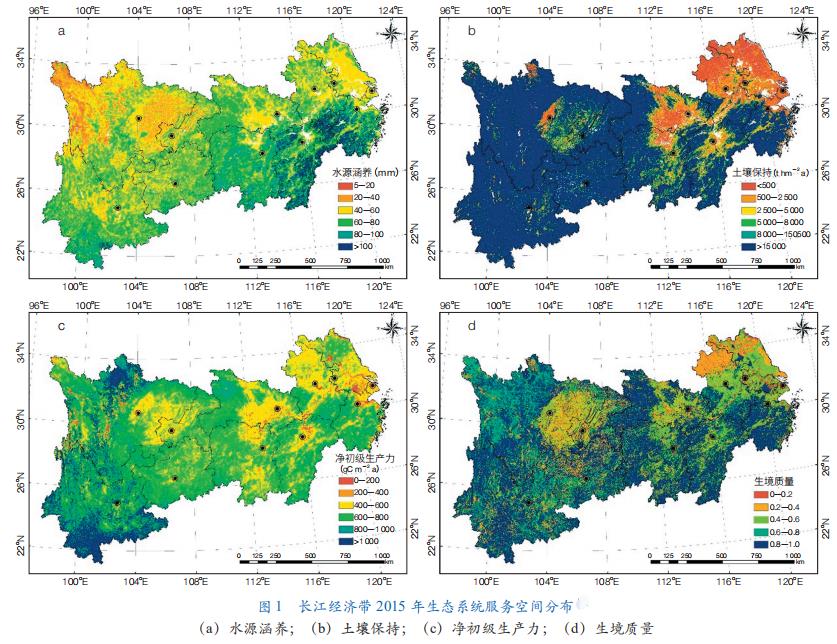
The Yangtze River Economic Belt is located in a moderate position in the north and south, and its superior conditions of light, heat, water and soil ratio have given birth to rich flora and fauna, which has become an important gene bank of natural species in the world and has great biodiversity protection value. There are 1 034 important protected species in the Yangtze River Basin, including 568 species of plants, 142 species of mammals, 168 species of birds, 57 species of amphibians, 85 species of reptiles and 14 species of fish. In addition, as an important habitat and refuge for many rare and endangered aquatic wild animals in China, the Yangtze River has 14 species of national first-and second-class protected aquatic wild animals, including ACIPENSER sinensis, ACIPENSER sinensis and ACIPENSER Changjiang. There are 6 088 species of plants in 208 families, 1 428 genera in the Three Gorges reservoir area alone, 7 037 species in 202 families, 1 476 genera in the middle reaches and 4 259 species in 174 families, 1 180 genera in the lower reaches.

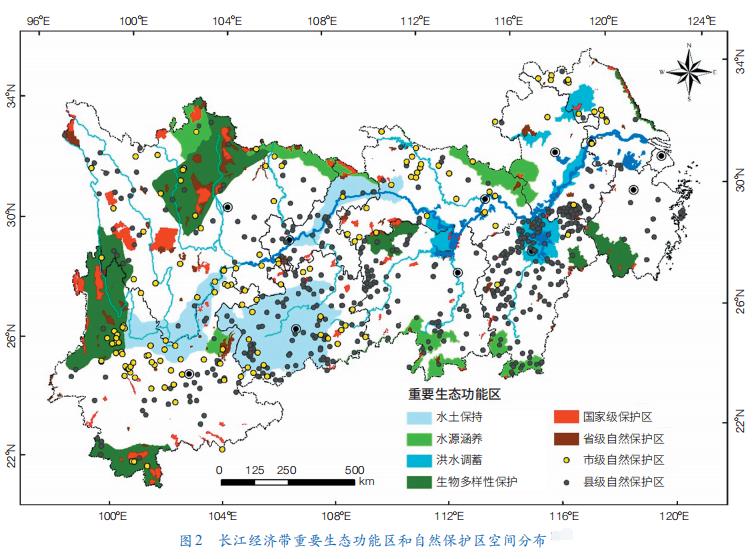
According to the national ecological function zoning, the Yangtze River Economic Belt involves 25 important ecological function zones, accounting for 47.1% of the national total. Among them, there are 8 important water conservation ecological service functional zones in China, including Qinba Mountain, Dabie Mountain, Huaihe River Source, Nanling Mountain, Dongjiang River Source, Zoige, Three Gorges Reservoir Area and Danjiangkou Reservoir Area (Figure 2). There are 1,066 nature reserves, including 165 national nature reserves (90 forest ecosystems, 47 wild animals, 14 inland waters, 12 wild plants, 1 geological relic and 1 paleontological relic). The protected area is 1.86×10⁷ hm2, accounting for 9.1% of the total area of the Yangtze River Economic Belt.
The eco-geographical pattern of economic belt is special, and there are many types of natural ecological disasters with high risk.

The complex and diverse geological and geomorphological environment and special and changeable climatic and hydrological conditions in the Yangtze River Economic Belt lead to frequent natural disasters, mainly floods and mountain disasters. These natural disasters have become a worry of the Yangtze River Economic Belt. The upper reaches of the Yangtze River is located at the junction of the first and second terraces in China, with complex geological conditions, widely distributed alpine and canyon landforms and active neotectonic movements. Earthquakes and landslides and mudslides are not only numerous, widely distributed and large-scale, but also have sudden, mass-produced and disaster chain effects, and major geological and mountain disasters occur almost every year.

The east-west flow direction of the Yangtze River coincides with the direction of the rain belt, which has a long stay time and many persistent rainstorms. The upper reaches of the Yangtze River have a large terrain drop and converge quickly, and the middle and lower reaches have low terrain, so the flood storage and discharge are not smooth, and the upper, middle and lower reaches of the Yangtze River often encounter rainstorms and floods. In addition, the river system is developed, and there are many tributaries entering the river, and there are bayonets in the middle reaches of the main stream and tidal supports in the lower reaches of the river, which leads to frequent floods in the Yangtze River, especially in the middle and lower reaches, and the flood disasters are characterized by high peak, large amount and long duration.

Water environment and atmospheric environment are seriously polluted.

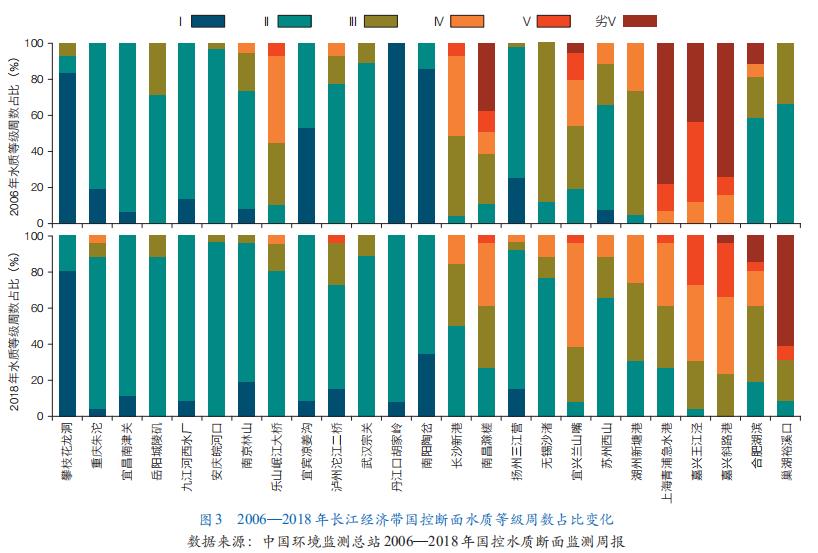
The Yangtze River Economic Belt has a long history of development, dense population and relatively developed economy. The rapid industrialization and urbanization process have led to a large total amount of environmental pollutants, and the cumulative effect of environmental pollution is remarkable. The environmental problems marked by the decline of water environment and atmospheric environment quality are prominent. In 2018, 21.1% of the 1,261 important water functional zones failed to meet the standards. From 2006 to 2018, among the 25 state-controlled sections in the main stream of the Yangtze River, the pH value of 9 sections, the dissolved oxygen content (DO) of 12 sections, the permanganate index (CODMn) of 16 sections and the annual average value of ammonia nitrogen concentration of 6 sections showed an upward trend. In 2018, the number of weeks with water quality grade IV and below in seven sections accounted for more than 30% (Figure 3).
The overall water quality of the lake is poor. Among the 61 major lakes in the Yangtze River Basin in 2018, the water area of Class I-III only accounts for 11.1%, Class IV-V accounts for 86.0%, and Class V is inferior to 2.9%. Poyang Lake, Taihu Lake, Chaohu Lake, Dongting Lake, Dianchi Lake, Wuhan East Lake, Xuanwu Lake, Hangzhou West Lake, etc., except for the overall water quality of Hangzhou West Lake, the water quality of other lakes is IV-worse than V. Of the 108 lakes in the middle and lower reaches with an area of more than 10 km2, 95 (accounting for 88% of the total) exceeded the eutrophication standard, of which 25 (accounting for 23.1% of the total) reached the heavy eutrophication standard, and only 13 (accounting for 12% of the total) were moderately eutrophic and poorly eutrophic lakes.

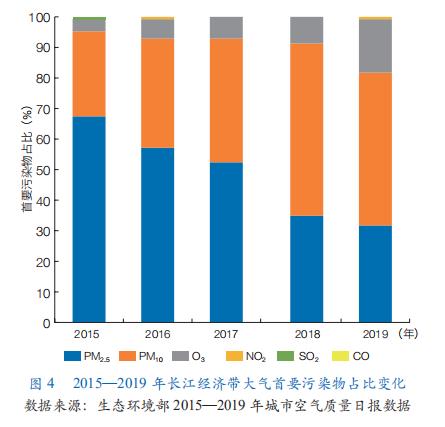
(2) The overall atmospheric environment is worrying. The Yangtze River Delta and Chengdu Plain are among the areas with the highest haze days in China. Among them, most cities in the Yangtze River Delta, Chengdu and its surrounding areas have haze days of more than 50 days, and some cities in Jiangsu and northern Zhejiang have haze days of more than 100 days. Among 126 prefecture-level cities, the average annual concentration of ozone (O3) in 76.2% prefecture-level cities is on the rise, and the average annual concentration of nitrogen dioxide (NO2) in 29.4% prefecture-level cities is also on the rise. From 2015 to 2019, the proportion of fine particulate matter (PM2.5) in the primary air pollutants showed a continuous downward trend, the proportion of inhalable particulate matter (PM10) exceeded 50%, and the proportion of O3 showed a continuous upward trend (Figure 4). Volatile organic compounds (VOCs) and nitrogen oxides (NOx) in the Yangtze River Delta are high-value areas in China and even in the world, which causes secondary pollution problems such as O3.
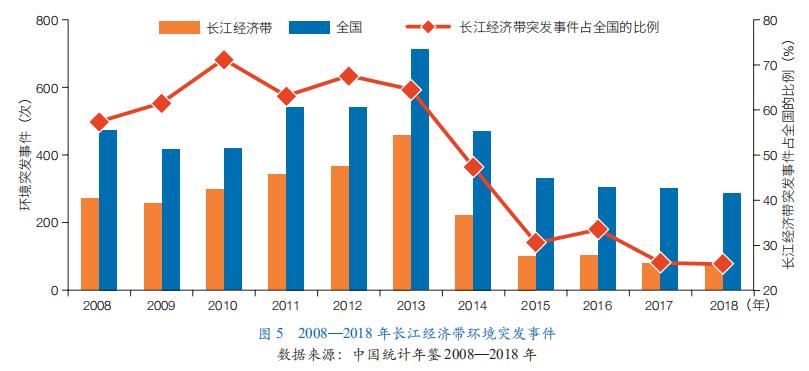
Structural and layout risks are prominent, and sudden environmental incidents occur frequently. There are 62 industrial parks along the Yangtze River, especially heavy chemical enterprises, with more than 250 kinds of hazardous chemicals produced and transported. 40% of papermaking, 43% of synthetic ammonia, 81% of ammonium phosphate, 72% of printing and dyeing cloth and 40% of caustic soda are concentrated in this area, which leads to frequent environmental emergencies and seriously threatens the water supply and ecological security of the local and downstream areas. From 2008 to 2018, there were 2,574 sudden environmental incidents in the Yangtze River Economic Belt, accounting for 53.6% of the national total. Among them, environmental emergencies in Shanghai, Jiangsu and Zhejiang account for more than 80% of the total environmental emergencies in the Yangtze River Economic Belt (Figure 5). After 2013, the sudden environmental pollution incidents in the Yangtze River Economic Belt showed a significant downward trend, but the cumulative and potential environmental risks of high-density layout of heavy chemical enterprises remained high.
The water ecology of the main tributaries and lakes of the Yangtze River has deteriorated significantly.

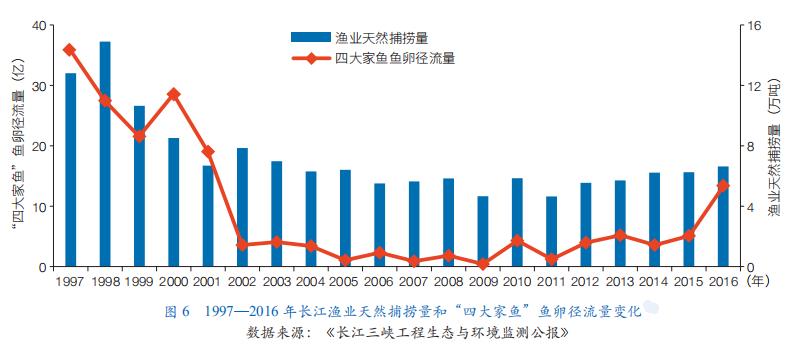
The rapid degradation of aquatic organisms in the upper reaches of the Yangtze River, especially a series of cascade hydropower development, has led to the destruction of spawning and breeding grounds and suitable habitats for rare and economic fish to varying degrees. From 2003 to 2010, after the impoundment of the Three Gorges Reservoir, 23 species of endemic fish were investigated, the number of species decreased by 51.1% compared with that before impoundment, and the dominance of endemic fish in the catch of the Three Gorges Reservoir decreased by 35.3%-99.9%. The spawning scale of "Four Big Fish" decreased significantly. The average annual runoff of "Four Big Fish" eggs in Jianli section of the middle reaches was 228 million, which was 90.0% lower than that in 1997-2002 before impoundment. Although the ecological regulation implemented in 2011 has promoted the improvement trend of the "four big fish", it only accounts for 23.9% from 1997 to 2002 (Figure 6). From 2003 to 2016, the average annual natural fishery catch in the Yangtze River decreased by 42.7% compared with that in 1997-2002. The biological resources of lakes in Yunnan-Guizhou Plateau are degraded, and the indigenous species are rapidly decreasing. The fish fauna evolved from plateau to the middle and lower reaches of the Yangtze River, and the indigenous species decreased significantly.
The lake wetland ecology in the middle and lower reaches of the Yangtze River is obviously degraded. The vegetation distribution of Poyang Lake and Dongting Lake beach wetlands in the middle reaches of the Yangtze River is characterized by the succession of area expansion, vegetation belt downward movement and obvious drought, which leads to significant changes in migratory bird habitats. The species and quantity of fish in rivers and lakes are decreasing rapidly, and migratory fish are almost extinct; Large mollusk benthos such as snails and mussels have been greatly reduced, while pollution-resistant water worms and aquatic insects larvae have increased; The population and number of macrocladocera and copepods in zooplankton decreased, while the number of small rotifers and protozoa increased rapidly. The distribution range of aquatic higher plants is greatly reduced, the community composition tends to be simple, large emergent plants disappear along the lake shore, and a large number of lakes change from clear grass lakes to turbid algae lakes.

The cumulative impact of the ecological environment of major projects represented by the disharmony between rivers and lakes is constantly emerging.

The construction of large-scale reservoirs has changed the situation of incoming water and sediment in the upper reaches of the Yangtze River, and significantly affected the river and lake water quality, wetland ecology, flood control and water supply safety. In recent decades, all kinds of dam projects in the Yangtze River Economic Belt have grown explosively, and there are more than 20 large-scale controlled water conservancy projects under construction and built in the upper reaches of the Yangtze River, represented by the Three Gorges. The construction of large-scale reservoirs has profoundly changed the situation of incoming water and sediment in the upper reaches of the Yangtze River, and then has an increasingly obvious impact on the water and ecological environment in the middle and lower reaches. Since 2003, the inflow of the upper reaches of the Yangtze River has been continuously small, and the runoff of Yichang Station in 80% of the years from 2003 to 2014 is less than the average from 1956 to 2014. The inflow in the upper reaches is reduced, and the river channel under the dam in the middle reaches is short of water and sediment. The runoff in Hankou Station in the middle reaches is less than the multi-year average. Since 2003, compared with the average value from 1956 to 2002, the proportion of sediment coming from the upper reaches of Datong station, a control station at the junction of the middle and lower reaches, has dropped sharply from 86% to 37%. On the one hand, the riverbed in the middle and lower reaches of the Yangtze River has been scoured for a long distance and violently. The total scouring amount of the Pingtan river channel from Yichang to Hukou reaches 1.06×10⁹ m3, of which 67% occurs in the Yichang-Chenglingji river channel, and the river channel has been scoured deeply and the bank collapsed from time to time, which seriously endangers the safety of the Yangtze River embankment. On the other hand, it causes the water level in the main stream of the Yangtze River to decrease in different degrees under the same discharge, which leads to the weakening of the Yangtze River’s jacking effect on Tongjiang Lake, and has a far-reaching impact on the lake’s water storage capacity and wetland ecological balance, as well as flood control and water supply safety in the middle and lower reaches of the Yangtze River.

The construction of water conservancy projects and reclamation have intensified the disharmony between rivers and lakes. The Yangtze River Economic Belt is not only the most concentrated area of lakes in China after the Qinghai-Tibet Plateau (the number and area of lakes larger than 1 km2 account for 25% of the whole country), but also the most significant change in the number and area of lakes in China in the past century. Historically, most of these lakes were naturally connected with the Yangtze River or other rivers, and they played normal ecological service functions such as flood storage, water purification, fresh water supply and biodiversity maintenance. Since 1950s, the construction of water conservancy projects and reclamation activities, such as man-made dams and dams, have intensified. Most lakes in this area have lost their natural hydraulic connection with rivers, and the relationship between rivers and lakes has gradually become disharmonious.

The barrier between rivers and lakes intensifies lake shrinkage and biodiversity decline. The structure and function of many lake ecosystems have changed due to the sudden change of hydrological and hydrodynamic conditions, and the contact of aquatic organisms between rivers and lakes has been blocked, resulting in the disappearance of migratory aquatic animals from the original distribution areas of rivers and lakes and becoming increasingly endangered, and the species and quantity of aquatic plants in lakes and fish rivers have decreased significantly. Algae, especially cyanobacteria, proliferate in large quantities, and the species of benthos decrease and tend to be miniaturized, which has become an important reason for the frequent occurrence of ecological disasters such as cyanobacteria bloom. For example, in 2007, an outbreak of cyanobacteria blooms in Taihu Lake caused a water supply crisis in Wuxi. Intensifying lake shrinkage and reclamation, resulting in a rapid decrease in the number and area of lakes. Since 1950s, the lake area in the middle reaches of the Yangtze River from Yichang to Datong has been reduced from 17 198 km2 to about 6 600 km2, a decrease of about 2/3. The number of lakes in the middle and lower reaches of the Yangtze River with an area of more than 1 km2 accounts for 44.4% of the whole country. The areas of the five major freshwater lakes have all decreased significantly, and the areas of Dongting Lake, Poyang Lake and Taihu Lake have decreased by 1 725 km2, 2 267 km2 and 172 km2 respectively, which directly led to a significant decline in the storage capacity of lakes and a passive situation of minor floods and major disasters.

Major projects are intertwined with the impacts of climate change, which increases the complexity and uncertainty of ecological and environmental problems. Since the beginning of the 21st century, influenced by multiple factors, such as the alternation of dry and wet cycles of climate, the impoundment operation of water conservancy projects in the upper reaches of the Yangtze River, such as the Three Gorges Project, and the intensification of human activities in the basin, the hydrological situation of the two existing Tongjiang lakes in Dongting Lake and Poyang Lake has undergone profound changes. The dry season of the lakes is advanced, the dry season is prolonged, and the ultra-low water level occurs frequently, which not only seriously affects the industrial and agricultural production in the lake area and the domestic water consumption of urban and rural residents, but also endangers the ecological balance between lakes and beach wetlands and the habitat degradation of migratory birds, resulting in a series of

Overall protection strategy

The Yangtze River Economic Belt is the region with the best comprehensive development conditions in China. It has a superior location with moderate north-south and east-west connectivity, a unique ratio of water, soil, gas and natural resources, and a relatively complete industrial and urban system. "Great protection and no great development" is not just protection and no development, but protection should be given priority and prominence. We should not take the old road of extensive and disorderly development at the expense of ecology and environment. We must take "great protection" as the premise, develop scientifically, orderly and intensively according to local conditions, and take the road of ecological civilization development in which man and nature coexist harmoniously.

Put the protection of water ecological environment in the Yangtze River in the first place and take the lead in implementing water quality target management.

Strengthen the management and control of the development of industries and parks along the Yangtze River and implement the source control of pollutants entering the river. Take the management of the occupation of the Yangtze River coastline as the core of regulating the orderly development along the Yangtze River, include the coastline land depth of 0.5—1 km and the bund land in the coastline category, follow the principles of ecological priority, intensive development and paid use, and implement the occupation permit system of the Yangtze River coastline. Strictly manage the scattered layout of industrial enterprises along the Yangtze River and the establishment of heavy chemical industrial parks, clean up and shut down polluting enterprises outside the parks within a time limit, and change the situation that heavy chemical industries along the Yangtze River are scattered, and pollution and risks are difficult to control. For all kinds of development zones and industrial parks set up along the Yangtze River, it is mandatory to build high-standard and full-coverage sewage treatment systems, standardize and strictly control the setting of sewage outlets along the Yangtze River, ensure that there is no scattered industrial and domestic sewage to be discharged directly, and prohibit water bodies whose tributaries fail to meet the Class V standard from entering the Yangtze River; In addition, regional environmental protection measures should be implemented for the coastal sections that cannot meet the basic requirements.

Strengthen the target management of water quality in the main tributaries and key lakes of the Yangtze River. Actively explore the target management mode of river basin environmental quality, and take the lead in realizing the transformation of environmental management in the Yangtze River Economic Belt from pollution reduction target assessment to environmental quality target assessment.

Form a pattern of land space development and protection that is economical and intensive in development and ecological and natural openness.

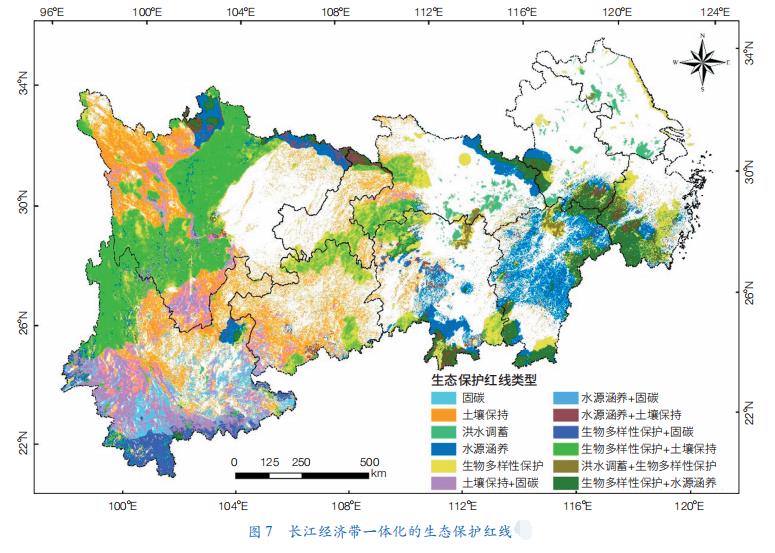
Strengthen the protection of ecosystem integrity and connectivity. Focus on maintaining ecosystem services in important ecological functional areas and controlling the development intensity of ecologically sensitive (fragile) areas, optimize the delineation of ecological protection red line (Figure 7), effectively control the development scale and order of hydropower projects, strengthen ecological nature conservation and river-lake connectivity, and build a land-water composite ecological corridor with the Yangtze River as the main axis.
Strengthen the ecological guidance of land development and optimize the layout of spatial development. Combined with the control of shoreline occupation, the ecological, living and production spaces are reasonably delineated, and various space environment access thresholds are formulated and negative lists are developed. We will implement strict ecological red line control and environmental damage compensation system, strengthen centralized and intensive development of important urban agglomerations and provincial and above development zones, and protect agricultural development space and green open space. Accelerate the formation of a new pattern of land and space development, in which centralized and intensive development and ecological openness complement each other and the main functions of the region are clear.

Continue to implement the green ecological security project in the Yangtze River Economic Belt.

Implement the water security project. Strengthen the protection of water conservation areas by focusing on the protection of the source and upper reaches of the Yangtze River, the rational allocation of water in the middle reaches and the protection of the downstream water environment; Delineate the red line of river and lake protection to ensure that the area of rivers and lakes does not decrease and the storage capacity does not decrease; Carry out returning farmland to lakes and wetlands, prohibit illegal occupation of rivers, lakes and beaches, limit the development intensity of flood storage and detention areas, and restore and increase the water resources storage capacity; Strengthen the unified management and optimal operation of the main and tributary reservoirs, implement the connection between rivers and lakes, clean water into rivers and clean small watersheds, and effectively ensure regional water security.

Implement natural ecological conservation projects. Strengthen the water ecological protection focusing on the protection of fish resources in the Yangtze River, strictly control the reclamation and development of wetlands in the Yangtze River, and carry out ecological dispatching of water conservancy projects conducive to fish protection, so as to effectively protect biodiversity and the health of the Yangtze River water ecosystem.

Implement major disaster prevention projects. Delineate the risk areas of mountain disasters such as earthquakes, landslides and mudslides in the upper reaches of the Yangtze River, and implement the project of resettlement and town construction in high-risk areas; Increase the construction of ecological projects such as returning farmland to forests and grasslands on steep slopes, greening barren hills and hills, and continuously slow down the harm of soil erosion; The comprehensive flood control system of the Yangtze River is formed by organically combining the dike reinforcement of the Yangtze River and its main tributaries with the construction of flood storage and detention areas and the joint optimal operation of reservoirs in the main tributaries of the Yangtze River.

Implement environmental and ecological risk prevention projects. Establish a negative list, and build a strict system of classified supervision of environmental and ecological risk sources and real-time risk monitoring, early warning and disposal; Promote environmental information sharing and build a regional joint prevention and control and emergency response mechanism; Strictly control the layout of polluting enterprises in sensitive coastal areas and regions and the transportation of hazardous chemicals.

Breaking the division between departments and localities and implementing integrated river basin management

Break the division between departments and localities, and set up an inter-departmental and inter-administrative Yangtze River basin management institution directly under the State Council. Draw lessons from the management experience of Rhine River in Europe and Tennessee River in the United States, and establish a comprehensive management mechanism for the Yangtze River basin through consultation and decision-making by stakeholders; Efforts will be made to solve cross-regional and cross-departmental problems that cannot be solved within various administrative units and departments, coordinate the preparation of comprehensive river basin planning and integrated control of spatial development, and supervise the implementation of the Yangtze River Protection Law.

Establish and improve the system of natural resources protection and management, environmental damage compensation and responsibility investigation and ecological compensation in the whole Yangtze River basin. In accordance with the general requirements of "adhering to and improving the system of ecological civilization system and promoting the harmonious coexistence between man and nature", we will take the lead in establishing and improving the property right registration of natural resources assets, the paid use of natural resources such as hydropower, minerals and water, the total resource management, and the matching asset profit and loss evaluation and assessment mechanism; Change the phenomenon of "enterprises make money, the government pays the bill, and the people suffer" in environmental damage, establish a mechanism for compensation and compulsory repair of environmental damage, and investigate the responsibility for environmental damage reasonably and legally; Based on the benchmark value of key water quantity and water quality indicators of control section agreed by the state-controlled or stakeholders, the ecological compensation, paid use of natural resources and environmental damage compensation system are combined, and according to the difference between the key indicators and the benchmark value, a two-way compensation (compensation) mechanism for upstream and downstream of the basin is established and improved. (Author: Yang Guishan, researcher of Nanjing Institute of Geography and Lakes, Chinese Academy of Sciences, president of Nanjing Branch of China Academy of Sciences; Xu Xibao, Nanjing Institute of Geography and Lakes, Chinese Academy of Sciences. Contributed by Journal of China Academy of Sciences)


Merchants induce consumers to buy laser pens as toys: they can instantly light matches and easily burn their eyes.

During the summer vacation, children have more contact with toys, but now many new toys have hidden dangers, such as laser pens, darts in anime Naruto, toothpick crossbows …

Not long ago, Xiao Wang, a member of the fire brigade in Lucheng District, Wenzhou, repeatedly saw primary school students playing with laser pens when he was in fun run on the Oujiang River. He thought it was time to remind them. Subsequently, Lucheng Fire Brigade made an experiment and found that the laser pen can instantly light matches and penetrate 8-story newspapers in 20 seconds, which is self-evident.

The sponge was cut 10 cm. Urban express map

The online shopping platform has blocked the "laser pen" search, but it can be found with "laser flashlight" and "pointing star pen"

In 2014, the exposure of laser pens at CCTV’s "March 15th" party will burn children’s eyes. Last year, the General Administration of Quality Supervision, Inspection and Quarantine released the "Investigation Results on the Quality and Safety of Products Protecting Children’s Eyes", and laser pens ranked first among children’s products with great safety hazards.

Since then, the online shopping platform has blocked the keyword search of "laser pen", and Baidu also suggested in a prominent position that "laser pen may cause retinal damage or even blindness in children, so parents should keep children away from laser pen."

But in reality, there are still many children playing with laser pens. Xiao Wang of Lucheng District Fire Brigade saw the children playing with laser pens on the riverside, so he bought one from Taobao, with a power of 5 watts and five pens, which was a total of 270 yuan.

The instructions for the use of this laser pen say "light matches and firecrackers within 3 meters" and so on. Xiao Wang thinks that there is no need to light matches and firecrackers with a laser pen in real life. Merchants are inducing consumers to buy them as toys.

Since the online shopping platform has blocked the "laser pen" search, how did Xiao Wang find it? He said that you can find it by changing the keywords into "laser flashlight" and "pointing star pen".

Yesterday,The reporter searched with "laser flashlight" and "stylus" on an online shopping platform and found that there were hundreds of pages of results. Among them, the monthly sales volume of a laser pen with tens of dollars is 9743, and many customers in the evaluation column say it is for children to play with.

Six groups of experiments tell you how hidden dangers the laser pen has.

Lucheng District Fire Brigade conducted experiments on laser pens, including mosquito-repellent incense, newspapers, foam, matches, plastic bags and so on.

After 1 minute, the mosquito-repellent incense was burned with white spots. Urban express map

Experiment 1: 1 minute, the mosquito-repellent incense was burned with white spots.

Firefighters put laser pens and mosquito-repellent incense on two small tables, separated by about 1 meter. Turn on the laser pen and let the light shine on the mosquito-repellent incense. After 10 seconds, you can smell the smoke of the mosquito-repellent incense being lit, and after 1 minute, the mosquito-repellent incense is burned to white spots.

20 seconds, breaking through 8 newspapers. Urban express map

Experiment 2: 20 seconds, breaking through 8 newspapers.

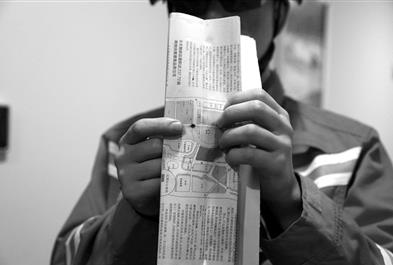
Overlap the newspapers, a total of 8 layers, put them on a small table, and aim the laser pointer at the newspaper 1 meter away. In 20 seconds, the light penetrated the newspaper and reached the back wall, and the newspaper was punctured into a small hole.

Experiment 3: Instantly ignite the match head.

The fireman opened the matchbox, and the whole box stood on the small table, and the laser pen was aimed at the matchhead. The moment the light touches, the match is lit.

After 1 minute, the chicken feet were burned to a black spot. Urban express map

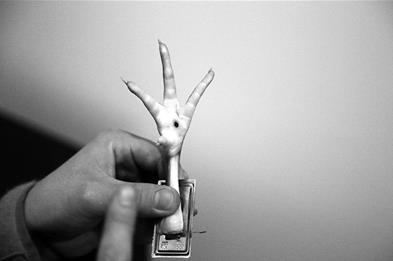
Experiment 4: 10 seconds, scorching the chicken feet epidermis.

Chicken feet are used to simulate human skin, although they are thicker than human skin. The fireman put the chicken feet on the table and turned on the laser pen to illuminate. After 10 seconds, the chicken feet smell burnt and there is a cracking sound of oil burning. After 1 minute, the skin of chicken feet was burnt out with a blackened spot.

Experiment 5: The sponge was cut into a 10 cm hole.

The same two small tables, the laser pen and sponge are separated by 1 meter, and the light of the laser pen is aimed at the sponge and moves slowly, translating about 10 cm. After turning off the laser pointer, the sponge has been cut a big hole.

Experiment 6: Black plastic bag caught fire for 5 seconds.

Xiao Wang said that the laser pen can wear a pen and project patterns such as stars all over the sky on the plane. After wearing a pen, the laser is diffused and the lethality becomes smaller. In the case of close distance, it is also dangerous to wear a laser pen. They put the black plastic bag 5 cm in front of the laser pointer, and the plastic bag burned after 5 seconds.

More than a dozen children in Wenzhou have been blinded by laser toys.

Lucheng Fire Department reminds parents not to let their children touch laser toys, especially high-powered ones. From the perspective of fire prevention, the laser pen can ignite at a long distance, which has great hidden dangers.

But the biggest harm of laser pen is the damage to human skin and eyes. In general,The laser power that the human body can bear is about 0.4 MW, and the laser of about 1 MW directly enters the eyes, which will cause harm..

Last year, the Ophthalmology and Optometry Hospital affiliated to Wenzhou Medical University made preliminary statistics. In about two years, there were more than a dozen children who were injured by laser toys, basically boys of about 10 years old. One boy’s eyesight dropped from 1.5 to 0.25 after being injured by a laser pen, but he could not recover after treatment.

Mao Xinjie, director of the optometry diagnosis and treatment center of the Ophthalmology Hospital affiliated to Wenzhou Medical University, said that external objects or light are imaged on the retina through the eyes, and the macular area located in the center of the retina is the most sensitive and fragile area on the retina. After being irradiated by the strong light of the laser pen, it is easy to cause edema and bleeding in the macular area, and the vision is greatly reduced. Once you burn your eyes with a laser pointer, the damage will be permanent and most of it will be difficult to recover. The injured should go to the hospital as soon as possible, and strive for treatment before the burned part is scarred.

(The original title is "Lucheng Fire Brigade did an experiment: the" laser pen "can instantly light a match and break through an 8-story newspaper for 20 seconds")